Deerberry
vaccinium stamineum
Deerberry is a delightful plant that produces sweet, edible berries! Kids will love spotting its colorful fruits in the woods during summer.
Hábitat: Deerberry commonly grows in forests, along roadsides, and in open areas.
The Deerberry has an upright, spreading shape with oval, bright green leaves that turn reddish-purple in fall. Its unique bell-shaped, white to pinkish flowers hang in clusters, and its pale green, yellowish, or sometimes purplish berries are often covered in a waxy bloom.
Categoría
PlantasRareza
Common
Peligro
1/5 · Muy bajo
Snaps
¡Sé la primera persona en hacer un snap!
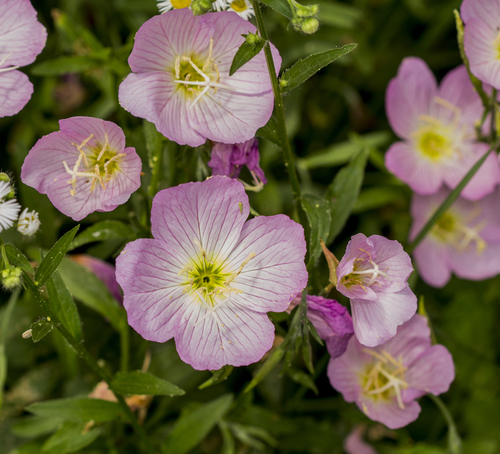
Deerberry flowers have long, yellow stamens that stick out like tiny antennae.
It's a wild cousin to your favorite cultivated blueberries and tart cranberries!
Its berries can stay pale green or yellowish, unlike typical blue blueberries!
Native Americans traditionally used Deerberry for both food and various medicines.
Deerberry can thrive in very acidic, poor soils, using special adaptations to absorb nutrients where other plants struggle.
Deerberry has a strong root system that helps it withstand dry periods, making it quite drought-tolerant once established.
Deerberry has a unique flower shape with protruding stamens that encourages 'buzz pollination' by certain bees for better seed production.
Odocoileus virginianus
Eats its leaves and berries.
Meleagris gallopavo
Forages on the nutritious berries.
Sialia sialis
Enjoys eating the ripe berries.
Apis mellifera
Collects nectar and pollen from flowers.
Bombus impatiens
Uses buzz pollination on its flowers.
Los animales sociales viven en grupos organizados, cooperando para obtener beneficios de supervivencia como la búsqueda de alimento, la defensa y la cría de descendencia.
Colorido describe a organismos u objetos que exhiben una amplia variedad de colores brillantes y distintivos.
Este rasgo caracteriza a los organismos cuya dieta consiste total o principalmente en material vegetal.
Los hábitats boscosos son entornos terrestres dominados por una densa cubierta arbórea, que sustentan una gran diversidad de vida animal y vegetal.

Describe organismos que transfieren polen, permitiendo la fertilización y reproducción de las plantas.
Peligro
1/5 · Muy bajo
Always ask an adult before picking and eating wild berries.
50-250 cm
50-200 cm
0.5-1 cm
Primavera
Sí
Ninguna
Perenne
Insectos
Acércate para separar los grupos y explorar dónde se ha fotografiado este objeto.
Los snaps recientes aparecerán aquí a medida que se añadan nuevas observaciones.