
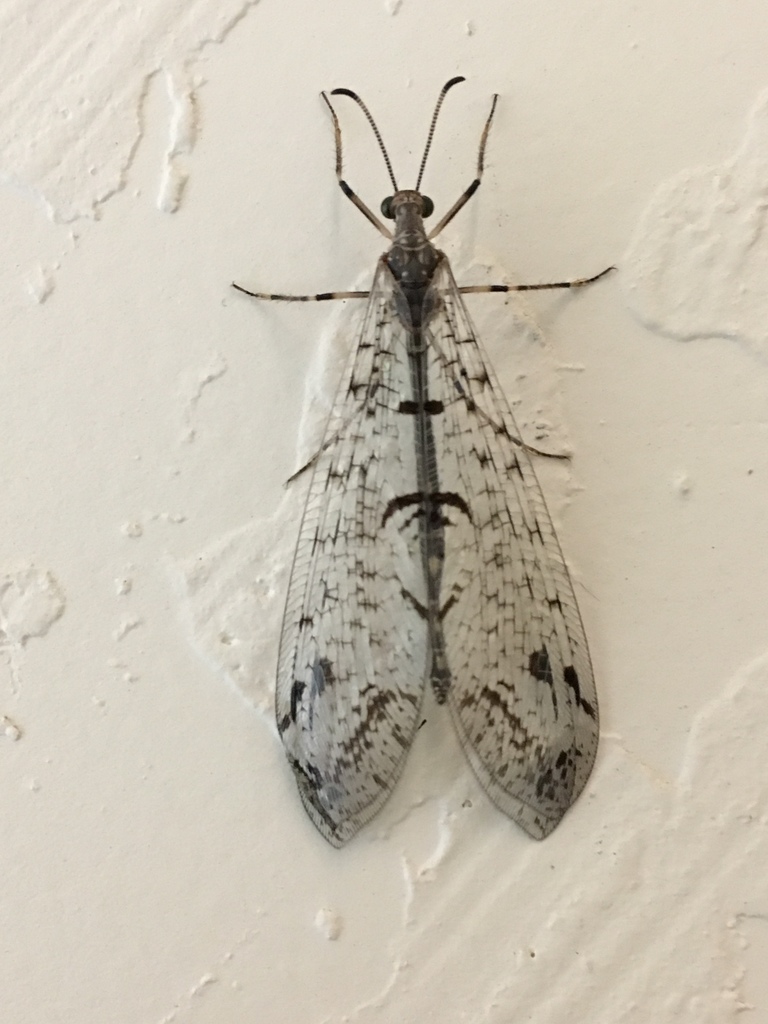





Dendroleon speciosus
Dendroleon speciosus
The Dendroleon speciosus, also known as the beautiful lacewing, is a tiny insect with delicate, lace-like wings. They are helpful because they eat pests like aphids, making gardens healthier and happier!
Hábitat: Forests
The Dendroleon speciosus is a large insect with a robust body and long, clubbed antennae. Its transparent, intricately veined wings display dark markings and a yellowish tint, creating a mottled brown and black pattern that helps it blend with tree bark.
Categoría
InsectosRareza
Common
Peligro
1/5 · Muy bajo
Snaps
¡Sé la primera persona en hacer un snap!
Adult antlions are often mistaken for dragonflies, but they have unique club-tipped antennae.
Adult antlions look like delicate lacewings but are often much larger and sturdier.
The larvae, called doodlebugs, can live for years before transforming into winged adults!
Unlike most insects, larval antlions don't poop! They store waste until they become adults.
Dendroleon speciosus larvae can hide perfectly under tree bark or leaf litter, ambushing unsuspecting insects with powerful jaws.
Dendroleon speciosus larvae have large, hollow, sickle-shaped jaws that inject venom and digestive enzymes into their prey.
Adult Dendroleon speciosus has mottled brown wings and body that helps them perfectly camouflage against tree bark during the day.
Larvae are ambush predators of insects; adults might eat small insects or nectar.
Diferencias por edad: Larvae are strict ambush predators, while adults may supplement their diet with nectar or pollen.
Formica rufa
Larvae ambush these ants hiding in their forest habitat.
%2C_Parc_de_Woluw%C3%A9%2C_Brussels_(13042792905).jpg&width=800)
Parus major
Insectivorous birds commonly prey on adult antlions.
Araniella cucurbitina
Orb weaver spiders can trap adult antlions in their webs.
Los animales solitarios viven solos durante la mayor parte de su vida y solo interactúan con otros para aparearse o cuidar de sus crías.
El camuflaje describe a los organismos que poseen colores o patrones que les permiten mezclarse con su entorno.
Colorido describe a organismos u objetos que exhiben una amplia variedad de colores brillantes y distintivos.
Este rasgo identifica a los organismos cuya dieta consiste principalmente en insectos y otros pequeños invertebrados.

Los hábitats boscosos son entornos terrestres dominados por una densa cubierta arbórea, que sustentan una gran diversidad de vida animal y vegetal.

Describe una especie cuya presencia y papel tienen un efecto desproporcionadamente grande en su entorno.

Relativo a especies que son significativamente más pequeñas que lo típico o promedio de su tipo.

Los animales nocturnos están principalmente activos durante la noche, y suelen descansar o dormir durante el día.

Describe organismos que transfieren polen, permitiendo la fertilización y reproducción de las plantas.
Todavía no hay alias listados.
Peligro
1/5 · Muy bajo
These insects are harmless, but it's best to look and not touch them.
50-70 mm
20-30 mm
365-1095 días
5-10 km/h
Larvae are ambush predators of insects; adults might eat small insects or nectar.
Forests
Ambush
6
Acércate para separar los grupos y explorar dónde se ha fotografiado este objeto.
Los snaps recientes aparecerán aquí a medida que se añadan nuevas observaciones.




_and_eggs%2C_Natchez_Trace%2C_Natchez%2C_Mississippi.jpg&width=800)






