Orange Bluet
enallagma signatum
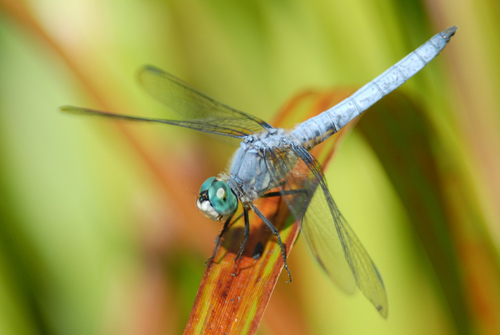
The Orange Bluet is a colorful dragonfly that loves to flutter around ponds and streams. With its bright orange and blue colors, it's like a little flying gem in nature!
Hábitat: Near ponds, streams, and wetlands, often resting on plants.
The Orange Bluet is a slender damselfly, with males sporting a striking bright orange or red base to their abdomen, contrasting with a blue-tipped end and black markings. Its thorax is black with green or yellow stripes. Females are typically duller, often yellowish-brown with similar black patterns.
Categoría
InsectosRareza
Common
Peligro
0/5 · Sin peligro conocido
Snaps
¡Sé la primera persona en hacer un snap!
Male Orange Bluets use their bright colors to show off and attract a mate.
Their babies, called nymphs, live underwater for up to a year before transforming!
These tiny insects have six legs, but they're mostly used for perching, not walking far!
They often fly tandem in a 'heart shape' when mating, a truly unique sight!
Orange Bluet larvae can breathe underwater using special gills that help them survive for months in ponds.
Orange Bluet has huge compound eyes that help them spot tiny flying insects from far away while hunting.
Orange Bluet can hover and dart quickly through the air, helping them catch prey and escape from predators.
Orange Bluets are tiny insect hunters, munching on small flying bugs.
Diferencias por edad: Larvae eat aquatic invertebrates; adults eat flying insects.
Anopheles quadrimaculatus
as prey for adults
Rana catesbeiana
as a food source
Gambusia affinis
larval stage is prey
_Sabine_Woods_TX_2018-04-21_08-32-57_(28100602238).jpg&width=800)
Protonotaria citrea
provides food
Los animales sociales viven en grupos organizados, cooperando para obtener beneficios de supervivencia como la búsqueda de alimento, la defensa y la cría de descendencia.
Colorido describe a organismos u objetos que exhiben una amplia variedad de colores brillantes y distintivos.
Los animales diurnos están activos principalmente durante el día y suelen descansar o dormir por la noche.
Los hábitats acuáticos abarcan entornos donde los organismos viven principalmente en el agua, incluidos océanos, ríos, lagos y humedales.

Describe organismos que transfieren polen, permitiendo la fertilización y reproducción de las plantas.
Peligro
0/5 · Sin peligro conocido
Todavía no hay notas especiales de seguridad.
35-45 mm
28-38 mm
20-45 días
5-10 km/h
Orange Bluets are tiny insect hunters, munching on small flying bugs.
Near ponds, streams, and wetlands, often resting on plants.
Pursuit
6
Acércate para separar los grupos y explorar dónde se ha fotografiado este objeto.
Los snaps recientes aparecerán aquí a medida que se añadan nuevas observaciones.