




Dusky Slugs
mesarion
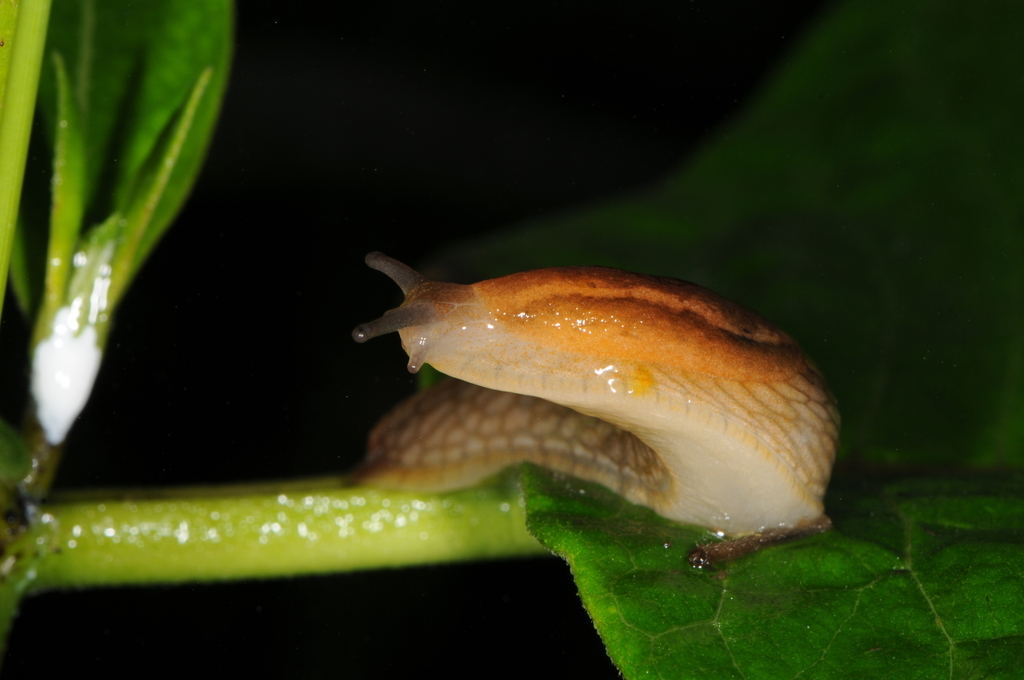
Dusky slugs are fascinating creatures that glide smoothly on their slimy trails. They come out to play during wet nights and are great at munching on decaying leaves!
Hábitat: Dusky slugs live in damp, shady areas like forests and gardens.
The Dusky Slug has a long, cylindrical body, typically dark gray to brown, often with subtle speckles or bands. It has two pairs of retractable tentacles and lacks an external shell, making it appear streamlined compared to snails.
Categoría
InvertebrateRareza
Common
Peligro
0/5 · Sin peligro conocido
Snaps
¡Sé la primera persona en hacer un snap!
A slug's slime trail helps it stick to surfaces, even allowing it to crawl upside down!
Dusky slugs are hermaphrodites, meaning each one has both male and female reproductive organs!
Some slugs can survive by burrowing deep underground during very cold or dry weather!
They can retreat their sensitive eye stalks into their head for protection from danger.
Dusky Slugs have a ribbon-like radula with tiny teeth that helps them scrape food off surfaces and chew tough plants.
Dusky Slugs have a unique breathing pore called a pneumostome that helps them take in oxygen directly from the air.
Dusky Slugs are important decomposers, eating decaying plants, algae, and fungi.
Turdus merula
Birds frequently feed on slugs found in gardens and forests.
Rana temporaria
Amphibians are key predators of slugs, especially after rain.
Pterostichus melanarius
Some ground beetles are predators of slugs, especially juveniles.
Agaricus campestris
Slugs often consume a variety of fungi, including common mushrooms.
Los animales solitarios viven solos durante la mayor parte de su vida y solo interactúan con otros para aparearse o cuidar de sus crías.
Este rasgo caracteriza a los organismos cuya dieta consiste total o principalmente en material vegetal.
Los hábitats boscosos son entornos terrestres dominados por una densa cubierta arbórea, que sustentan una gran diversidad de vida animal y vegetal.
Describe a los organismos que descomponen la materia orgánica muerta, reciclando los nutrientes de vuelta al ecosistema.

Los animales nocturnos están principalmente activos durante la noche, y suelen descansar o dormir durante el día.
Peligro
0/5 · Sin peligro conocido
Todavía no hay notas especiales de seguridad.
4.5 cm
2 g
2 años
0.005 km/h
Dusky Slugs are important decomposers, eating decaying plants, algae, and fungi.
Dusky slugs live in damp, shady areas like forests and gardens.
Foraging
30
Acércate para separar los grupos y explorar dónde se ha fotografiado este objeto.
Los snaps recientes aparecerán aquí a medida que se añadan nuevas observaciones.