.jpg&width=800)





Eastern Kingbird
Tyrannus tyrannus
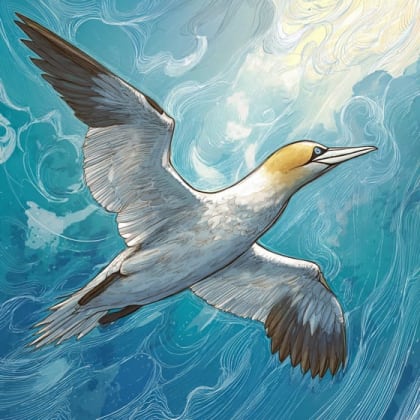
The Eastern Kingbird is a lively bird with a black head and white belly. It loves to catch insects in mid-air and can often be seen perched on fences or wires, watching for its next meal.
Hábitat: Open fields and gardens
The Eastern Kingbird has a sleek, dark gray back with a contrasting pure white belly and a black tail tipped distinctly in white. Its head is dark black, often hiding a small, vibrant orange-red crown patch. This upright posture and clean markings make it easily identifiable.
Categoría
AvesRareza
Common
Peligro
1/5 · Muy bajo
Snaps
¡Sé la primera persona en hacer un snap!
A tiny, fiery orange patch hides on top of their head, usually only seen when they're excited!
Eastern Kingbirds can sometimes eat small fruits, making them more than just insect-eaters!
Their nest is often built on a horizontal tree branch, far from the trunk for safety!
They are called 'kingbirds' because they bravely chase much larger birds away from their nests!
Eastern Kingbirds can bravely chase much larger birds like hawks because of their fierce territorial instinct, which helps them protect their nest.
Eastern Kingbirds can catch flying insects with incredible agility in mid-air, because of their sharp eyesight and swift, acrobatic flight.
Eastern Kingbirds have a hidden patch of fiery orange-red feathers on their head that only shows when they're excited, helping them display during courtship or confrontation.
These birds primarily feast on flying insects, expertly caught mid-air, but also enjoy tasty berries!
Anax junius
A primary prey item.

Bombus impatiens
Kingbirds catch these bees mid-flight.
Accipiter cooperii
May prey on kingbird adults or fledglings.
Thamnophis sirtalis
Can raid nests for eggs and nestlings.
Morus rubra
Kingbirds consume its ripe fruits.
Describe a los animales, principalmente aves, que poseen una cubierta de plumas.
Los animales sociales viven en grupos organizados, cooperando para obtener beneficios de supervivencia como la búsqueda de alimento, la defensa y la cría de descendencia.
Este rasgo identifica a los organismos cuya dieta consiste principalmente en insectos y otros pequeños invertebrados.
Los hábitats de pastizales son biomas terrestres dominados por pastos y plantas herbáceas, que sustentan a una variedad de animales de pastoreo.

Los animales diurnos están activos principalmente durante el día y suelen descansar o dormir por la noche.

Este rasgo identifica a los organismos que exhiben una rapidez excepcional en sus movimientos para cazar, escapar o desplazarse.

Los animales migratorios emprenden movimientos estacionales de una región a otra, típicamente en respuesta a cambios en el clima o la disponibilidad de alimentos.

Esta característica de hábitat indica especies que pueden coexistir con los humanos en entornos urbanos y suburbanos, utilizando estructuras artificiales y espacios verdes.
Todavía no hay alias listados.
Peligro
1/5 · Muy bajo
Enjoy watching birds from a distance and don't disturb their nests.
20-23 cm
33-38 cm
0.033-0.055 kg
2-10 años
50 km/h
These birds primarily feast on flying insects, expertly caught mid-air, but also enjoy tasty berries!
Open fields and gardens
Ambush
Acércate para separar los grupos y explorar dónde se ha fotografiado este objeto.
Los snaps recientes aparecerán aquí a medida que se añadan nuevas observaciones.

Illinois, US
Puedes ver Pato Joyuyo, Tordo Sargento y Pato.
Ver guía →

Virginia, US
Puedes ver Azure Bluet, Allegheny Blackberry y Small-Flowered Buttercup.
Ver guía →

British Columbia, CA
Puedes ver American Dipper, Salmón Rojo y Pato.
Ver guía →







.jpg&width=800)