






Eurasian Wigeon
Mareca penelope
The Eurasian Wigeon is a beautiful duck with a striking reddish-brown head and a white forehead. These ducks love to swim in lakes and rivers, where they search for tasty plants to eat.
Hábitat: Wetlands
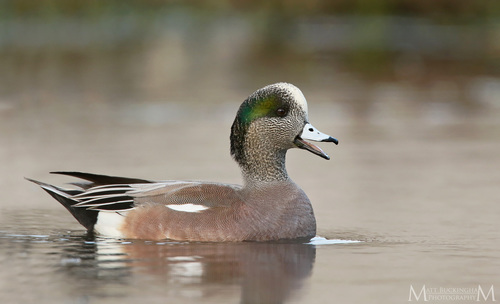
The Eurasian Wigeon male has a striking chestnut-coloured head with a creamy-yellow stripe on its forehead, a grey body, and a pinkish breast. Females are mottled brown, making them harder to spot. Both have a small, distinctive sky-blue bill with a black tip.
Categoría
AvesRareza
Common
Peligro
1/5 · Muy bajo
Snaps
¡Sé la primera persona en hacer un snap!
During winter, thousands of Eurasian Wigeons can gather in huge noisy flocks!
Their name "wigeon" comes from an old word meaning "whistling duck"!
These ducks don't usually dive for food; they prefer to graze on land!
They sometimes follow swans to eat bits of plants that float to the surface!
Eurasian Wigeon can efficiently eat tough grasses because of their strong bill, helping them get energy from plants.
Eurasian Wigeon has a unique 'whee-oo' whistle call that helps them communicate clearly over long distances with their flock.
Eurasian Wigeon sometimes steals food from other diving birds, helping them save energy by not having to dive themselves.
These ducks are mostly vegetarians, munching on grasses and aquatic plants from the surface.

Zostera marina
A favorite food source in coastal wintering areas.
Poa pratensis
Feeds on tender blades of this common grass.

Haliaeetus albicilla
A powerful raptor that preys on adult ducks.
Vulpes vulpes
Predator of eggs, ducklings, and sometimes adult ducks.
Describe a los animales, principalmente aves, que poseen una cubierta de plumas.
Se caracteriza por tener los dedos conectados por una membrana, lo que generalmente ayuda a nadar.
Los animales sociales viven en grupos organizados, cooperando para obtener beneficios de supervivencia como la búsqueda de alimento, la defensa y la cría de descendencia.
Los animales cantores producen vocalizaciones complejas, a menudo con el propósito de atraer parejas, defender el territorio o comunicarse dentro de su especie.

Colorido describe a organismos u objetos que exhiben una amplia variedad de colores brillantes y distintivos.

Los filtradores obtienen nutrientes filtrando partículas de alimentos suspendidos y pequeños organismos del agua.

Este rasgo caracteriza a los organismos cuya dieta consiste total o principalmente en material vegetal.

Este rasgo de hábitat identifica especies que se encuentran en humedales, que son áreas de tierra saturadas de agua, ya sea permanente o estacionalmente, e incluyen marismas, pantanos y ciénagas.

Los animales migratorios emprenden movimientos estacionales de una región a otra, típicamente en respuesta a cambios en el clima o la disponibilidad de alimentos.
Peligro
1/5 · Muy bajo
Always watch ducks from a distance and don't feed them bread.
42-59 cm
71-80 cm
0.5-1.07 kg
2-18 años
100 km/h
These ducks are mostly vegetarians, munching on grasses and aquatic plants from the surface.
Wetlands
Grazing
Acércate para separar los grupos y explorar dónde se ha fotografiado este objeto.
Los snaps recientes aparecerán aquí a medida que se añadan nuevas observaciones.





.jpg&width=800)







.jpg&width=800)
