.jpg&width=800)





Eurasian Wryneck
Jynx torquilla
The Eurasian Wryneck is a special bird that can twist its neck like a snake! It has a beautiful brown and gray pattern that helps it hide in trees. This bird loves to eat ants and beetles.
Hábitat: Forests
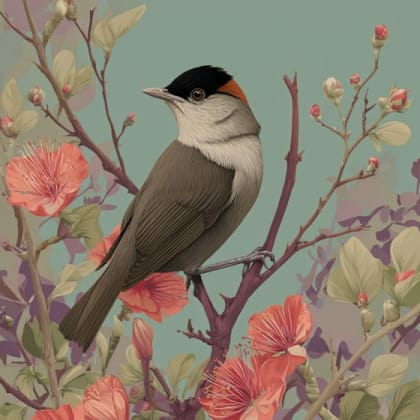
The Eurasian Wryneck is a small, slender bird with cryptic, mottled grey, brown, and rufous plumage, featuring intricate barred and streaked patterns. It has a distinctive dark stripe running from its eye down its neck, and a long tail. Its soft colours help it blend perfectly with tree bark.
Categoría
AvesRareza
Common
Peligro
1/5 · Muy bajo
Snaps
¡Sé la primera persona en hacer un snap!
During migration, wrynecks often fly alone, traveling long distances over land and sea!
Sometimes, they visit gardens in autumn, fattening up for their amazing journey south!
Their eggs are surprisingly pure white, often hidden deep inside dark tree cavities.
Unlike other woodpeckers, wrynecks prefer to nest in ready-made holes, not drilling their own!
Eurasian Wryneck can turn its head nearly 180 degrees to scan for predators or find hidden insects.
Eurasian Wryneck has a unique defense display, twisting its neck and hissing to mimic a snake and scare off threats.
Eurasian Wryneck has a long, sticky tongue to reach deep into ant nests, helping it catch its favorite insect prey.
Eurasian Wryneck has a patterned plumage that perfectly blends with tree bark, helping it hide from predators.
Eurasian Wrynecks mainly gobble up ants and other insects using their super-sticky tongue!
Formica rufa
Major food source, found in nests.

Accipiter nisus
A common predator of adult wrynecks.
Sturnus vulgaris
Competes for tree cavities for nesting.
Lasius niger
Eats larvae and adults from colonies.
Describe a los animales, principalmente aves, que poseen una cubierta de plumas.
Los animales solitarios viven solos durante la mayor parte de su vida y solo interactúan con otros para aparearse o cuidar de sus crías.
Los animales cantores producen vocalizaciones complejas, a menudo con el propósito de atraer parejas, defender el territorio o comunicarse dentro de su especie.
Los animales arborícolas viven principalmente en los árboles, utilizándolos como refugio, alimento y protección contra los depredadores.

El camuflaje describe a los organismos que poseen colores o patrones que les permiten mezclarse con su entorno.

Este rasgo identifica a los organismos cuya dieta consiste principalmente en insectos y otros pequeños invertebrados.

Los hábitats boscosos son entornos terrestres dominados por una densa cubierta arbórea, que sustentan una gran diversidad de vida animal y vegetal.

Los animales diurnos están activos principalmente durante el día y suelen descansar o dormir por la noche.
Todavía no hay alias listados.
Peligro
1/5 · Muy bajo
Enjoy watching birds from a distance and don't disturb their nests.
16-18 cm
25-30 cm
0.03-0.05 kg
5-10 años
40 km/h
Eurasian Wrynecks mainly gobble up ants and other insects using their super-sticky tongue!
Forests
Foraging
Acércate para separar los grupos y explorar dónde se ha fotografiado este objeto.
Los snaps recientes aparecerán aquí a medida que se añadan nuevas observaciones.