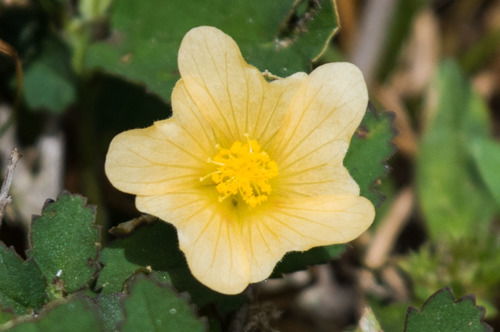
Florida False Sunflower
phoebanthus grandiflorus
The Florida False Sunflower is a bright and cheerful flower that can bring a smile to anyone's face! Its sunny yellow petals look like a little piece of sunshine in the garden.
Hábitat: They thrive in sunny fields, gardens, and along roadsides in Florida.
The Florida False Sunflower has vibrant yellow, daisy-like flowers with many thin petals surrounding a darker yellow center. Its rough, hairy stems and leaves, often growing upright, make it visually distinct from true sunflowers, despite its sunny appearance. It forms clumps of bright color.
Categoría
PlantasRareza
Common
Peligro
0/5 · Sin peligro conocido
Snaps
¡Sé la primera persona en hacer un snap!
It loves sandy soil so much, it's often found growing near ancient beach dunes!
Its 'false' name means it's related to, but not a true member of the sunflower family!
The scientific name 'Phoebanthus' cleverly means 'sun flower' in ancient Greek!
This sunny flower grows wild only in Florida, making it a true Sunshine State native!
Florida False Sunflower can thrive in dry, sandy soils that other plants struggle in, thanks to its deep root system.
Its bright yellow petals and abundant nectar act like a flashing sign, attracting many bees and butterflies to help it reproduce.
Florida False Sunflower has underground stems (rhizomes) that help it spread and form new plants, creating large colonies.
Apis mellifera
Gathers nectar and pollen
Bombus pennsylvanicus
Visits flowers for nectar and pollen
Danaus plexippus
Sips nectar from the flower heads
Colorido describe a organismos u objetos que exhiben una amplia variedad de colores brillantes y distintivos.
Este rasgo caracteriza a los organismos cuya dieta consiste total o principalmente en material vegetal.
Los hábitats de pastizales son biomas terrestres dominados por pastos y plantas herbáceas, que sustentan a una variedad de animales de pastoreo.
Los animales diurnos están activos principalmente durante el día y suelen descansar o dormir por la noche.

Describe organismos que transfieren polen, permitiendo la fertilización y reproducción de las plantas.
Peligro
0/5 · Sin peligro conocido
Todavía no hay notas especiales de seguridad.
30-90 cm
30-60 cm
2.5-5 cm
Fall-winter, occasionally year-round
No
Ninguna
Perenne
Insectos
Acércate para separar los grupos y explorar dónde se ha fotografiado este objeto.
Los snaps recientes aparecerán aquí a medida que se añadan nuevas observaciones.