Foothill desert-parsley
Lomatium utriculatum
Foothill desert-parsley is a special plant that grows in dry areas. It has pretty yellow flowers that look like tiny umbrellas and can be found in the foothills of mountains.
Hábitat: Desert
The Foothill desert-parsley has delicate clusters of tiny bright yellow flowers atop slender, branched stems. Its leaves are finely divided, fern-like, and green, forming a low basal rosette. This feathery, airy appearance helps it stand out against dry, rocky soils.
Categoría
PlantasRareza
Common
Peligro
1/5 · Muy bajo
Snaps
¡Sé la primera persona en hacer un snap!
Even its scientific name, Lomatium, describes its distinctive seeds!
Indigenous people traditionally ate the roots and used parts for medicine.
Its flat-topped flower clusters are called umbels, like tiny nature's umbrellas!
The seeds have papery wings, helping them fly far away on the wind.
Foothill desert-parsley has a deep taproot that helps it store water, allowing it to survive long dry periods in the desert.
It produces a strong, characteristic aroma from its leaves that might deter some hungry animals from munching on it.
Foothill desert-parsley can sprout and bloom very early in spring, completing its life cycle before the desert heat becomes too intense.
Bombus occidentalis
Its tiny flowers provide nectar and pollen for early spring bees.
Odocoileus hemionus
Deer browse on its leaves and stems when other food is scarce.
Peromyscus maniculatus
Small rodents may consume the nutritious seeds of the plant.
Las plantas aromáticas producen y emiten compuestos orgánicos volátiles fragantes, a menudo como defensa o para atraer a los polinizadores.
Las plantas con flores son cualquier planta que produce flores como parte de su ciclo reproductivo.
Las plantas bienales completan su ciclo de vida en dos temporadas de crecimiento, formando típicamente follaje en el primer año y floreciendo o semillando en el segundo.
Las flores en racimo son inflorescencias donde las flores individuales están dispuestas muy juntas en un tallo común.

Las flores fragantes emiten un aroma agradable, a menudo para atraer polinizadores o como defensa.

Las plantas tolerantes a la sequía pueden sobrevivir y florecer en condiciones de escasa disponibilidad de agua.

Describe plantas que son particularmente atractivas y beneficiosas para una amplia variedad de organismos polinizadores.

Los hábitats desérticos son regiones áridas caracterizadas por precipitaciones extremadamente bajas y, a menudo, temperaturas extremas, que albergan una flora y fauna especializadas.

Este rasgo de hábitat identifica a las especies que se encuentran en regiones montañosas, caracterizadas por su gran altitud, pendientes pronunciadas y zonas climáticas variables.
Todavía no hay alias listados.
Peligro
1/5 · Muy bajo
Do not touch plants without asking an adult, as some plants can be prickly or cause allergies.
10-40 cm
15-30 cm
0.2-0.5 cm
Primavera
Sí
Ninguna
Anual
Insectos
Acércate para separar los grupos y explorar dónde se ha fotografiado este objeto.
Los snaps recientes aparecerán aquí a medida que se añadan nuevas observaciones.

British Columbia, CA
Puedes ver Western Rattlesnake Plantain, Fairy-Slipper y Serpentine Fern.
Ver guía →
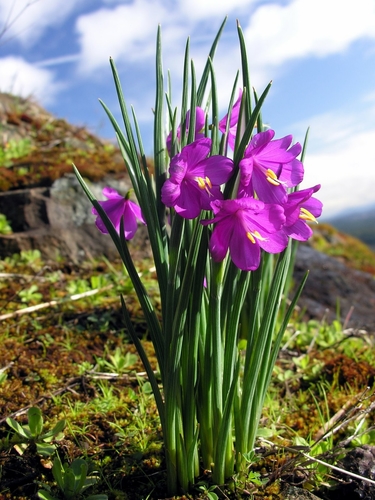
British Columbia, CA
Puedes ver Grasswidow, Broad-Leaved Stonecrop y Rustyhair Saxifrage.
Ver guía →
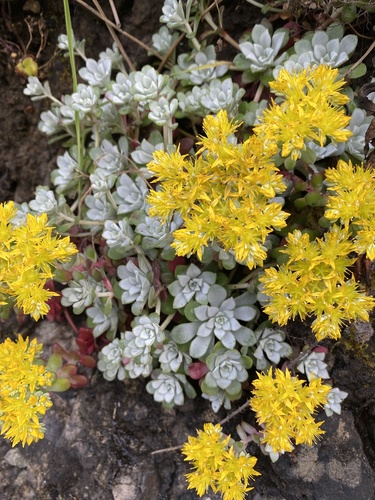
British Columbia, CA
Puedes ver Broad-Leaved Stonecrop y Western Rattlesnake Plantain.
Ver guía →