






Forest Tent Caterpillar Moth
Malacosoma disstria
The Forest Tent Caterpillar Moth is a fluffy, brown moth that loves to fly around in the woods. It starts its life as a caterpillar, munching on leaves before transforming into a beautiful moth!
Hábitat: Forests
The Forest Tent Caterpillar Moth is typically dull yellowish-tan to brownish, often with a darker diagonal band across its forewings. Males are usually smaller and darker than females. Unlike many other moths, its wings lack prominent spots or complex patterns, making it appear quite plain.
Categoría
InsectosRareza
Common
Peligro
1/5 · Muy bajo
Snaps
¡Sé la primera persona en hacer un snap!
Adult moths have no working mouthparts; they live only days, focused solely on finding a mate.
Despite their name, Forest Tent Caterpillars spin silk mats on branches, not large communal tents!
During outbreaks, millions of caterpillars can strip entire forests bare of leaves in just weeks!
Massive caterpillar marches across roads during outbreaks can make surfaces slippery, like ice!
Forest Tent Caterpillar Moth can blend seamlessly with tree bark because of its mottled brown and gray wings that mimic its surroundings.
The moth can find mates in the dark because females release powerful chemical signals called pheromones that males detect from afar.
Females can protect their future offspring by laying eggs in a durable, waterproof mass covered with a protective cement-like substance.
Its eggs can survive freezing winters because they are laid in a tough, insulated case on tree branches, waiting to hatch in spring.
As caterpillars, they feast on tree leaves; adult moths famously do not eat at all!
Diferencias por edad: Larvae (caterpillars) are voracious leaf-eaters, while adult moths do not feed.
Acer saccharum
Larvae consume its leaves, sometimes causing defoliation during outbreaks.
Populus tremuloides
A primary food source for the caterpillars, especially in northern regions.
.jpg&width=800)
Coccyzus americanus
This bird is one of the few avian predators that readily eats hairy caterpillars.
Sarcophaga aldrichi
Larvae of this parasitic fly infest and consume the caterpillar's pupae.
Peludo describe a los animales que poseen una cubierta densa de pelo o pelaje suave.
Los animales sociales viven en grupos organizados, cooperando para obtener beneficios de supervivencia como la búsqueda de alimento, la defensa y la cría de descendencia.
El camuflaje describe a los organismos que poseen colores o patrones que les permiten mezclarse con su entorno.
Este rasgo caracteriza a los organismos cuya dieta consiste total o principalmente en material vegetal.

Los hábitats boscosos son entornos terrestres dominados por una densa cubierta arbórea, que sustentan una gran diversidad de vida animal y vegetal.

Los animales diurnos están activos principalmente durante el día y suelen descansar o dormir por la noche.

Describe organismos que transfieren polen, permitiendo la fertilización y reproducción de las plantas.
Todavía no hay alias listados.
Peligro
1/5 · Muy bajo
It's best to watch these moths from a distance and not touch them.
25-45 mm
15-25 mm
5-10 días
10-25 km/h
As caterpillars, they feast on tree leaves; adult moths famously do not eat at all!
Forests
Foraging
6
Acércate para separar los grupos y explorar dónde se ha fotografiado este objeto.
Los snaps recientes aparecerán aquí a medida que se añadan nuevas observaciones.
.jpg)
Pennsylvania, US
Puedes ver Mariposa Almirante y Allegheny Mountain Dusky Salamander.
Ver guía →
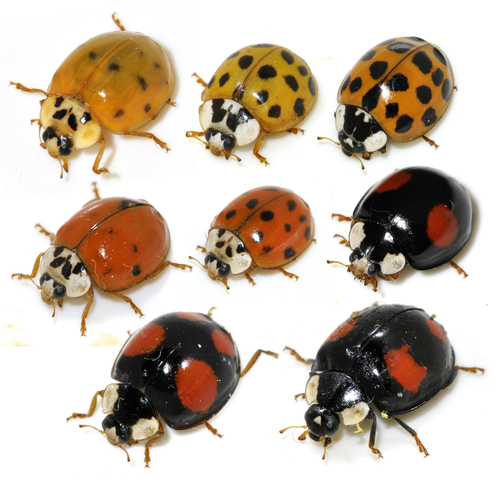
Ontario, CA
Puedes ver Mariquita Asiática y Forest Tent Caterpillar Moth.
Ver guía →
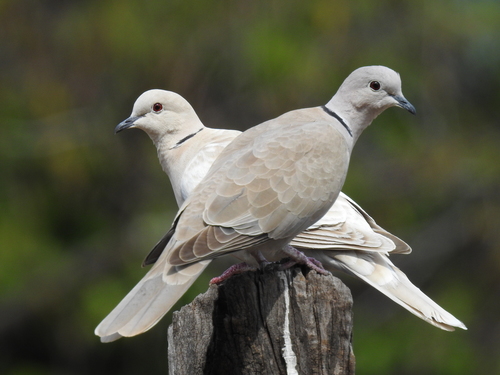
Tennessee, US
Puedes ver Eurasian Collared-Dove y Hongo De La Miel.
Ver guía →

Ontario, CA
Puedes ver Common Eastern Bumble Bee y Two-Spotted Bumble Bee.
Ver guía →










