






Frilled Dogwinkle
nucella lamellosa
The Frilled Dogwinkle is a fun sea snail with a frilly shell! It loves to crawl on rocky shores and can be found in tidal pools.
Hábitat: Rocky coastal areas and tidal pools
The Frilled Dogwinkle has a thick, spiral shell adorned with prominent, wavy frills or ridges that can be white, grey, yellow, orange, or brown. Its wide aperture often reveals a yellowish or purplish interior, making it visually distinct from smoother, plainer snails.
Categoría
InvertebrateRareza
Common
Peligro
0/5 · Sin peligro conocido
Snaps
¡Sé la primera persona en hacer un snap!
Female Frilled Dogwinkles lay their eggs in tall, vase-shaped capsules.
Its shell color can vary greatly even within the same tide pool!
Some Frilled Dogwinkles drill and eat as many as three barnacles a day!
They use a ribbon-like tongue, called a radula, covered in tiny teeth to feed.
Frilled Dogwinkle can drill perfect holes into prey shells because of its radula and acid, helping them access soft bodies inside.
Frilled Dogwinkle has a muscular foot that can create strong suction, allowing it to cling tightly to rocks against powerful waves.
Frilled Dogwinkle can produce a purple dye because of specialized glands, which may deter predators or be a waste product.
Frilled Dogwinkle has a sturdy, ridged shell that helps it withstand crashing waves and protects it from predators.
This sea snail munches on tasty barnacles and mussels by drilling through their hard shells.
Balanus glandula
Drills shell to consume soft parts.

Mytilus edulis
A primary food source drilled for sustenance.
Pisaster ochraceus
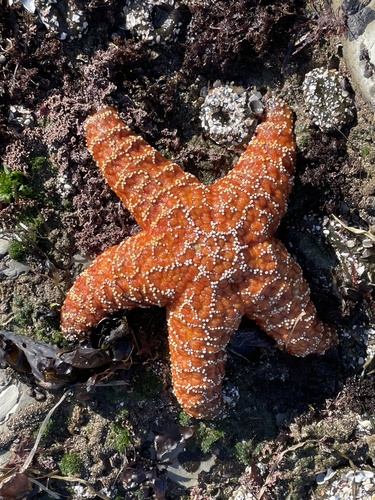
A significant predator in tide pools.
Cancer productus
Crushes shells to eat the snail inside.
Los animales solitarios viven solos durante la mayor parte de su vida y solo interactúan con otros para aparearse o cuidar de sus crías.
El camuflaje describe a los organismos que poseen colores o patrones que les permiten mezclarse con su entorno.
Colorido describe a organismos u objetos que exhiben una amplia variedad de colores brillantes y distintivos.
Este rasgo identifica a los organismos cuya dieta consiste total o principalmente en tejido animal.

Los hábitats marinos abarcan todos los entornos de agua salada de los océanos de la Tierra, sustentando una inmensa diversidad de vida acuática.
Peligro
0/5 · Sin peligro conocido
Todavía no hay notas especiales de seguridad.
10 g
5 años
This sea snail munches on tasty barnacles and mussels by drilling through their hard shells.
Rocky coastal areas and tidal pools
Pursuit
4.5 cm
Acércate para separar los grupos y explorar dónde se ha fotografiado este objeto.
Los snaps recientes aparecerán aquí a medida que se añadan nuevas observaciones.
British Columbia, CA
Puedes ver Ochre Sea Star, Fringe Cups y Moonglow Anemone.
Ver guía →
Washington, US
Puedes ver Ochre Sea Star, Purple Shore Crab y Strawberry Tree.
Ver guía →

Washington, US
Puedes ver Red Valerian, Ocean Spray y Yellow Shore Crab.
Ver guía →














