






fringed loosestrife
Lysimachia ciliata
Fringed loosestrife is a pretty plant with yellow flowers that bloom in summer. It grows tall and has soft, fringed leaves that look like they are waving in the breeze.
Hábitat: Wetlands
The fringed loosestrife has distinct bright yellow, star-shaped flowers with delicate, frilly edges, giving them a unique fringed appearance. Its leaves grow in whorls around a smooth, often purplish stem, distinguishing it from other meadow plants.
Categoría
PlantasRareza
Common
Peligro
1/5 · Muy bajo
Snaps
¡Sé la primera persona en hacer un snap!
Ancient people believed this plant could 'loose' (release) arguments, hence its common name!
Its scientific name, Lysimachia, is thought to honor an ancient Greek king, Lysimachus!
Look closely for tiny black dots on its leaves – they are special glands!
This plant is sometimes called 'whorled loosestrife' because its leaves grow in circles!
The fringed loosestrife has unique fringed petals that give its bright yellow flowers a distinctive, frilly look.
The fringed loosestrife can produce sweet nectar on its leaves to attract helpful ants for protection against pests.
The fringed loosestrife can spread quickly using underground stems called rhizomes, helping it form dense colonies.
Apis mellifera
gathers nectar from its flowers

Bombus impatiens
crucial for plant reproduction
Odocoileus virginianus
its leaves are a food source
.JPG&width=800)
Sylvilagus floridanus
rabbits sometimes browse it
Las plantas caducifolias pierden periódicamente todas sus hojas, por lo general durante el otoño o las estaciones secas.
Las plantas con flores son cualquier planta que produce flores como parte de su ciclo reproductivo.
Las plantas de floración de verano producen sus flores durante la temporada estival, a menudo aportando un color vibrante cuando muchas otras plantas ya han terminado de florecer.
Describe plantas que son particularmente atractivas y beneficiosas para una amplia variedad de organismos polinizadores.

Este rasgo de hábitat identifica especies que se encuentran en humedales, que son áreas de tierra saturadas de agua, ya sea permanente o estacionalmente, e incluyen marismas, pantanos y ciénagas.
Todavía no hay alias listados.
Peligro
1/5 · Muy bajo
Always look but don't touch plants without asking an adult first.
60-150 cm
30-60 cm
1-2 cm
Verano
No
Ninguna
Perenne
Insectos
Acércate para separar los grupos y explorar dónde se ha fotografiado este objeto.
Los snaps recientes aparecerán aquí a medida que se añadan nuevas observaciones.

Virginia, US
Puedes ver Rana Verde, Pond Slider y Tortuga Mordedora.
Ver guía →

Pennsylvania, US
Puedes ver Eastern Skunk Cabbage y Carpe Americano.
Ver guía →
Virginia, US
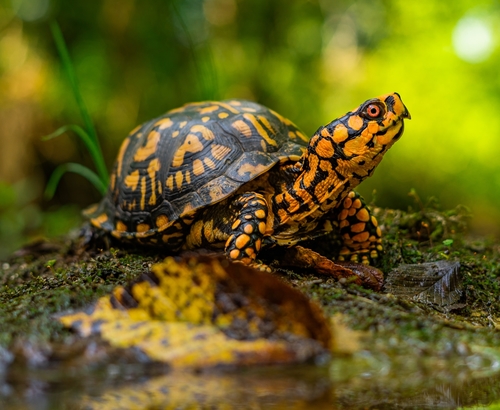
Puedes ver Tortuga De Caja Oriental, True Sedges y True Lilies.
Ver guía →

















