






Gadwall
Mareca strepera
The Gadwall is a lovely duck that loves to swim in ponds and lakes. It has a grayish-brown body and is often seen with other ducks, making it a friendly bird to watch!
Hábitat: Wetlands
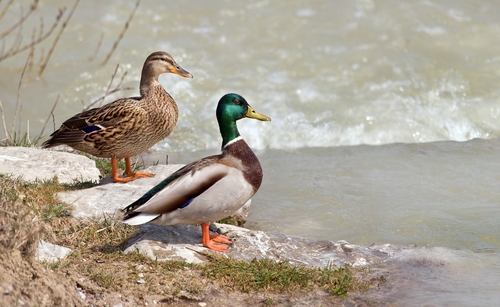
The Gadwall is a medium-sized grey-brown duck. Males have fine patterns on their body, a black rear, and a striking white speculum (wing patch) visible in flight. Females are mottled brown but also possess a white speculum, distinguishing them from many other dabbling ducks.
Categoría
AvesRareza
Common
Peligro
1/5 · Muy bajo
Snaps
¡Sé la primera persona en hacer un snap!
A female Gadwall might lay her eggs in another duck's nest sometimes!
Gadwall ducks often build their nests far from water, hidden in tall grasses!
These ducks are found all over the world, from America to Asia!
They don't quack much; instead, males make a deep, reedy whistle sound!
Gadwall can tip head-first into water to reach yummy plants at the bottom, helping them find food without fully diving.
The Gadwall has subtle grey-brown plumage that helps it blend perfectly into marshy reeds, making it hard for predators to spot.
Gadwall has a bright white wing patch that flashes in flight, helping flock members stay together and identify each other.
Mostly eats watery plants and their seeds, with some tiny insects, making them primarily herbivores.
Diferencias por edad: Ducklings consume more protein-rich insects for rapid growth, shifting to more plants as they mature.
Haliaeetus leucocephalus
Nests and ducklings are vulnerable to powerful aerial hunters.
Potamogeton crispus
Relies on abundant aquatic vegetation for food source.
Mustela vison
Nests, eggs, and ducklings are prey for river predators.

Sagittaria latifolia
Consumes seeds and tubers from various water plants.
Describe a los animales, principalmente aves, que poseen una cubierta de plumas.
Se caracteriza por tener los dedos conectados por una membrana, lo que generalmente ayuda a nadar.
Los animales sociales viven en grupos organizados, cooperando para obtener beneficios de supervivencia como la búsqueda de alimento, la defensa y la cría de descendencia.
Los filtradores obtienen nutrientes filtrando partículas de alimentos suspendidos y pequeños organismos del agua.

Este rasgo caracteriza a los organismos cuya dieta consiste total o principalmente en material vegetal.

Este rasgo de hábitat identifica especies que se encuentran en humedales, que son áreas de tierra saturadas de agua, ya sea permanente o estacionalmente, e incluyen marismas, pantanos y ciénagas.

Los animales diurnos están activos principalmente durante el día y suelen descansar o dormir por la noche.

Los hábitats acuáticos abarcan entornos donde los organismos viven principalmente en el agua, incluidos océanos, ríos, lagos y humedales.

Los animales migratorios emprenden movimientos estacionales de una región a otra, típicamente en respuesta a cambios en el clima o la disponibilidad de alimentos.
Todavía no hay alias listados.
Peligro
1/5 · Muy bajo
Always watch ducks from a distance and don't feed them bread.
46-58 cm
78-90 cm
0.7-1.3 kg
5-10 años
80 km/h
Mostly eats watery plants and their seeds, with some tiny insects, making them primarily herbivores.
Wetlands
Foraging
Acércate para separar los grupos y explorar dónde se ha fotografiado este objeto.
Los snaps recientes aparecerán aquí a medida que se añadan nuevas observaciones.

Connecticut, US
Puedes ver Gorrión Melódico, Sinsonte Norteño y Monarch.
Ver guía →

South Holland, NL
Puedes ver Grey Heron, Eurasian Jackdaw y Common Moorhen.
Ver guía →

Washington, US
Puedes ver Pato, American Wigeon y Gaviota De Delaware.
Ver guía →
Washington, US
Puedes ver Pato, American Coot y Barnacla Canadiense.
Ver guía →

Tennessee, US
Puedes ver Red Buckeye, Prairie Trillium y Largeflower Bellwort.
Ver guía →

Washington, US
Puedes ver Barnacla Canadiense, Pato y American Coot.
Ver guía →












