






Giant Plumose Anemone
metridium farcimen
The Giant Plumose Anemone is a beautiful sea creature that looks like a colorful flower underwater! It waves its tentacles in the currents, waiting for tasty food to float by.
Hábitat: They live in the ocean along rocky and sandy shores, often found in tide pools.
The Giant Plumose Anemone is a tall, column-shaped invertebrate with a broad oral disc crowned by a dense, feathery mass of white, cream, or sometimes orange-brown tentacles. It stands out due to its substantial size and ornate, flower-like appearance.
Categoría
InvertebrateRareza
Common
Peligro
1/5 · Muy bajo
Snaps
¡Sé la primera persona en hacer un snap!
If cut in half, each piece can grow into a new anemone!
Some anemones can live to be over 100 years old!
They can crawl along the seafloor, but super, super slowly!
They often grow in huge groups, creating an underwater 'flower garden'!
Giant Plumose Anemone can reproduce by splitting its foot or oral disc because it allows for asexual reproduction and colony formation.
Giant Plumose Anemone can slowly glide across surfaces using its muscular foot because it helps them find better feeding spots.
It filters tiny food particles and microscopic animals from the surrounding water.
Dermasterias imbricata
Leather stars prey on various sea anemones.
Pleurobranchaea californica
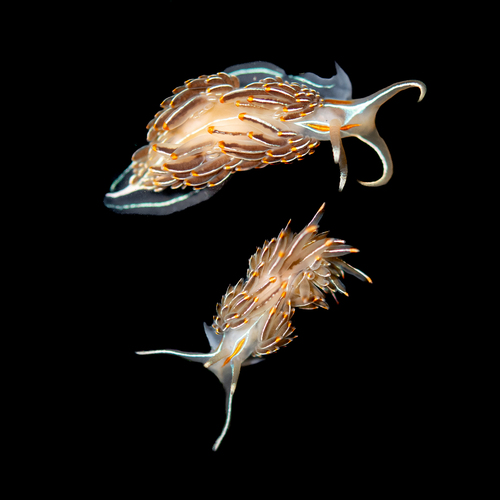
This sea slug consumes anemone tissues.

Pycnopodia helianthoides
A large sea star known to eat anemones.
Los animales solitarios viven solos durante la mayor parte de su vida y solo interactúan con otros para aparearse o cuidar de sus crías.
Colorido describe a organismos u objetos que exhiben una amplia variedad de colores brillantes y distintivos.
Los filtradores obtienen nutrientes filtrando partículas de alimentos suspendidos y pequeños organismos del agua.
Los hábitats acuáticos abarcan entornos donde los organismos viven principalmente en el agua, incluidos océanos, ríos, lagos y humedales.

Los hábitats marinos abarcan todos los entornos de agua salada de los océanos de la Tierra, sustentando una inmensa diversidad de vida acuática.
Peligro
1/5 · Muy bajo
Always observe marine life from a safe distance.
15-90 cm
5-100 años
It filters tiny food particles and microscopic animals from the surrounding water.
They live in the ocean along rocky and sandy shores, often found in tide pools.
Filter Feeding
Acércate para separar los grupos y explorar dónde se ha fotografiado este objeto.
Los snaps recientes aparecerán aquí a medida que se añadan nuevas observaciones.











_(14534156278).jpg&width=800)




