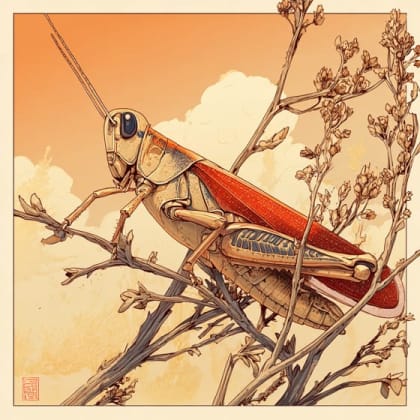
Giant Walkingstick
Megaphasma denticrus
The Giant Walkingstick is a fun insect that looks like a stick! It can be very long and is great at hiding in trees and bushes. This clever camouflage helps it stay safe from hungry birds.
Hábitat: Forests
The Giant Walkingstick is an exceptionally long and slender insect, perfectly resembling a twig or small branch. It typically ranges in color from brown, green, to gray, often featuring small bumps or spines on its body. Its super-long legs and body help it vanish into leafy backgrounds.
Categoría
InsectosRareza
Common
Peligro
1/5 · Muy bajo
Snaps
¡Sé la primera persona en hacer un snap!
Even after hatching, young walkingsticks look like tiny versions of their adult parents!
It holds the record as one of the longest insects in North America!
Its eggs often look exactly like seeds, helping them hide from hungry animals.
Some female Giant Walkingsticks can reproduce without a male, laying eggs that hatch into clones!
Giant Walkingstick can perfectly mimic twigs and branches, making it almost invisible to predators in its forest home.
Giant Walkingstick can release a foul-smelling, irritating chemical spray to deter predators that get too close.
Giant Walkingstick can voluntarily detach a leg to escape from a predator, and it can regrow later.
These plant-eaters munch on various leaves, helping trim vegetation in their habitats.
Quercus alba
feeds on its leaves, especially young ones.
Cyanocitta cristata
a common bird predator in its forest habitat.
.jpg&width=800)
Tamias striatus
forages for insects on forest floors and branches.
Los animales solitarios viven solos durante la mayor parte de su vida y solo interactúan con otros para aparearse o cuidar de sus crías.
Los animales arborícolas viven principalmente en los árboles, utilizándolos como refugio, alimento y protección contra los depredadores.
El camuflaje describe a los organismos que poseen colores o patrones que les permiten mezclarse con su entorno.
Colorido describe a organismos u objetos que exhiben una amplia variedad de colores brillantes y distintivos.

Este rasgo caracteriza a los organismos cuya dieta consiste total o principalmente en material vegetal.

Los hábitats boscosos son entornos terrestres dominados por una densa cubierta arbórea, que sustentan una gran diversidad de vida animal y vegetal.

Gigante describe organismos u objetos de un tamaño significativamente mayor al promedio de su especie o tipo.

Los animales nocturnos están principalmente activos durante la noche, y suelen descansar o dormir durante el día.
Todavía no hay alias listados.
Peligro
1/5 · Muy bajo
Always look but don't touch insects without asking an adult first.
150-300 mm
300-500 días
These plant-eaters munch on various leaves, helping trim vegetation in their habitats.
Forests
Foraging
6
Acércate para separar los grupos y explorar dónde se ha fotografiado este objeto.
Los snaps recientes aparecerán aquí a medida que se añadan nuevas observaciones.