






Golden-crowned Kinglet
Regulus satrapa
The Golden-crowned Kinglet is a tiny bird with a bright yellow crown on its head. It loves to flit around in trees, looking for tiny insects to eat. This little bird is very energetic and can be seen hopping from branch to branch!
Hábitat: Forests
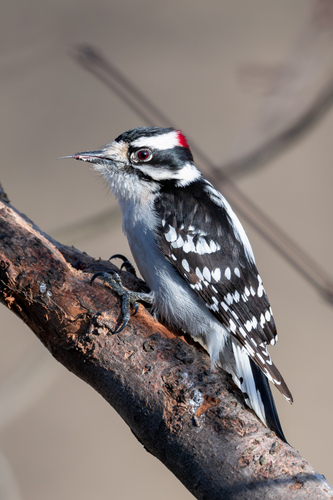
The Golden-crowned Kinglet is a tiny, olive-green bird with grayish underparts. It has distinctive black stripes on its head, framing a bright yellow or orange-yellow crown patch, bordered by black.
Categoría
AvesRareza
Common
Peligro
1/5 · Muy bajo
Snaps
¡Sé la primera persona en hacer un snap!
A male kinglet's bright orange crown is usually hidden, only flashing it when excited or displaying!
Despite their small size, they sometimes travel thousands of kilometers during migration!
These busy birds can eat up to half their body weight in insects every single day!
They can shiver their tiny bodies to create heat and stay warm in icy weather!
Golden-crowned Kinglet can hang upside down because of its strong legs and tiny claws that help them snatch insects from needles and twigs.
Golden-crowned Kinglet has a thick, insulating feather coat that helps them stay warm and survive freezing winter temperatures.
Golden-crowned Kinglet has a very high-pitched call that allows them to communicate without giving away their location to predators.
Tiny insect-eaters that feast on small bugs and spiders found in the forest canopy.
Picea glauca
Provides nesting sites and food resources.
Abies balsamea
Offers crucial foraging habitat and shelter.

Accipiter striatus
A common predator of small forest birds.
Dendroctonus rufipennis
Eats larvae and adults from tree bark.
Los animales sociales viven en grupos organizados, cooperando para obtener beneficios de supervivencia como la búsqueda de alimento, la defensa y la cría de descendencia.
Los animales cantores producen vocalizaciones complejas, a menudo con el propósito de atraer parejas, defender el territorio o comunicarse dentro de su especie.
Los animales arborícolas viven principalmente en los árboles, utilizándolos como refugio, alimento y protección contra los depredadores.
Colorido describe a organismos u objetos que exhiben una amplia variedad de colores brillantes y distintivos.

Este rasgo identifica a los organismos cuya dieta consiste principalmente en insectos y otros pequeños invertebrados.

Los hábitats boscosos son entornos terrestres dominados por una densa cubierta arbórea, que sustentan una gran diversidad de vida animal y vegetal.

Los animales diurnos están activos principalmente durante el día y suelen descansar o dormir por la noche.

Relativo a especies que son significativamente más pequeñas que lo típico o promedio de su tipo.
Todavía no hay alias listados.
Peligro
1/5 · Muy bajo
Always watch birds from a distance to keep them safe and happy.
8-11 cm
14-18 cm
0.004-0.008 kg
2-4 años
40 km/h
Tiny insect-eaters that feast on small bugs and spiders found in the forest canopy.
Forests
Foraging
Acércate para separar los grupos y explorar dónde se ha fotografiado este objeto.
Los snaps recientes aparecerán aquí a medida que se añadan nuevas observaciones.






.jpg&width=800)
.jpg&width=800)



