






Great Blue Skimmer
Libellula vibrans
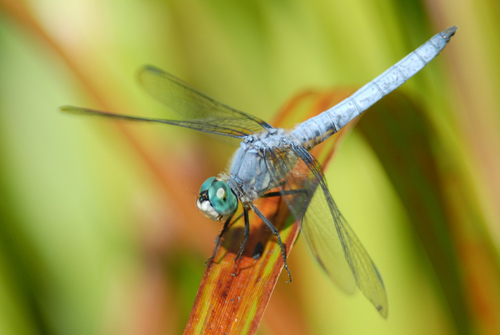
The Great Blue Skimmer is a beautiful dragonfly with bright blue wings and a shiny body. It loves to fly around ponds and lakes, catching tiny insects to eat.
Hábitat: Wetlands
The Great Blue Skimmer has a robust body, with adult males displaying a distinctive powdery blue coloration across their abdomen and thorax. Its wings are clear, often with a subtle amber tint at the base, setting it apart from other skimmers by its uniform blue and clear wing pattern.
Categoría
InsectosRareza
Common
Peligro
1/5 · Muy bajo
Snaps
¡Sé la primera persona en hacer un snap!
Dragonflies are ancient insects, having existed on Earth before the first dinosaurs appeared!
Dragonfly larvae, called nymphs, live underwater for years before they emerge to fly!
Their wings are incredibly strong, allowing them to fly even if one wing is slightly damaged.
They are excellent pest controllers, eating thousands of mosquitoes and gnats.
Great Blue Skimmer has huge compound eyes that help them spot tiny prey and hidden predators in nearly all directions at once.
Great Blue Skimmer can hover, dart, and fly backward because of its two sets of independently controlled wings.
Great Blue Skimmer nymphs can blend perfectly with pond debris because of their dull, mottled bodies, avoiding detection.
This insect is an expert aerial hunter, catching other flying insects in mid-air!
Diferencias por edad: Nymphs eat aquatic insects and tadpoles, while adults hunt flying insects.
Culex pipiens
Actively preys on adult mosquitoes, helping control their populations.
.jpg&width=800)
Tyrannus tyrannus
Birds often snatch adult skimmers from the air as a food source.
Micropterus salmoides
Largemouth bass frequently consume dragonfly nymphs in freshwater habitats.
Los animales solitarios viven solos durante la mayor parte de su vida y solo interactúan con otros para aparearse o cuidar de sus crías.
Las criaturas aéreas pasan una parte importante de su vida en el aire, utilizando el vuelo para diversas actividades como la caza, la migración o la anidación.
Colorido describe a organismos u objetos que exhiben una amplia variedad de colores brillantes y distintivos.
Este rasgo identifica a los organismos cuya dieta consiste principalmente en insectos y otros pequeños invertebrados.

Este rasgo de hábitat identifica especies que se encuentran en humedales, que son áreas de tierra saturadas de agua, ya sea permanente o estacionalmente, e incluyen marismas, pantanos y ciénagas.

Los hábitats de agua dulce incluyen entornos acuáticos no salinos como ríos, lagos, estanques y humedales, vitales para numerosas especies.

Los animales diurnos están activos principalmente durante el día y suelen descansar o dormir por la noche.

Este rasgo identifica a los organismos que exhiben una rapidez excepcional en sus movimientos para cazar, escapar o desplazarse.

Describe organismos que transfieren polen, permitiendo la fertilización y reproducción de las plantas.
Todavía no hay alias listados.
Peligro
1/5 · Muy bajo
Dragonflies are friendly and won't hurt you, but it's best to watch them from a distance.
75-110 mm
50-70 mm
30-90 días
35 km/h
This insect is an expert aerial hunter, catching other flying insects in mid-air!
Wetlands
Pursuit
6
Acércate para separar los grupos y explorar dónde se ha fotografiado este objeto.
Los snaps recientes aparecerán aquí a medida que se añadan nuevas observaciones.












.jpg&width=800)

