




Gulf Coast Buck Moth
Hemileuca orleans
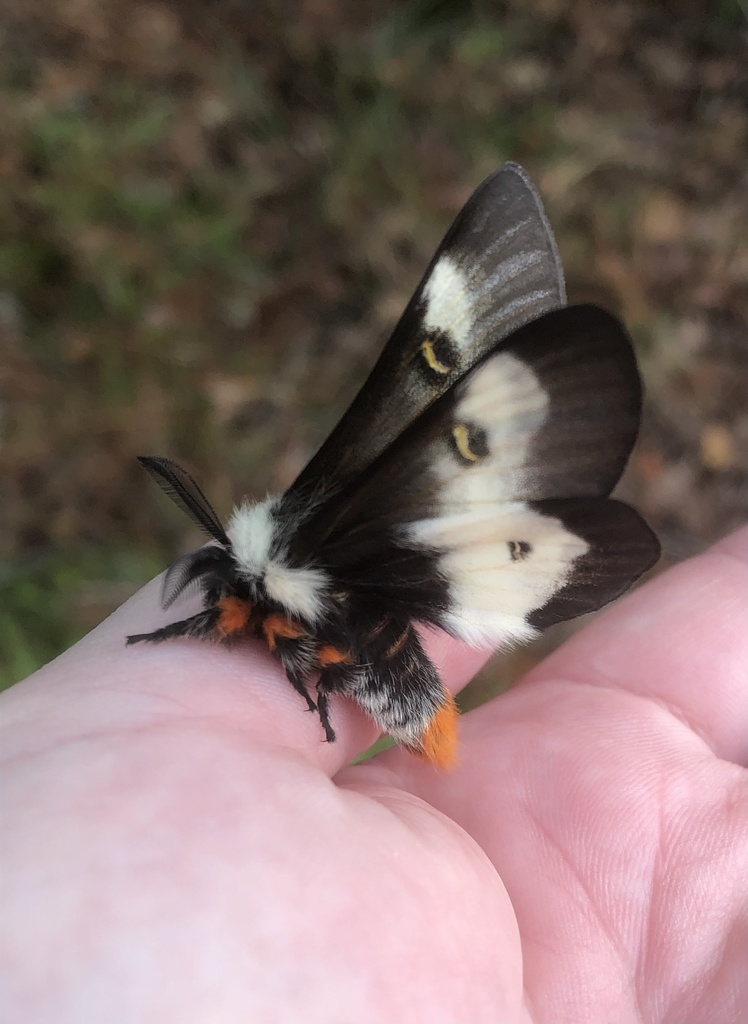
The Gulf Coast Buck Moth is a beautiful insect with big, fluffy bodies and striking colors. They are often seen fluttering around in the warm coastal areas, especially during the fall.
Hábitat: Coastal areas
The Gulf Coast Buck Moth has striking yellow forewings with a prominent black band, often edged in fiery orange or red. Its hindwings are solid black, contrasting sharply with a yellow margin. This daytime flyer has a furry black body and distinctive antennae, making it stand out against green foliage.
Categoría
InsectosRareza
Common
Peligro
1/5 · Muy bajo
Snaps
¡Sé la primera persona en hacer un snap!
Adult moths don't eat at all! They live off stored energy.
Its caterpillars eat specific marsh grasses, becoming spiny and colorful!
Males have feathery antennae to sniff out females from far away!
They fly only in late autumn and early winter afternoons!
Gulf Coast Buck Moth can fly during the day because of its adaptation to active flight in sunlight, that helps them find mates when many predators are active.
Gulf Coast Buck Moth has bright contrasting colors that help them warn predators they are unpalatable or toxic, deterring attacks.
Gulf Coast Buck Moth can emerge and fly in late fall/early winter because of its specialized life cycle, that helps them avoid competition and some predators.
Adults don't eat, but their spiny caterpillars munch on marsh grasses!
Diferencias por edad: Adult moths do not feed, relying on energy stored from their plant-eating caterpillar stage.
Arundinaria tecta
Larvae feed exclusively on its leaves.

Phragmites australis
Larvae may also feed on its leaves.
Toxostoma rufum
Birds may prey on adult moths.
Peludo describe a los animales que poseen una cubierta densa de pelo o pelaje suave.
Los animales solitarios viven solos durante la mayor parte de su vida y solo interactúan con otros para aparearse o cuidar de sus crías.
Colorido describe a organismos u objetos que exhiben una amplia variedad de colores brillantes y distintivos.
Este rasgo caracteriza a los organismos cuya dieta consiste total o principalmente en material vegetal.

Describe plantas que son particularmente atractivas y beneficiosas para una amplia variedad de organismos polinizadores.

Los hábitats costeros son entornos dinámicos situados a lo largo de la interfaz entre la tierra y el mar, influenciados por las mareas, las olas y el agua salada.

Los animales diurnos están activos principalmente durante el día y suelen descansar o dormir por la noche.

Describe organismos que transfieren polen, permitiendo la fertilización y reproducción de las plantas.
Todavía no hay alias listados.
Peligro
1/5 · Muy bajo
Moths are usually safe to watch, but it's best not to touch them.
40-70 mm
20-35 mm
5-10 días
8 km/h
Adults don't eat, but their spiny caterpillars munch on marsh grasses!
Coastal areas
Foraging
6
Acércate para separar los grupos y explorar dónde se ha fotografiado este objeto.
Los snaps recientes aparecerán aquí a medida que se añadan nuevas observaciones.




_on_Arctostaphylos_parryana%E2%80%94RPBG_(14636065667).jpg&width=800)