

Icarian Treacle Mustard
erysimum scoparium
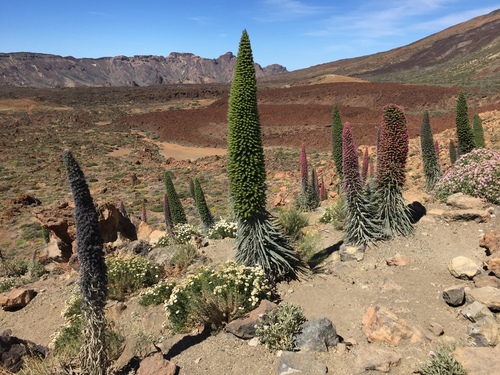
The Icarian Treacle Mustard, scientifically known as Erysimum scoparium, is a resilient and striking perennial subshrub endemic to the high-altitude volcanic regions of the Canary Islands, notably around Mount Teide in Tenerife. Thriving in harsh, windswept environments where few other plants can survive, this wallflower species has adapted beautifully to intense sunlight, poor volcanic soils, and dramatic temperature fluctuations. It forms dense, rounded, broom-like mounds that burst into color during the spring, offering vital resources to local high-altitude pollinators. Its presence adds a touch of vibrant life to the otherwise barren, extra-terrestrial-looking volcanic landscapes. Nature enthusiasts and hikers visiting the high peaks of the Canaries often admire this plant for its rugged survival skills and sweet-scented floral displays that transition from white to deep violet as they age.
Hábitat: Found in dry, high-altitude volcanic scrublands and rocky slopes of the Canary Islands, particularly around Mount Teide.
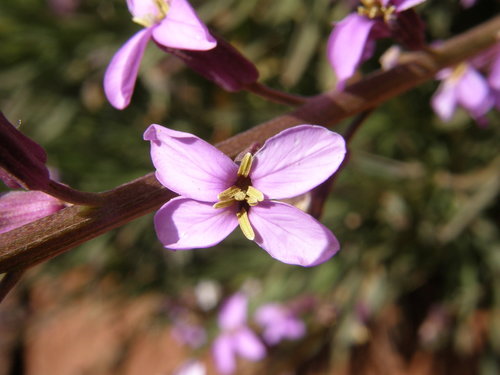
Erysimum scoparium is a woody-based perennial shrub growing between 30 and 120 centimeters in height, characterized by its dense, upright, broom-like branching habit. It features narrow, linear, grey-green leaves that are covered in fine, pressed hairs, giving the foliage a silvery-matte appearance. The flowers are arranged in dense terminal racemes; each small flower has four petals that display a dramatic color gradient. Newly opened flowers start as a pale lilac, white, or yellow, gradually darkening to an intense violet or purple as they age and are pollinated, creating a multi-colored cluster effect on a single stalk.
Categoría
PlantasRareza
Common
Peligro
1/5 · Muy bajo
Snaps
¡Sé la primera persona en hacer un snap!
Its color-changing petals serve as an efficient guide for bees, ensuring that pollinators do not waste energy visiting already pollinated flowers.
The specific epithet 'scoparium' means broom-like in Latin, referring to its stiff, brushy branches.
This resilient plant can withstand temperatures below freezing during alpine winter nights as well as intense midday heat.
The blossoms shift color from pale white to deep violet after pollination, signaling to visiting insects which flowers still contain nectar.
It possesses a highly specialized root system capable of extracting scarce nutrients and water from dry, highly porous volcanic ash.
Its narrow leaves are coated with dense, microscopic hairs that reflect excess solar radiation and reduce water loss.
As a photoautotrophic plant, it produces its own energy through photosynthesis, converting sunlight, carbon dioxide, and water into sugars.
Bombus canariensis
Pollinated by this native bee which is attracted to its color-changing blossoms.
Oryctolagus cuniculus
Foraged upon heavily by this introduced invasive mammal, which threatens its wild regeneration.
Aún no hay insignias de rasgos asignadas a este objeto.
Todavía no hay alias listados.
Las colecciones para este objeto aparecerán aquí a medida que se añadan más temas.
Peligro
1/5 · Muy bajo
Todavía no hay notas especiales de seguridad.
La forma más fácil de identificar a Icarian Treacle Mustard es usar la aplicación de identificación de naturaleza Snappit.
30-120 cm
2-10 años
As a photoautotrophic plant, it produces its own energy through photosynthesis, converting sunlight, carbon dioxide, and water into sugars.
Found in dry, high-altitude volcanic scrublands and rocky slopes of the Canary Islands, particularly around Mount Teide.
Acércate para separar los grupos y explorar dónde se ha fotografiado este objeto.
Los snaps recientes aparecerán aquí a medida que se añadan nuevas observaciones.