Japanese holly
Ilex crenata
Japanese holly is a small, evergreen shrub with shiny green leaves. It can grow in gardens and parks, making them look beautiful all year round!
Hábitat: Urban areas
The Japanese holly is a dense evergreen shrub with tiny, oval, spineless leaves that are glossy dark green. It produces small, inconspicuous greenish-white flowers, followed by an abundance of small, round, black berries, making it look quite different from traditional prickly hollies.
Categoría
PlantasRareza
Common
Peligro
2/5 · Bajo
Snaps
¡Sé la primera persona en hacer un snap!
Even though it's called 'holly', its leaves are smooth, not prickly!
It's a master of disguise, often mistaken for a boxwood plant!
Its dark berries look like tiny black pearls hidden among the leaves!
Some types of Japanese holly only grow a few inches tall!
Japanese holly can keep its green leaves all winter long, helping it collect sunlight and stay vibrant when other plants are bare.
Japanese holly has strong branches and tiny leaves that let it be pruned into fun shapes, helping it fit perfectly in any garden.
Japanese holly has many small black berries that provide an important food source for birds, helping them find snacks in cold months.
Apis mellifera
Collects nectar and pollen
Turdus obscurus
Eats the plant's small berries
Bombycilla japonica
Feeds on the plant's berries
Las plantas ornamentales se cultivan principalmente por su atractivo estético, embelleciendo paisajes y jardines con su atractivo follaje, flores o forma.
Un arbusto es una planta leñosa más pequeña que un árbol, típicamente con múltiples tallos que se ramifican desde o cerca del suelo.
Las plantas tolerantes a la sombra están adaptadas para crecer y prosperar en áreas con bajos niveles de luz, requiriendo menos luz solar directa.
Las plantas de hoja perenne conservan su follaje durante todo el año, sin perder nunca todas sus hojas a la vez.

Las plantas frutales producen frutos, que son los ovarios maduros de las plantas con flores que contienen semillas.

Esta característica de hábitat indica especies que pueden coexistir con los humanos en entornos urbanos y suburbanos, utilizando estructuras artificiales y espacios verdes.
Todavía no hay alias listados.
Peligro
2/5 · Bajo
Always wash your hands after touching plants, and don't eat any berries without asking an adult.
100-300 cm
100-250 cm
0.3-0.5 cm
Late spring to early summer
No
Leve
Perenne
Insectos
Acércate para separar los grupos y explorar dónde se ha fotografiado este objeto.
Los snaps recientes aparecerán aquí a medida que se añadan nuevas observaciones.
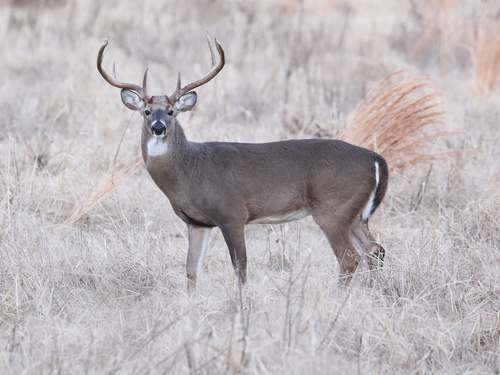
Virginia, US
Puedes ver Ciervo De Cola Blanca, American Tuliptree y Acebo.
Ver guía →
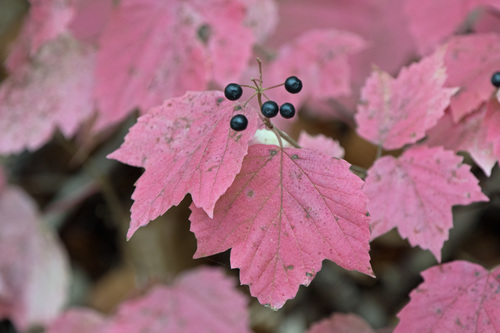
Virginia, US
Puedes ver Mapleleaf Viburnum, Japanese Holly y Common Bonnet.
Ver guía →
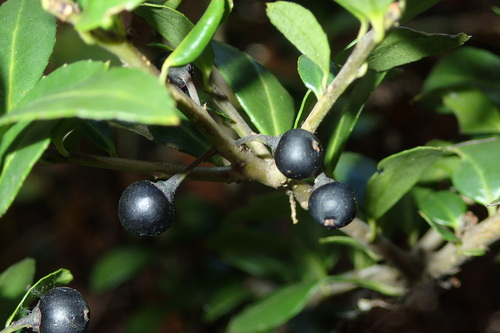
Virginia, US
Puedes ver Japanese Holly, Asian Jumpseed y Violetas.
Ver guía →
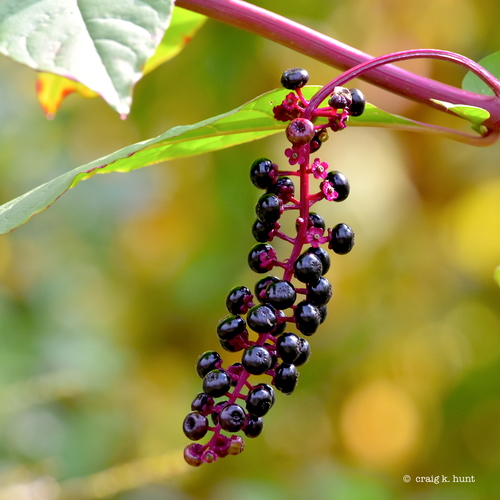
Maryland, US
Puedes ver American Pokeweed, Varas De Oro y Common Hackberry.
Ver guía →