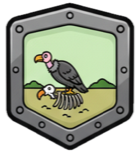


King Vulture
Sarcoramphus papa
The King Vulture is a colorful bird known for its bright feathers and large size. It helps keep nature clean by eating dead animals, making it an important part of the ecosystem.
Hábitat: Forests
The King Vulture has a striking appearance with a largely creamy-white body and contrasting black flight feathers. Its bald head boasts vibrant skin in shades of orange, yellow, red, and blue, crowned with a distinctive orange wattle above its powerful beak, making it easily distinguishable.
Categoría
AvesRareza
Common
Peligro
2/5 · Bajo
Snaps
¡Sé la primera persona en hacer un snap!
Baby king vultures are born with dark feathers and a fuzzy, dull gray head.
King Vultures can soar so high they sometimes fly above the clouds!
Their name comes from a legend that they are the kings and queens of other vultures!
They often help smaller vultures by using their strong beaks to open large, tough carcasses.
King Vultures can spot small carcasses from incredible heights because of their keen eyesight, helping them find food efficiently.
King Vultures have a strong, hooked beak that helps them tear open the tough hides of large animals to reach their meal.
King Vultures can ride warm air currents for hours without flapping their wings, saving energy while searching vast areas for food.
These vultures are nature's clean-up crew, primarily eating the carrion (dead animals) they find.
Cathartes aura
for opening large carcasses with tough hides.
Tapirus terrestris
carrion of dead tapirs when available.
Caiman crocodilus
carrion of dead caimans found in its range.

Pecari tajacu
carrion of dead peccaries from natural causes.
Describe a los animales, principalmente aves, que poseen una cubierta de plumas.
Los animales sociales viven en grupos organizados, cooperando para obtener beneficios de supervivencia como la búsqueda de alimento, la defensa y la cría de descendencia.
Los carroñeros consumen materia orgánica muerta, ayudando a descomponer los cadáveres y otros desechos en el ecosistema.
Colorido describe a organismos u objetos que exhiben una amplia variedad de colores brillantes y distintivos.

Los hábitats boscosos son entornos terrestres dominados por una densa cubierta arbórea, que sustentan una gran diversidad de vida animal y vegetal.

Describe a los organismos que descomponen la materia orgánica muerta, reciclando los nutrientes de vuelta al ecosistema.

Este rasgo identifica a los organismos cuya dieta consiste total o principalmente en tejido animal.

Los animales diurnos están activos principalmente durante el día y suelen descansar o dormir por la noche.

Describe una especie cuya presencia y papel tienen un efecto desproporcionadamente grande en su entorno.

El estado de amenazado indica que es probable que una especie pase a estar en peligro de extinción en el futuro cercano si no se toman medidas efectivas de conservación.
Todavía no hay alias listados.
Peligro
2/5 · Bajo
Always watch birds from a distance and never try to touch them.
71-80 cm
170-200 cm
2.7-4.5 kg
20-30 años
50 km/h
These vultures are nature's clean-up crew, primarily eating the carrion (dead animals) they find.
Forests
Scavenging
Acércate para separar los grupos y explorar dónde se ha fotografiado este objeto.
Los snaps recientes aparecerán aquí a medida que se añadan nuevas observaciones.

Georgia, US
Puedes ver León Africano, Jirafas y Common Ostrich.
Ver guía →
Texas, US
Puedes ver León Africano, Zorro Rojo y Common Ostrich.
Ver guía →
England, UK
Puedes ver León Africano, Dragón De Komodo y Common Ostrich.
Ver guía →

California, US
Puedes ver Yellow-Footed Tortoise, Ajolote y Panda Rojo.
Ver guía →

Texas, US
Puedes ver Dragón De Komodo, Domestic Bactrian Camel y Spectacled Bear.
Ver guía →
Hawaii, US
Puedes ver León Africano, Dragón De Komodo y Jirafas.
Ver guía →








.jpg&width=800)