
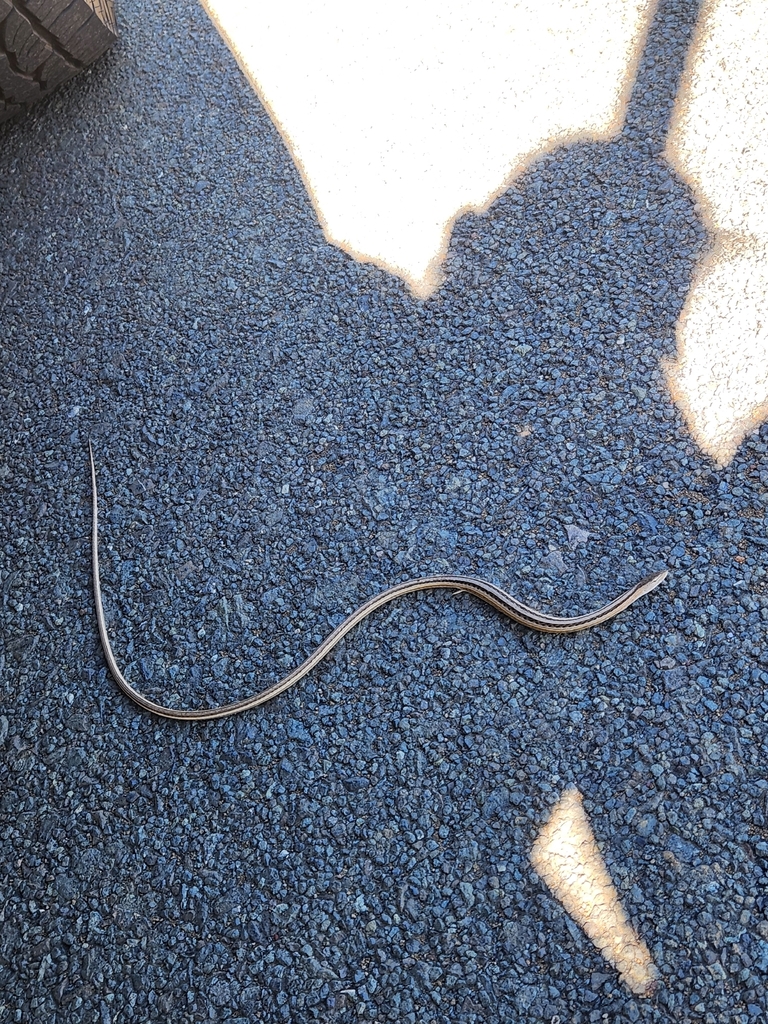





Large-Scale Grass Lizard
chamaesaura macrolepis
The Large-Scale Grass Lizard is a fascinating reptile that loves to bask in the sun. With its large, scaly body and quick movements, it is a master of camouflage in grassy areas!
Hábitat: Open grasslands and savannahs in warm climates.
The Large-Scale Grass Lizard has an exceptionally long, slender body with tiny, reduced limbs, making it look snake-like. Its body is covered in large, keeled scales and typically appears in shades of brown, olive-green, or grey to blend seamlessly into tall grasses.
Categoría
ReptilesRareza
Common
Peligro
1/5 · Muy bajo
Snaps
¡Sé la primera persona en hacer un snap!
Despite having legs, it often moves by wiggling like a snake through dense grasses.
Its body can be up to three times longer than its head, thanks to an incredibly long tail!
These lizards are sometimes called "snake-lizards" because of their very long body and reduced limbs.
They can hold their breath for several minutes to hide from airborne threats in water puddles.
Large-Scale Grass Lizard can drop its tail if grabbed, wiggling to distract a predator and allow the lizard to escape.
Large-Scale Grass Lizard has live birth (viviparity) which helps its young avoid egg predators and develop safely inside the mother.
Large-Scale Grass Lizard has a sleek, often striped body coloration that helps it blend perfectly into the tall grass, hiding from predators.
Large-Scale Grass Lizard has large, tough, keeled scales that provide extra protection against rough vegetation and potential attackers.
This lizard is a skilled hunter of small insects and other tiny invertebrates found in the grass.
Buteo rufofuscus
A common bird of prey in its habitat.
Dispholidus typus
A tree snake that hunts lizards.
Gryllus bimaculatus
A primary food source in its grassy environment.
Locusta migratoria
A large insect prey abundant in its habitat.
Los animales solitarios viven solos durante la mayor parte de su vida y solo interactúan con otros para aparearse o cuidar de sus crías.
El camuflaje describe a los organismos que poseen colores o patrones que les permiten mezclarse con su entorno.
Este rasgo identifica a los organismos cuya dieta consiste total o principalmente en tejido animal.
Los animales diurnos están activos principalmente durante el día y suelen descansar o dormir por la noche.
Peligro
1/5 · Muy bajo
Always observe lizards from a distance; they are wild animals.
30-70 cm
0.03-0.1 kg
5-8 años
15 km/h
This lizard is a skilled hunter of small insects and other tiny invertebrates found in the grass.
Open grasslands and savannahs in warm climates.
Foraging
2-6
Acércate para separar los grupos y explorar dónde se ha fotografiado este objeto.
Los snaps recientes aparecerán aquí a medida que se añadan nuevas observaciones.





.jpg&width=800)


.JPG&width=800)






