

Laurobasidium lauri
laurobasidium lauri
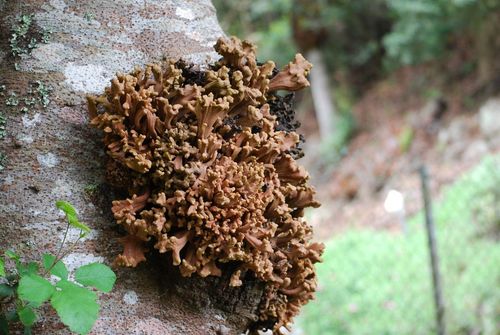
Laurobasidium lauri es un fascinante hongo parásito, específico de huésped, famoso por producir espectaculares crecimientos en forma de cuernos en los troncos y ramas de los laureles. Se encuentra exclusivamente en los singulares bosques de laurisilva de Macaronesia, envueltos en niebla (incluyendo Madeira, las Azores y las Islas Canarias), esta especie induce a la planta huésped a formar grandes agallas leñosas conocidas localmente como 'Madre de louro'. A pesar de su naturaleza parasitaria, suele coexistir con su huésped durante muchos años sin matarlo. Este hongo desempeña un papel distintivo en el ecosistema del bosque nublado, mostrando una relación simbiótica altamente evolucionada y especializada que depende completamente del ambiente húmedo y antiguo del bosque de laureles.
Hábitat: Se encuentra en bosques de laureles húmedos y de gran altitud (Laurisilva), creciendo exclusivamente como parásito en los troncos y ramas de los laureles macaronésicos.
En la naturaleza, Laurobasidium lauri es fácilmente reconocible por sus espectaculares agallas multilobuladas o en forma de cuernos que brotan directamente de la corteza de los laureles. Estos crecimientos son típicamente de color marrón amarillento a marrón chocolate oscuro, con una textura dura y leñosa-carnosa. Pueden variar en tamaño desde pequeñas proyecciones en forma de dedo de unos pocos centímetros hasta estructuras masivas y ramificadas que alcanzan hasta 50 centímetros de longitud. Durante períodos de alta humedad, la superficie de estas agallas puede adquirir una apariencia aterciopelada y pálida a medida que se cubren de estructuras microscópicas productoras de esporas.
Categoría
HongosRareza
Común
Peligro
1/5 · Muy bajo
Snaps
¡Sé la primera persona en hacer un snap!
A pesar de formar crecimientos masivos, parecidos a tumores, el hongo rara vez mata a su árbol huésped, manteniendo un equilibrio parasitario estable durante décadas.
En Madeira, estos extraños crecimientos se llaman tradicionalmente 'Madre de louro'.
Su apariencia depende en gran medida del clima; las agallas secas parecen madera muerta, pero se hinchan y se convierten en productoras activas de esporas en presencia de niebla densa.
La señalización química desencadena que el laurel huésped desarrolle estructuras leñosas masivas y protectoras que albergan y alimentan al hongo.
Libera esporas predominantemente durante períodos de alta niebla y precipitación, asegurando condiciones óptimas para la colonización.
La estructura vegetativa sobrevive durante varios años dentro de los tejidos del huésped, produciendo nuevas agallas portadoras de esporas temporada tras temporada.
Absorbe agua, carbohidratos y nutrientes vitales directamente de los tejidos vasculares vivos de sus árboles huésped de laurel.
Laurus novocanariensis
Actúa como un parásito específico de huésped, induciendo la formación de agallas en las ramas y el tronco de este árbol endémico.
Laurus azorica
Utiliza esta especie de árbol huésped en las Azores para obtener nutrición y soporte estructural.
Aún no hay insignias de rasgos asignadas a este objeto.
Todavía no hay alias listados.
Las colecciones para este objeto aparecerán aquí a medida que se añadan más temas.
Peligro
1/5 · Muy bajo
Todavía no hay notas especiales de seguridad.
Compara la forma del sombrero, la parte inferior, el pie y su base, y si el hongo crece sobre madera o sobre el suelo. Unos tienen láminas, otros poros o aguijones. Un sombrero visto solo desde arriba suele ocultar los rasgos más útiles. Identificador de setas: sube una foto y compara los detalles visibles.
5-50 cm
0.1-2 kg
2-15 años
Absorbe agua, carbohidratos y nutrientes vitales directamente de los tejidos vasculares vivos de sus árboles huésped de laurel.
Se encuentra en bosques de laureles húmedos y de gran altitud (Laurisilva), creciendo exclusivamente como parásito en los troncos y ramas de los laureles macaronésicos.
Absorción Parasitaria
Acércate para separar los grupos y explorar dónde se ha fotografiado este objeto.
Los snaps recientes aparecerán aquí a medida que se añadan nuevas observaciones.
Llévate el descubrimiento
Haz una foto con Snappit, identifica la especie y guarda el hallazgo en tu colección.