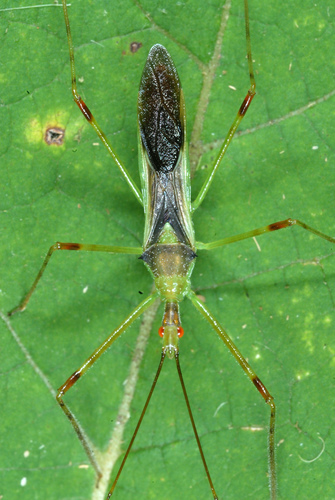
Magnolia Green Jumping Spider
lyssomanes viridis
The Magnolia Green Jumping Spider is a playful little creature that loves to leap around and explore! With its bright green color, it blends in beautifully with the leaves and flowers around it.
Hábitat: They can be found in gardens, forests, and areas with plenty of plants.
The Magnolia Green Jumping Spider has a slender, bright, iridescent green body that makes it stand out against foliage. Its eight eyes, including two prominent forward-facing ones, provide excellent vision. Unlike many spiders, it is not hairy, giving it a smooth, gem-like appearance.
Categoría
InsectosRareza
Common
Peligro
0/5 · Sin peligro conocido
Snaps
¡Sé la primera persona en hacer un snap!
Its scientific name, *Lyssomanes viridis*, means 'green loose-bodied'.
Males perform a vibrant dance to attract a female partner.
These spiders don't spin webs for catching food, they hunt directly!
They build a tiny silk hideout to sleep and molt safely.
Magnolia Green Jumping Spider can jump impressive distances because of strong leg muscles that help them ambush prey or escape danger.
Magnolia Green Jumping Spider has excellent vision with eight eyes that helps them track moving prey and navigate their environment.
Magnolia Green Jumping Spider can produce a silk safety line as they jump, helping them recover if they miss their target.
Tiny hunters, they feast on small insects they ambush with incredible leaps.
Aphis gossypii
Feeds on these common garden pests.
Anolis carolinensis
A small lizard that preys on spiders.
Magnolia grandiflora
Often found camouflaged on leaves of magnolia trees.
Los animales solitarios viven solos durante la mayor parte de su vida y solo interactúan con otros para aparearse o cuidar de sus crías.
Los animales arborícolas viven principalmente en los árboles, utilizándolos como refugio, alimento y protección contra los depredadores.
Colorido describe a organismos u objetos que exhiben una amplia variedad de colores brillantes y distintivos.
Este rasgo identifica a los organismos cuya dieta consiste total o principalmente en tejido animal.

Los animales diurnos están activos principalmente durante el día y suelen descansar o dormir por la noche.
Peligro
0/5 · Sin peligro conocido
Todavía no hay notas especiales de seguridad.
3-7 mm
300-400 días
Tiny hunters, they feast on small insects they ambush with incredible leaps.
They can be found in gardens, forests, and areas with plenty of plants.
Ambush
8
Acércate para separar los grupos y explorar dónde se ha fotografiado este objeto.
Los snaps recientes aparecerán aquí a medida que se añadan nuevas observaciones.