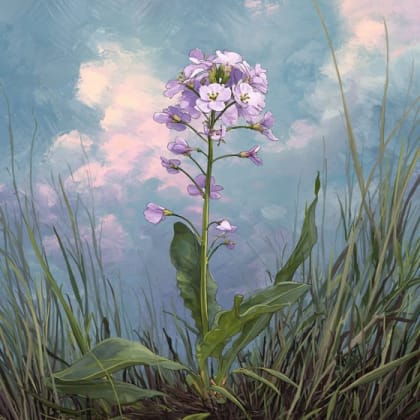
mat rock spiraea
Petrophytum caespitosum
Mat rock spiraea is a small, beautiful shrub that grows in rocky places. Its tiny flowers bloom in clusters, making it a lovely sight in nature.
Hábitat: Mountain regions
The mat rock spiraea is a low-growing subshrub, forming dense, compact mats with small, oval, sage-green leaves. It produces abundant clusters of tiny, five-petaled white or pale pink flowers, which create a delicate contrast against its harsh, rocky habitat.
Categoría
PlantasRareza
Common
Peligro
1/5 · Muy bajo
Snaps
¡Sé la primera persona en hacer un snap!
Despite its small size, some mat rock spiraea plants can live for over 100 years.
Its scientific name, *Petrophytum*, actually means 'rock plant' in Greek!
This amazing plant can grow directly out of cracks in solid rock with almost no soil!
Tiny bees and butterflies visit these tough plants, even on windy mountain cliffs.
Mat rock spiraea has an extensive, deep root system that can penetrate tiny rock crevices, anchoring it securely against strong winds and erosion.
This spiraea grows in a tight, cushion-like form, which helps it withstand severe temperatures and powerful winds on exposed mountain slopes.
It has small, thick, often hairy leaves that are adapted to minimize water loss, allowing the plant to thrive in very dry, rocky environments.
Apis mellifera
Visits flowers for nectar.
Bombus bifarius
Active pollinator in alpine areas.
Vanessa cardui
Sips nectar from blossoms.
Las plantas caducifolias pierden periódicamente todas sus hojas, por lo general durante el otoño o las estaciones secas.
Las plantas con flores son cualquier planta que produce flores como parte de su ciclo reproductivo.
Un arbusto es una planta leñosa más pequeña que un árbol, típicamente con múltiples tallos que se ramifican desde o cerca del suelo.
Las flores en racimo son inflorescencias donde las flores individuales están dispuestas muy juntas en un tallo común.

Colorido describe a organismos u objetos que exhiben una amplia variedad de colores brillantes y distintivos.

Describe plantas que son particularmente atractivas y beneficiosas para una amplia variedad de organismos polinizadores.

Este rasgo de hábitat identifica a las especies que se encuentran en regiones montañosas, caracterizadas por su gran altitud, pendientes pronunciadas y zonas climáticas variables.
Todavía no hay alias listados.
Peligro
1/5 · Muy bajo
Always look but don't touch plants unless you know they are safe.
10-30 cm
0.3-0.5 cm
Verano
No
Ninguna
Perenne
Insectos
Mountain regions
Acércate para separar los grupos y explorar dónde se ha fotografiado este objeto.
Los snaps recientes aparecerán aquí a medida que se añadan nuevas observaciones.








.jpg&width=800)