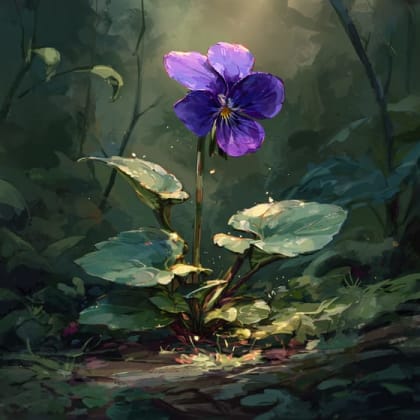
Mealy Blue Sage
Salvia farinacea
Mealy Blue Sage is a beautiful flower with lovely blue-purple blooms. It attracts butterflies and bees, making gardens colorful and lively!
Hábitat: Grasslands
The Mealy Blue Sage has tall, slender spikes of densely packed, vibrant blue-violet flowers, often appearing fuzzy due to its distinctive white or grey 'mealy' coating on stems and calyxes. Its lance-shaped leaves are typically a muted green, contrasting beautifully with the bright blooms.
Categoría
PlantasRareza
Common
Peligro
1/5 · Muy bajo
Snaps
¡Sé la primera persona en hacer un snap!
After flowers fade, its fuzzy, colorful stems still look cool in the garden!
Gently rub its leaves to discover a faint, fresh, secret scent!
It's like a garden magnet, pulling in busy bees, bright butterflies, and even hummingbirds!
Its scientific name 'farinacea' means 'flour-like' for its powdery stems!
Mealy Blue Sage has roots that can reach deep into the soil, helping it find water and stay vibrant even during dry spells.
Mealy Blue Sage can wave its bright blue flowers like flags, inviting bees and butterflies to feast on its sweet nectar.
Mealy Blue Sage has a powdery coating on its stems and flowers that protects it from sun and might deter munching pests.
Apis mellifera
collects nectar and pollen
Danaus plexippus
feeds on nectar from the blooms

Archilochus colubris
sips nectar with its long beak
Myzus persicae
sucks sap from leaves and stems
Hippodamia convergens
preys on aphids that feed on the sage
Las plantas con flores son cualquier planta que produce flores como parte de su ciclo reproductivo.
Las plantas ornamentales se cultivan principalmente por su atractivo estético, embelleciendo paisajes y jardines con su atractivo follaje, flores o forma.
Un arbusto es una planta leñosa más pequeña que un árbol, típicamente con múltiples tallos que se ramifican desde o cerca del suelo.
Las plantas de floración de verano producen sus flores durante la temporada estival, a menudo aportando un color vibrante cuando muchas otras plantas ya han terminado de florecer.

Las flores fragantes emiten un aroma agradable, a menudo para atraer polinizadores o como defensa.

Las plantas tolerantes a la sequía pueden sobrevivir y florecer en condiciones de escasa disponibilidad de agua.

Describe plantas que son particularmente atractivas y beneficiosas para una amplia variedad de organismos polinizadores.

Los hábitats de pastizales son biomas terrestres dominados por pastos y plantas herbáceas, que sustentan a una variedad de animales de pastoreo.
Todavía no hay alias listados.
Peligro
1/5 · Muy bajo
Always look but don't touch flowers without asking an adult.
60-90 cm
30-45 cm
1-2 cm
Summer to fall
No
Ninguna
Perenne
Insectos
Acércate para separar los grupos y explorar dónde se ha fotografiado este objeto.
Los snaps recientes aparecerán aquí a medida que se añadan nuevas observaciones.




.jpg)