






Northern Curly-tailed Lizard
Leiocephalus carinatus
The Northern Curly-tailed Lizard is a small, colorful lizard that loves to bask in the sun. It has a curly tail that helps it balance and look extra cute!
Hábitat: Coastal areas
The Northern Curly-tailed Lizard has a long, strikingly curled tail that spirals upwards. Its body is typically brown or gray with dark crossbands, and males often display iridescent blue or green on their heads and throats, making them distinctive from other local lizards.
Categoría
ReptilesRareza
Common
Peligro
1/5 · Muy bajo
Snaps
¡Sé la primera persona en hacer un snap!
Males do push-ups to show off and defend territory.
Their tails often spiral like a corkscrew!
These lizards are not native to Florida, they were introduced!
They can sometimes drop their tails to escape danger.
Northern Curly-tailed Lizard can curl its tail high because this unique posture helps them communicate their presence and territorial claims to rivals.
Northern Curly-tailed Lizard can warm up fast because their dark scales quickly absorb sunlight, giving them energy for hunting and escaping.
Northern Curly-tailed Lizard can run incredibly fast because long, powerful hind legs provide bursts of speed to evade predators swiftly.
These lizards are opportunistic eaters, munching on a variety of insects and sometimes even small plants!
Felis catus
Feral and pet cats frequently hunt them.
Buteo jamaicensis
Birds of prey are common predators.
Anolis carolinensis
They opportunistically prey on smaller lizards.

Blatta orientalis
Commonly consumes various insect species.
Crestado describe a los animales que poseen un mechón prominente de plumas, pelo o piel en la cabeza.
Los animales arborícolas viven principalmente en los árboles, utilizándolos como refugio, alimento y protección contra los depredadores.
El camuflaje describe a los organismos que poseen colores o patrones que les permiten mezclarse con su entorno.
Colorido describe a organismos u objetos que exhiben una amplia variedad de colores brillantes y distintivos.

Este rasgo identifica a los organismos cuya dieta consiste principalmente en insectos y otros pequeños invertebrados.

Los hábitats costeros son entornos dinámicos situados a lo largo de la interfaz entre la tierra y el mar, influenciados por las mareas, las olas y el agua salada.

Los animales diurnos están activos principalmente durante el día y suelen descansar o dormir por la noche.

Este rasgo identifica a los organismos que exhiben una rapidez excepcional en sus movimientos para cazar, escapar o desplazarse.
Todavía no hay alias listados.
Peligro
1/5 · Muy bajo
Always watch from a distance and don't try to catch them; they are best left in the wild.
18-30 cm
0.02-0.05 kg
3-6 años
25 km/h
These lizards are opportunistic eaters, munching on a variety of insects and sometimes even small plants!
Coastal areas
Ambush
2-6
Acércate para separar los grupos y explorar dónde se ha fotografiado este objeto.
Los snaps recientes aparecerán aquí a medida que se añadan nuevas observaciones.
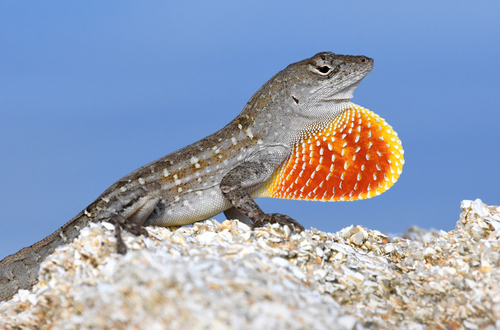
Florida, US
Puedes ver Anolis Castaño, Shiny-Leaved Wild Coffee y Firebush.
Ver guía →
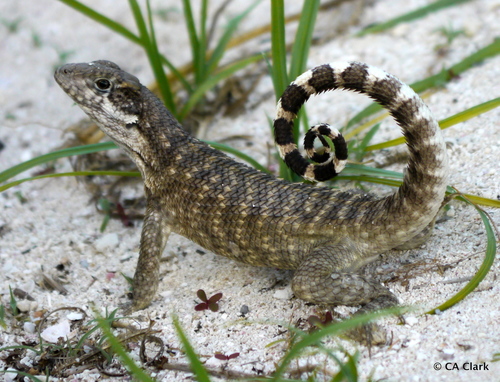
Florida, US
Puedes ver Northern Curly-Tailed Lizard, Iguana Verde y Triangle Cactus.
Ver guía →
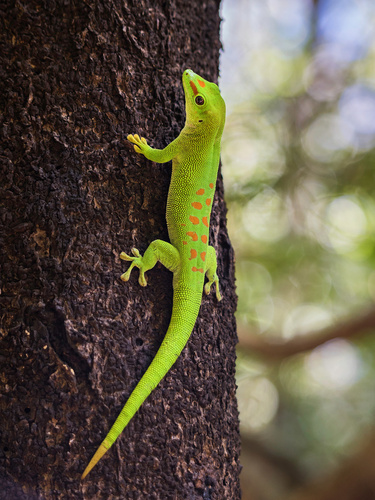
Florida, US
Puedes ver Madagascar Giant Day Gecko, Iguana Verde y Anolis Castaño.
Ver guía →










_(6-22-10)_canet_rd%2C_morro_bay%2C_slo_co%2CCA_-1_(4747274015).jpg&width=800)