Northern Zigzag Salamander
Plethodon dorsalis
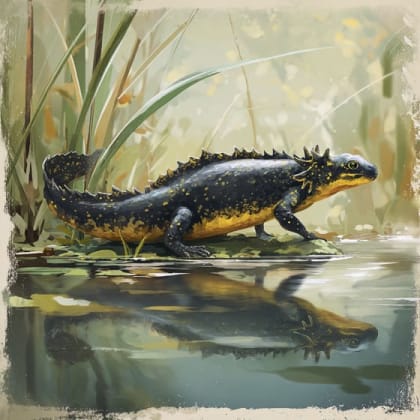
The Northern Zigzag Salamander is a small, colorful creature that loves to hide under rocks and leaves. It has a unique zigzag pattern on its back that helps it blend in with its forest home.
Hábitat: Forests
The Northern Zigzag Salamander is a small, slender amphibian with a distinctive red, orange, or yellow "zigzag" stripe running down its back. This wavy stripe contrasts sharply with its dark brown to black body, making it look like a tiny lightning bolt.
Categoría
AnfibiosRareza
Common
Peligro
1/5 · Muy bajo
Snaps
¡Sé la primera persona en hacer un snap!
Some can go months without food by slowing their metabolism!
These salamanders never drink water; they absorb it through their skin!
They don't have lungs, relying entirely on their damp skin to breathe!
They lay eggs underground and guard them until they hatch!
Northern Zigzag Salamander can detach its tail to escape predators, which then wiggles to distract attackers while the salamander slips away to safety.
Northern Zigzag Salamander has a cryptic zigzag pattern that helps them blend perfectly with leaf litter and moss, making it hard for predators to spot them.
Northern Zigzag Salamander has slightly noxious skin secretions that can deter some predators, helping them avoid being eaten.
Tiny salamanders munch on small insects and other invertebrates they find in the forest.
Formica fusca
A common prey item in their forest habitat.
Porcellionides pruinosus
Feeds on these small crustaceans in damp areas.
Thamnophis sirtalis
A primary predator in their natural environment.
Procyon lotor
Opportunistic predator that may find salamanders.
Los animales solitarios viven solos durante la mayor parte de su vida y solo interactúan con otros para aparearse o cuidar de sus crías.
Los animales arborícolas viven principalmente en los árboles, utilizándolos como refugio, alimento y protección contra los depredadores.
El camuflaje describe a los organismos que poseen colores o patrones que les permiten mezclarse con su entorno.
Colorido describe a organismos u objetos que exhiben una amplia variedad de colores brillantes y distintivos.

Este rasgo identifica a los organismos cuya dieta consiste principalmente en insectos y otros pequeños invertebrados.

Los hábitats boscosos son entornos terrestres dominados por una densa cubierta arbórea, que sustentan una gran diversidad de vida animal y vegetal.

Describe a los organismos que descomponen la materia orgánica muerta, reciclando los nutrientes de vuelta al ecosistema.

Los organismos regenerativos poseen la capacidad de volver a desarrollar partes del cuerpo, tejidos u órganos perdidos o dañados.
Todavía no hay alias listados.
Peligro
1/5 · Muy bajo
If you see a salamander, watch it from a distance and don't touch it. They are delicate and need to stay safe.
7-10 cm
0.002-0.005 kg
5-10 años
0.2 km/h
Tiny salamanders munch on small insects and other invertebrates they find in the forest.
Forests
Foraging
3-20
Acércate para separar los grupos y explorar dónde se ha fotografiado este objeto.
Los snaps recientes aparecerán aquí a medida que se añadan nuevas observaciones.