






orange honeysuckle
Lonicera ciliosa
The orange honeysuckle is a beautiful shrub with bright orange flowers that attract hummingbirds and butterflies. It grows in the wild and can add color to gardens too!
Hábitat: Forests
The orange honeysuckle is a climbing vine with vibrant, trumpet-shaped orange to reddish-orange flowers. Its blossoms often grow in clusters, contrasting with its green, oval leaves that sometimes fuse together below the flowers. The slender stems twine around supports, creating a lush, colorful display.
Categoría
PlantasRareza
Common
Peligro
1/5 · Muy bajo
Snaps
¡Sé la primera persona en hacer un snap!
Early settlers sometimes used honeysuckle stems for weaving baskets!
Its vibrant orange flowers glow like tiny trumpets, announcing spring's arrival!
Some honeysuckle vines can grow over 8 meters long, reaching high into trees!
Some leaves hug the stem so tightly, they appear as one single leaf!
Orange honeysuckle has bright, tubular flowers that perfectly fit hummingbird beaks, ensuring pollination.
Orange honeysuckle can twine its flexible stems around trees and shrubs, reaching sunlight in dense forests.
Orange honeysuckle has perfoliate leaves that fuse, creating cups that collect rainwater for thirsty visitors.
Orange honeysuckle produces red berries that offer a food source for many bird species in late summer.
.jpg&width=800)
Selasphorus rufus
Sips nectar, carrying pollen between flowers.
Turdus migratorius
Eats the bright red berries, spreading seeds.
Odocoileus hemionus
Browses on the leaves and young stems.
Bombus bifarius
Visits flowers for nectar and pollen.
Las plantas aromáticas producen y emiten compuestos orgánicos volátiles fragantes, a menudo como defensa o para atraer a los polinizadores.
Las plantas caducifolias pierden periódicamente todas sus hojas, por lo general durante el otoño o las estaciones secas.
Las plantas con flores son cualquier planta que produce flores como parte de su ciclo reproductivo.
Un arbusto es una planta leñosa más pequeña que un árbol, típicamente con múltiples tallos que se ramifican desde o cerca del suelo.

Las plantas de floración de verano producen sus flores durante la temporada estival, a menudo aportando un color vibrante cuando muchas otras plantas ya han terminado de florecer.

Las plantas de floración primaveral producen sus flores durante la temporada de primavera, lo que a menudo significa el final del invierno y el comienzo de un nuevo crecimiento.

Las flores fragantes emiten un aroma agradable, a menudo para atraer polinizadores o como defensa.

Colorido describe a organismos u objetos que exhiben una amplia variedad de colores brillantes y distintivos.

Describe plantas que son particularmente atractivas y beneficiosas para una amplia variedad de organismos polinizadores.

Los hábitats boscosos son entornos terrestres dominados por una densa cubierta arbórea, que sustentan una gran diversidad de vida animal y vegetal.
Todavía no hay alias listados.
Peligro
1/5 · Muy bajo
Always check with an adult before touching or tasting any plants.
300-800 cm
100-300 cm
2-4 cm
Spring to early summer
No
Leve
Perenne
Aves
Acércate para separar los grupos y explorar dónde se ha fotografiado este objeto.
Los snaps recientes aparecerán aquí a medida que se añadan nuevas observaciones.
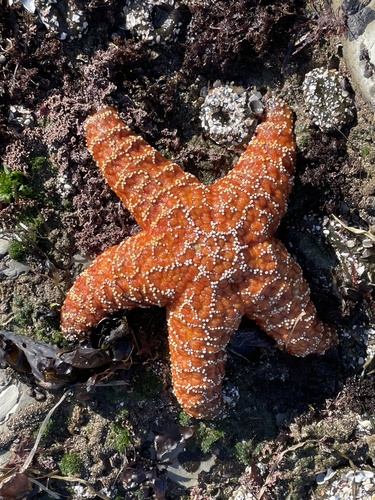
British Columbia, CA
Puedes ver Ochre Sea Star, Fringe Cups y Moonglow Anemone.
Ver guía →

Washington, US
Puedes ver Western Yellow Pond-Lily, Rose Spirea y Fireweed.
Ver guía →
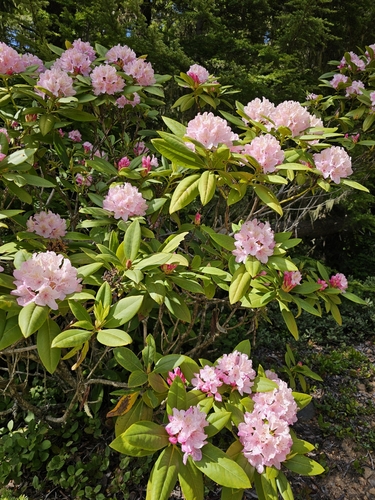
British Columbia, CA
Puedes ver Pacific Rhododendron, Vanilla Leaf y Pacific Trillium.
Ver guía →

British Columbia, CA
Puedes ver Vine Maple, Orange Honeysuckle y Licorice Fern.
Ver guía →
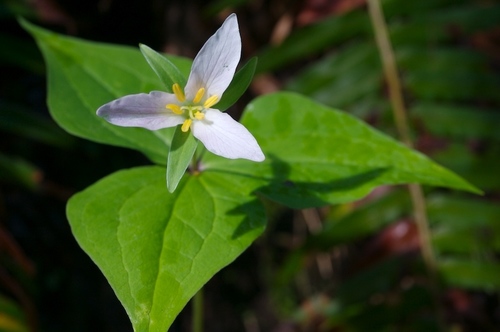
British Columbia, CA
Puedes ver Pacific Trillium, Western Redcedar y Vanilla Leaf.
Ver guía →







_Allium_vineale_-_inflorescence_immature.jpg&width=800)




