Ouessant
Ouessant
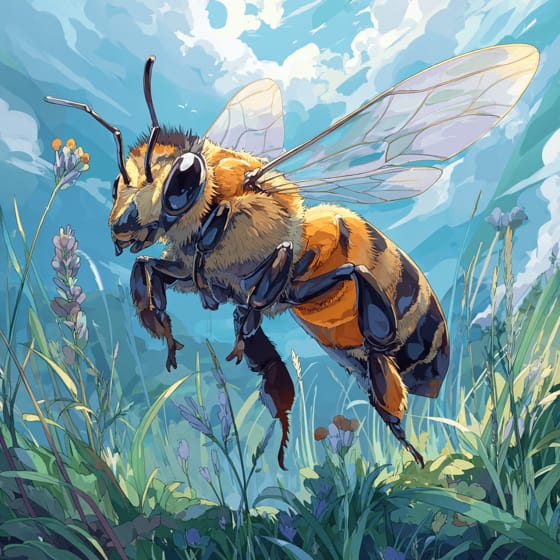
La Ouessant es un insecto diminuto al que le encanta zumbar alrededor de las flores. Tiene hermosos colores y ayuda a las plantas a crecer esparciendo polen. ¡Estas pequeñas criaturas son importantes para la naturaleza!
Hábitat: Jardines
La Ouessant es un insecto minúsculo y robusto, típicamente cubierto de un denso pelaje marrón oscuro y dorado que le da un aspecto aterciopelado. Su cuerpo compacto y sus alas iridiscentes, proporcionalmente grandes, brillan con tenues tonos azules, lo que lo distingue de las moscas comunes.
Categoría
InvertebrateRareza
Common
Peligro
1/5 · Muy bajo
Snaps
¡Sé la primera persona en hacer un snap!
¡Las alas de una Ouessant baten tan rápido que se vuelven un borrón para nuestros ojos!
¡A pesar de su tamaño, las Ouessant pueden volar hacia atrás por cortas distancias!
¡Usan pequeños pelos en sus cuerpos para saborear la dulzura del néctar!
¡Este diminuto insecto puede visitar cientos de flores en un solo día!
La Ouessant tiene un cuerpo notablemente pequeño y aplanado que le ayuda a colarse en pequeñas grietas para evadir a los depredadores.
La Ouessant puede recolectar grandes cantidades de polen en cerdas especializadas en sus patas traseras, esenciales para alimentar a sus crías.
La Ouessant puede sentir sutiles vibraciones del suelo a través de sus patas, lo que le ayuda a detectar peligros que se acercan.
Este diminuto insecto sorbe néctar de las flores para obtener energía y recolecta polen para alimentar a sus crías.

Cirsium arvense
Vital para la dispersión de semillas de esta flor silvestre común.
Apis mellifera
Compiten por el néctar pero comparten un ecosistema vital.
Misumena vatia
Un depredador común camuflado entre los pétalos de las flores.
_Clock_-_Tennessee%2C_USA_-_May_31%2C_2014.jpg&width=800)
Taraxacum officinale
Ayuda a propagar el diente de león, muy extendido y resistente.
Los animales sociales viven en grupos organizados, cooperando para obtener beneficios de supervivencia como la búsqueda de alimento, la defensa y la cría de descendencia.
Colorido describe a organismos u objetos que exhiben una amplia variedad de colores brillantes y distintivos.
Este rasgo caracteriza a los organismos cuya dieta consiste total o principalmente en material vegetal.
Describe plantas que son particularmente atractivas y beneficiosas para una amplia variedad de organismos polinizadores.

Los animales diurnos están activos principalmente durante el día y suelen descansar o dormir por la noche.

Describe una especie cuya presencia y papel tienen un efecto desproporcionadamente grande en su entorno.

Relativo a especies que son significativamente más pequeñas que lo típico o promedio de su tipo.

Esta característica de hábitat indica especies que pueden coexistir con los humanos en entornos urbanos y suburbanos, utilizando estructuras artificiales y espacios verdes.

Describe organismos que transfieren polen, permitiendo la fertilización y reproducción de las plantas.
Todavía no hay alias listados.
Peligro
1/5 · Muy bajo
Sé cuidadoso y fíjate por dónde pisas para proteger a pequeños insectos como la Ouessant.
La forma más fácil de identificar a Ouessant es usar la aplicación de identificación de naturaleza Snappit.
5-10 mm
3-6 mm
20-40 días
8 km/h
Este diminuto insecto sorbe néctar de las flores para obtener energía y recolecta polen para alimentar a sus crías.
Jardines
Forrajeo
Acércate para separar los grupos y explorar dónde se ha fotografiado este objeto.
Los snaps recientes aparecerán aquí a medida que se añadan nuevas observaciones.
Llévate el descubrimiento
Haz una foto con Snappit, identifica la especie y guarda el hallazgo en tu colección.