Pacific madrone
Arbutus menziesii
The Pacific madrone is a beautiful tree with smooth, reddish bark and shiny green leaves. It grows in coastal areas and can be found in forests, making it a special part of nature.
Hábitat: Coastal areas
The Pacific madrone has striking cinnamon-red bark that peels in thin strips, revealing a smooth, greenish underlayer. It boasts leathery, dark green evergreen leaves and clusters of small, white, bell-shaped flowers that later turn into bright orange-red berries.
Categoría
PlantasRareza
Common
Peligro
1/5 · Muy bajo
Snaps
¡Sé la primera persona en hacer un snap!
Its bark peels away like paper, revealing a smooth, cool new reddish skin!
Its wood is so incredibly dense and heavy, it actually sinks in water!
Madrone trees can live for over 200 years, becoming ancient giants in the forest!
The beautiful red berries are a favorite snack for many hungry birds and even bears!
Pacific madrone can shed its old bark to reveal smooth, photosynthetic new bark, helping it grow and shed pests.
Pacific madrone has super deep roots that help it reach water deep underground, allowing it to survive dry spells.
Pacific madrone has tough evergreen leaves that stay green all year, letting it make food even in winter.
Turdus migratorius
Feeds on sweet red berries.
Ursus americanus
Enjoys eating the madrone berries.
Apis mellifera
Collects nectar from white flowers.

Sialia mexicana
Consumes madrone berries in winter.
Las plantas de hoja perenne conservan su follaje durante todo el año, sin perder nunca todas sus hojas a la vez.
Las plantas frutales producen frutos, que son los ovarios maduros de las plantas con flores que contienen semillas.
Los árboles de hoja ancha son angiospermas caracterizadas por hojas planas y anchas que típicamente se caen anualmente en climas templados.
Las plantas comestibles son aquellas partes de una planta que se consideran seguras para el consumo humano.

Se refiere a la madera que ha sido preparada para su uso en la construcción y la carpintería.

Los hábitats boscosos son entornos terrestres dominados por una densa cubierta arbórea, que sustentan una gran diversidad de vida animal y vegetal.

Este rasgo caracteriza a los organismos con una esperanza de vida excepcionalmente larga en comparación con otros de su especie.

Los hábitats costeros son entornos dinámicos situados a lo largo de la interfaz entre la tierra y el mar, influenciados por las mareas, las olas y el agua salada.

Describe organismos que transfieren polen, permitiendo la fertilización y reproducción de las plantas.
Todavía no hay alias listados.
Peligro
1/5 · Muy bajo
Always look but don't touch the bark; it can be delicate.
1000-2500 cm
300-1000 cm
0.5-0.7 cm
Spring to early summer
No
Leve
Perenne
Insectos
Acércate para separar los grupos y explorar dónde se ha fotografiado este objeto.
Los snaps recientes aparecerán aquí a medida que se añadan nuevas observaciones.

Washington, US
Puedes ver Bigleaf Maple, Common Snowberry y Osoberry.
Ver guía →
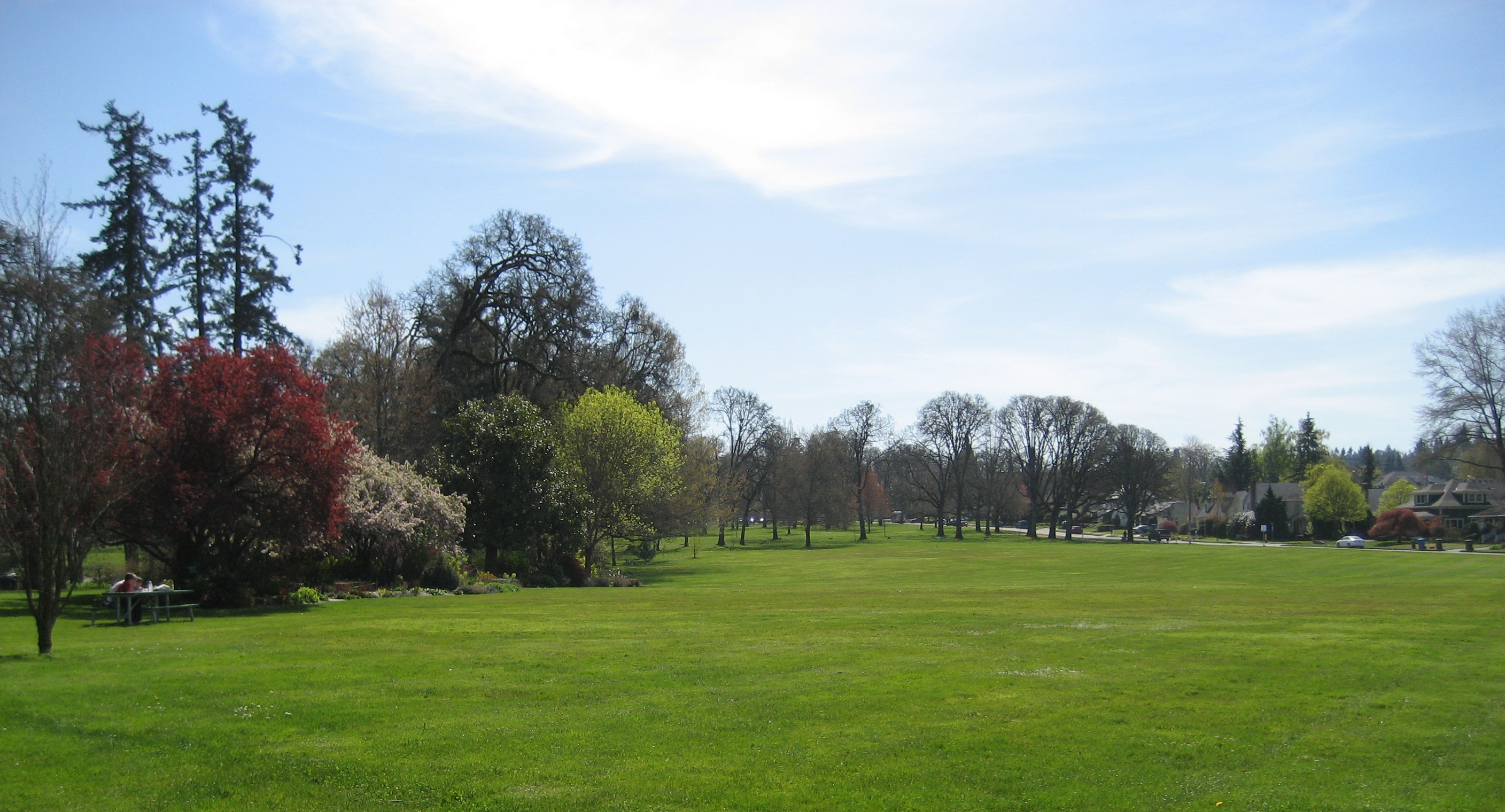
Oregon, US
Puedes ver Oregon Oak, Douglas's Ground Squirrel y Ardilla Gris Oriental.
Ver guía →

Washington, US
Puedes ver Purple Foxglove, Tansy y Broad-Leaved Sweet Pea.
Ver guía →

British Columbia, CA
Puedes ver Broad-Leaved Stonecrop, Salal y Pacific Sanicle.
Ver guía →
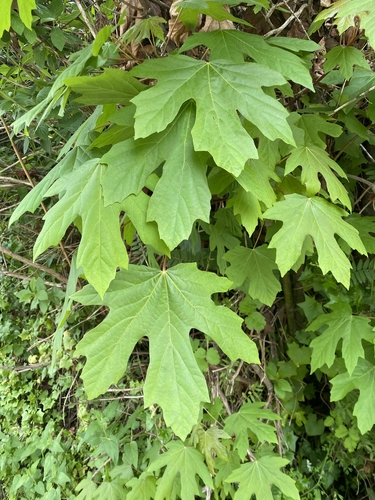
British Columbia, CA
Puedes ver Bigleaf Maple, Western Sword Fern y Vanilla Leaf.
Ver guía →
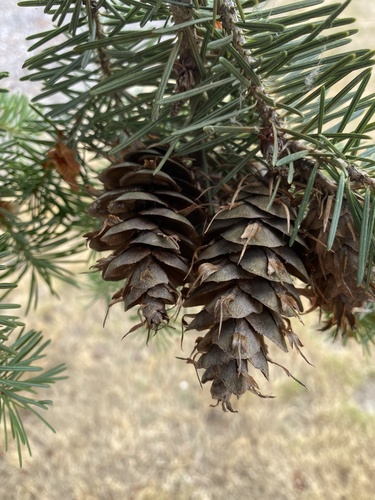
British Columbia, CA
Puedes ver Abeto De Douglas, Purple Foxglove y Oregon Oak.
Ver guía →