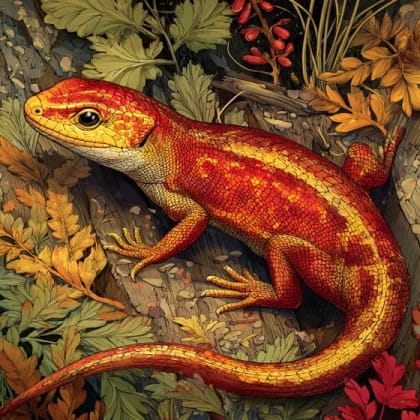




Plains Garter Snake
Thamnophis radix
The Plains Garter Snake is a friendly snake that loves to slither through grass and wetlands. They have beautiful stripes and are great at catching small bugs and frogs.
Hábitat: Grasslands
The Plains Garter Snake has a brown, olive, or black body with three prominent yellow or orange stripes running lengthwise. A checkerboard pattern of dark spots often appears between the stripes. This combination makes it distinct from other garter snakes.
Categoría
ReptilesRareza
Common
Peligro
1/5 · Muy bajo
Snaps
¡Sé la primera persona en hacer un snap!
Plains Garter Snakes are not venomous to humans, making them safe to observe!
Their forked tongue 'tastes' the air, helping them find yummy food!
They give birth to live babies, not eggs, like a tiny snake factory!
They sometimes form huge groups called 'hibernacula' to sleep through winter together!
Plains Garter Snakes can release a foul-smelling musk because it helps them deter predators when feeling threatened.
Plains Garter Snakes have a natural resistance to the mild venom of some prey, allowing them to hunt more easily.
Plains Garter Snakes can unhinge their jaws, allowing them to swallow prey much larger than their head!
Plains Garter Snakes can brumate by slowing their body functions, helping them survive cold winter months.
This snake is a hunter that eats small creatures like frogs, earthworms, and mice.
Rana pipiens
A common prey item in their wetland habitats.
Lumbricus terrestris
A primary food source, especially for younger snakes.
Microtus pennsylvanicus
Often preyed upon in grassy habitats.
Buteo jamaicensis
A common aerial predator of garter snakes.
Marcado con bandas paralelas o líneas de color.
Los animales solitarios viven solos durante la mayor parte de su vida y solo interactúan con otros para aparearse o cuidar de sus crías.
Colorido describe a organismos u objetos que exhiben una amplia variedad de colores brillantes y distintivos.
Este rasgo identifica a los organismos cuya dieta consiste principalmente en insectos y otros pequeños invertebrados.

Los hábitats de pastizales son biomas terrestres dominados por pastos y plantas herbáceas, que sustentan a una variedad de animales de pastoreo.

Este rasgo de hábitat identifica especies que se encuentran en humedales, que son áreas de tierra saturadas de agua, ya sea permanente o estacionalmente, e incluyen marismas, pantanos y ciénagas.

Los animales diurnos están activos principalmente durante el día y suelen descansar o dormir por la noche.

Este rasgo identifica a los organismos que exhiben una rapidez excepcional en sus movimientos para cazar, escapar o desplazarse.
Todavía no hay alias listados.
Peligro
1/5 · Muy bajo
If you see a snake, it's best to watch from a distance and not touch it.
38-71 cm
0.05-0.2 kg
5-10 años
5 km/h
This snake is a hunter that eats small creatures like frogs, earthworms, and mice.
1.5 km/h
Grasslands
Foraging
Acércate para separar los grupos y explorar dónde se ha fotografiado este objeto.
Los snaps recientes aparecerán aquí a medida que se añadan nuevas observaciones.




.jpg)