






Powdered Dancer
Argia moesta
The Powdered Dancer is a beautiful dragonfly with bright colors and delicate wings. They love to dance around near water, making them fun to watch as they flit and hover.
Hábitat: Wetlands
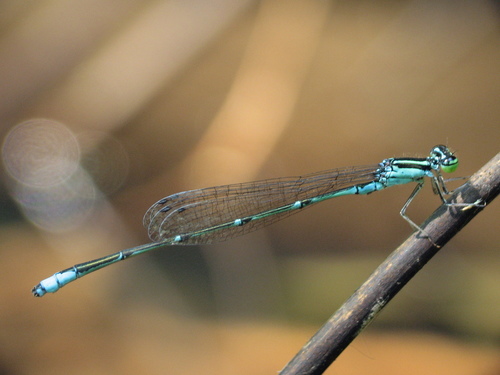
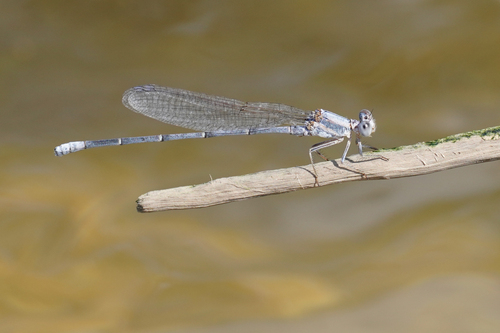
The Powdered Dancer is a slender damselfly, often appearing powdery blue-grey on its body, especially in older males. It has dark stripes on its thorax and clear, delicate wings. Its muted coloration helps it blend in near rivers and streams.
Categoría
InsectosRareza
Common
Peligro
1/5 · Muy bajo
Snaps
¡Sé la primera persona en hacer un snap!
Baby Powdered Dancers are called nymphs and live underwater for months or even years!
Powdered Dancers fold their wings neatly back when resting, unlike their dragonfly cousins!
These tiny hunters help protect you by eating lots of pesky mosquitoes!
They have huge eyes covering most of their head, letting them see almost all around them!
Powdered Dancer males develop a unique powdery blue coating that helps them camouflage amongst shadows and plants near water.
The Powdered Dancer has a slender body and large wings that help them glide gracefully and quickly snatch tiny insects from the air.
Young Powdered Dancers live underwater as nymphs, using special hinged jaws to ambush tiny aquatic creatures.
These damselflies are fierce insect hunters, both as adults and underwater as nymphs!
Diferencias por edad: Nymphs hunt underwater for aquatic insects and tiny crustaceans, while adults hunt flying insects in the air.
Culex pipiens
as a flying adult
Lepomis macrochirus
nymphs in water
Hirundo rustica
adults in flight
Typha latifolia
for egg-laying
Los animales solitarios viven solos durante la mayor parte de su vida y solo interactúan con otros para aparearse o cuidar de sus crías.
Las criaturas aéreas pasan una parte importante de su vida en el aire, utilizando el vuelo para diversas actividades como la caza, la migración o la anidación.
Colorido describe a organismos u objetos que exhiben una amplia variedad de colores brillantes y distintivos.
Este rasgo identifica a los organismos cuya dieta consiste principalmente en insectos y otros pequeños invertebrados.

Este rasgo de hábitat identifica especies que se encuentran en humedales, que son áreas de tierra saturadas de agua, ya sea permanente o estacionalmente, e incluyen marismas, pantanos y ciénagas.

Los hábitats de agua dulce incluyen entornos acuáticos no salinos como ríos, lagos, estanques y humedales, vitales para numerosas especies.

Los animales diurnos están activos principalmente durante el día y suelen descansar o dormir por la noche.

Este rasgo identifica a los organismos que exhiben una rapidez excepcional en sus movimientos para cazar, escapar o desplazarse.

Describe organismos que transfieren polen, permitiendo la fertilización y reproducción de las plantas.
Todavía no hay alias listados.
Peligro
1/5 · Muy bajo
Always watch dragonflies from a distance and don't try to catch them.
45-60 mm
35-42 mm
30-60 días
10 km/h
These damselflies are fierce insect hunters, both as adults and underwater as nymphs!
Wetlands
Pursuit
6
Acércate para separar los grupos y explorar dónde se ha fotografiado este objeto.
Los snaps recientes aparecerán aquí a medida que se añadan nuevas observaciones.
New York, US
Puedes ver Stream Bluet, Variable Dancer y Eastern Pondhawk.
Ver guía →

Quebec, CA
Puedes ver Ardilla Gris Oriental, Pato y Marmota.
Ver guía →
Texas, US
Puedes ver Powdered Dancer y Glassy-Winged Sharpshooter.
Ver guía →

Maryland, US
Puedes ver Sapo Americano, Ciervo De Cola Blanca y Lesser Celandine.
Ver guía →







.jpg&width=800)






