Purple Martin
Progne subis
The Purple Martin is a beautiful bird with shiny purple feathers. They love to eat insects and can often be seen flying high in the sky. These birds are friendly and enjoy living near people.
Hábitat: Urban areas
The Purple Martin is a large, sleek swallow with pointed wings and a forked tail. Males are entirely glossy, iridescent deep blue-purple, appearing black in dim light. Females and young birds have duller, greyish-white undersides, making them distinct from other swallows.
Categoría
AvesRareza
Common
Peligro
1/5 · Muy bajo
Snaps
¡Sé la primera persona en hacer un snap!
Purple Martins eat up to 2,000 flying insects every single day!
Some martins travel over 10,000 miles each year during migration!
These birds can drink water mid-flight by skimming the surface of lakes!
They are the only North American bird that relies almost entirely on human-provided homes!
Purple Martins can catch flying insects mid-air because of their agile flight and wide gape, helping them get food.
Purple Martins have a strong social instinct that helps them live together in large groups, often in human-made birdhouses.
Purple Martins can fly thousands of kilometers between continents because of their strong wings and endurance, avoiding cold winters.
These birds are expert aerial hunters, catching flying insects like dragonflies and wasps mid-air.
Accipiter cooperii
Juvenile martins are sometimes prey for these swift raptors.
Anax junius
Purple Martins actively pursue and catch these large dragonflies.
Oeciacus vicarius
These parasitic bugs feed on the blood of martins, especially nestlings.
Homo sapiens
Eastern populations rely almost entirely on human-provided housing.
Describe a los animales, principalmente aves, que poseen una cubierta de plumas.
Los animales sociales viven en grupos organizados, cooperando para obtener beneficios de supervivencia como la búsqueda de alimento, la defensa y la cría de descendencia.
Este rasgo identifica a los organismos cuya dieta consiste principalmente en insectos y otros pequeños invertebrados.
Los animales diurnos están activos principalmente durante el día y suelen descansar o dormir por la noche.

Este rasgo identifica a los organismos que exhiben una rapidez excepcional en sus movimientos para cazar, escapar o desplazarse.

Los animales migratorios emprenden movimientos estacionales de una región a otra, típicamente en respuesta a cambios en el clima o la disponibilidad de alimentos.

Esta característica de hábitat indica especies que pueden coexistir con los humanos en entornos urbanos y suburbanos, utilizando estructuras artificiales y espacios verdes.
Peligro
1/5 · Muy bajo
Watch these birds from a distance and don't disturb their nests.
17-20 cm
39-41 cm
0.045-0.06 kg
5-7 años
64 km/h
These birds are expert aerial hunters, catching flying insects like dragonflies and wasps mid-air.
Urban areas
Pursuit
Acércate para separar los grupos y explorar dónde se ha fotografiado este objeto.
Los snaps recientes aparecerán aquí a medida que se añadan nuevas observaciones.

Pennsylvania, US
Puedes ver Ciervo De Cola Blanca y Mile-A-Minute Weed.
Ver guía →
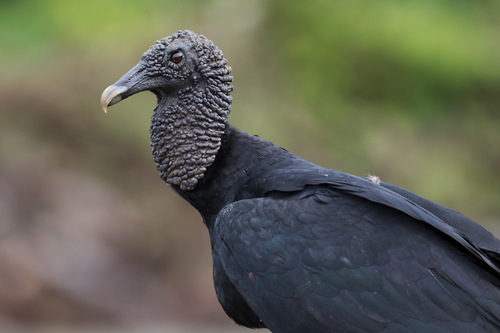
Florida, US
Puedes ver Zopilote Negro, Caimán Americano y Iguana Verde.
Ver guía →
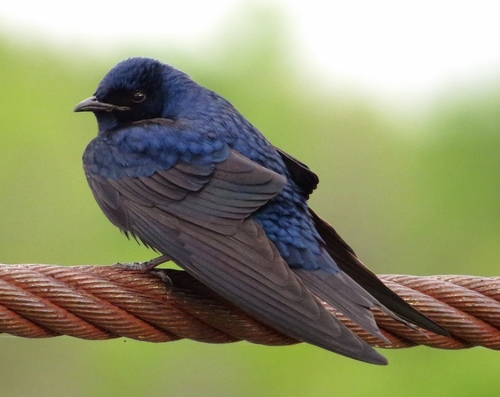
California, US
Puedes ver Purple Martin, Acorn Woodpecker y Junco Ojioscuro.
Ver guía →
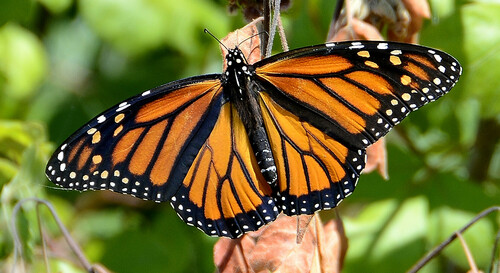
Florida, US
Puedes ver Monarch, Pin-Tailed Pondhawk y Polydamas Swallowtail.
Ver guía →