

Rabidosa
rabidosa
Las arañas Rabidosa, comúnmente conocidas como parte de la familia de las arañas lobo, son un grupo fascinante y muy beneficioso de arácnidos nativos de Norteamérica. A pesar de su nombre científico algo alarmante, que se traduce como "rabiosa", estas arañas no portan la rabia y son completamente inofensivas para los humanos. Se ganaron este apodo debido a sus movimientos increíblemente rápidos, erráticos y en zigzag al cazar o huir del peligro. Como cazadoras activas, desempeñan un papel crucial en el control de las poblaciones de insectos en sus ecosistemas.A diferencia de muchas arañas, las especies de Rabidosa no tejen elaboradas telarañas para atrapar a sus presas. En cambio, confían en una vista excepcional, sigilo y ráfagas de velocidad increíble para perseguir insectos en el suelo. También son celebradas por sus notables instintos maternales, protegiendo ferozmente a sus crías de depredadores y peligros ambientales. Observar a una araña lobo madre navegando por la maleza con sus crías es un ejemplo sorprendente de la crianza en invertebrados.
Hábitat: Típicamente se encuentran deambulando por el suelo en campos de hierba, bosques caducifolios abiertos, matorrales y jardines suburbanos, a menudo buscando refugio bajo la hojarasca, rocas o troncos caídos.
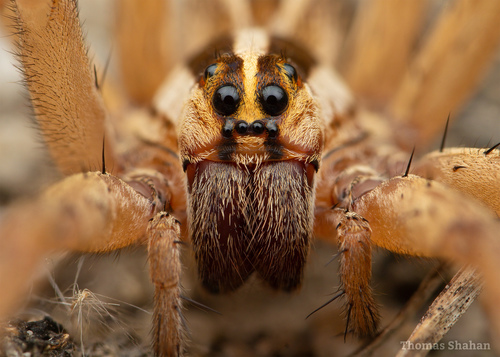
Las arañas Rabidosa son arácnidos robustos y relativamente grandes, fácilmente reconocibles por las prominentes rayas longitudinales de alto contraste que recorren su cefalotórax (región de la cabeza) y abdomen. Típicamente, estas rayas alternan entre marrón oscuro y un amarillo pálido o tostado claro. Como todas las arañas lobo, poseen ocho ojos dispuestos en tres filas distintas, con dos grandes ojos frontales en la fila central que les proporcionan una visión excelente. Las hembras son generalmente más grandes que los machos y, durante la temporada de cría, a menudo se las puede ver arrastrando un saco de huevos esférico y grisáceo de seda adherido a sus hileras o transportando una gruesa capa de pequeñas arañitas aferradas a su abdomen.
Categoría
InvertebrateRareza
Common
Peligro
1/5 · Muy bajo
Snaps
2
Una araña lobo hembra es una madre ferozmente dedicada; si pierde su saco de huevos, lo buscará frenéticamente e incluso se sabe que ha cargado por error pequeñas piedras en su lugar.
Debido a su tamaño, a veces se puede escuchar el crujido de una araña Rabidosa grande moviéndose entre la hojarasca seca antes de verla.
El nombre 'Rabidosa' puede sonar alarmante, pero estas arañas no portan la rabia; fueron nombradas por sus movimientos increíblemente rápidos y en zigzag.
Son verdaderos 'lobos' del mundo de las arañas; en lugar de tejer telarañas pegajosas para atrapar comida, acechan activamente y persiguen a sus presas a pie.
Son cazadores activos y voraces que dependen de la velocidad para atrapar una amplia variedad de insectos terrestres y arácnidos más pequeños.
Diferencias por edad: Las arañitas consumen insectos microscópicos como colémbolos y moscas de la fruta, y cazan presas más grandes a medida que mudan y crecen.
Aún no hay insignias de rasgos asignadas a este objeto.
Todavía no hay alias listados.
Las colecciones para este objeto aparecerán aquí a medida que se añadan más temas.
Peligro
1/5 · Muy bajo
Todavía no hay notas especiales de seguridad.
La forma más fácil de identificar a Rabidosa es usar la aplicación de identificación de naturaleza Snappit.
1-3 cm
0.0005-0.002 kg
1-2 años
2 km/h
Son cazadores activos y voraces que dependen de la velocidad para atrapar una amplia variedad de insectos terrestres y arácnidos más pequeños.
Típicamente se encuentran deambulando por el suelo en campos de hierba, bosques caducifolios abiertos, matorrales y jardines suburbanos, a menudo buscando refugio bajo la hojarasca, rocas o troncos caídos.
Persecución
Acércate para separar los grupos y explorar dónde se ha fotografiado este objeto.
Llévate el descubrimiento
Haz una foto con Snappit, identifica la especie y guarda el hallazgo en tu colección.