Red-bellied piranha
Pygocentrus nattereri
The red-bellied piranha is a colorful fish known for its bright red belly. They live in rivers and lakes in South America and are famous for their sharp teeth and strong jaws.
Hábitat: Freshwater rivers and lakes
The Red-bellied piranha is a stout, deep-bodied fish, typically silvery-grey with a distinctive reddish-orange patch on its belly and chin. It has a small, blunt snout and powerful jaws with sharp, triangular teeth, visually setting it apart from other fish.
Categoría
PecesRareza
Common
Peligro
3/5 · Moderado
Snaps
¡Sé la primera persona en hacer un snap!
Despite their fierce fame, they mostly act as river scavengers, cleaning up dead animals.
Piranhas have a surprisingly good sense of hearing, detecting splashes from far away.
Some Amazonian tribes use dried piranha jaws as handy tools or weapons, like scissors!
Their teeth are replaced individually throughout their life, always keeping them razor-sharp!
Red-bellied piranha has razor-sharp, triangular teeth that helps them shear through flesh with surprising speed and efficiency.
Red-bellied piranha can swim in large schools because it helps them overwhelm prey and protect themselves from larger predators.
Red-bellied piranha has extremely powerful jaw muscles because it allows them to deliver a strong, bone-crushing bite.
These fierce fish primarily hunt other fish but will also scavenge and eat plants and insects.
Caiman crocodilus
Larger caimans actively prey on piranhas.
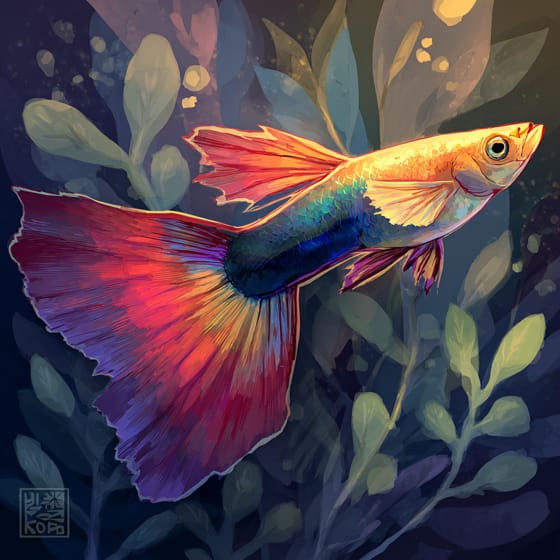
Poecilia reticulata
They ambush and consume various smaller fish species.
Hydrochoerus hydrochaeris
They scavenge on deceased animals, cleaning the environment.
Los animales sociales viven en grupos organizados, cooperando para obtener beneficios de supervivencia como la búsqueda de alimento, la defensa y la cría de descendencia.
Colorido describe a organismos u objetos que exhiben una amplia variedad de colores brillantes y distintivos.
Los organismos piscívoros son animales que subsisten principalmente de una dieta a base de peces.
Un depredador de emboscada caza esperando pacientemente y ocultándose, para luego lanzar un ataque repentino cuando una presa desprevenida se pone a su alcance.

Los hábitats de agua dulce incluyen entornos acuáticos no salinos como ríos, lagos, estanques y humedales, vitales para numerosas especies.

Este rasgo identifica a los organismos cuya dieta consiste total o principalmente en tejido animal.

Este rasgo identifica a los organismos que exhiben una rapidez excepcional en sus movimientos para cazar, escapar o desplazarse.

Los hábitats acuáticos abarcan entornos donde los organismos viven principalmente en el agua, incluidos océanos, ríos, lagos y humedales.
Todavía no hay alias listados.
Peligro
3/5 · Moderado
Always watch from a safe distance and never try to touch or feed wild fish.
15-30 cm
0.2-0.5 kg
10-15 años
These fierce fish primarily hunt other fish but will also scavenge and eat plants and insects.
20 km/h
Freshwater rivers and lakes
Ambush
10 m
Acércate para separar los grupos y explorar dónde se ha fotografiado este objeto.
Los snaps recientes aparecerán aquí a medida que se añadan nuevas observaciones.

Massachusetts, US
Puedes ver Lobo Fino Del Norte, Charrán Común y Foca Común.
Ver guía →

Colorado, US
Puedes ver Tigre, Aurelia Aurita y Barramundi.
Ver guía →

California, US
Puedes ver Four-Toed Hedgehog, Military Macaw y Pitón Verde.
Ver guía →

Texas, US
Puedes ver Rana Catesbeiana, Anguila Eléctrica y Pitón Reticulada.
Ver guía →