
.jpg&width=800)





Red-breasted Merganser
Mergus serrator
The Red-breasted Merganser is a beautiful duck with a striking red chest and a long, slender body. They love to dive underwater to catch fish and can be seen swimming in lakes and rivers.
Hábitat: Coastal areas
The Red-breasted Merganser has a shaggy crest and a long, thin, reddish bill with a hooked tip. Males display a dark green head, a rusty-red chest band, and striking black and white body feathers. Females are more muted with a reddish-brown head and a less distinct crest.
Categoría
AvesRareza
Common
Peligro
1/5 · Muy bajo
Snaps
¡Sé la primera persona en hacer un snap!
Baby mergansers can dive and find their own food just a few days after hatching!
These ducks need a running start on the water to take off into flight, like an airplane!
They can stay underwater for nearly a full minute while hunting for fishy snacks!
Unlike most ducks, mergansers keep their wild, spiky hairdo even when diving!
Red-breasted Mergansers have special clear eyelids that act like goggles, helping them see perfectly while diving underwater.
Red-breasted Mergansers have a long, slender bill with saw-like edges that help them grip onto slippery fish in the water.
Red-breasted Mergansers have powerful webbed feet and a streamlined body that helps them chase and catch fast fish deep underwater.
These speedy swimmers mostly gobble up small fish, but also enjoy a few other aquatic critters!
Diferencias por edad: Young mergansers start with small aquatic insects before moving to larger fish.
Larus argentatus
Preys on merganser eggs and young chicks.
Esox lucius
Large pike may prey on merganser ducklings.
Salmo salar
Mergansers eat juvenile salmon, especially in river systems.
Oncorhynchus mykiss
They frequently prey on smaller trout in freshwater.
Describe a los animales, principalmente aves, que poseen una cubierta de plumas.
Se caracteriza por tener los dedos conectados por una membrana, lo que generalmente ayuda a nadar.
Los animales sociales viven en grupos organizados, cooperando para obtener beneficios de supervivencia como la búsqueda de alimento, la defensa y la cría de descendencia.
Colorido describe a organismos u objetos que exhiben una amplia variedad de colores brillantes y distintivos.

Los filtradores obtienen nutrientes filtrando partículas de alimentos suspendidos y pequeños organismos del agua.

Los organismos piscívoros son animales que subsisten principalmente de una dieta a base de peces.

Los hábitats costeros son entornos dinámicos situados a lo largo de la interfaz entre la tierra y el mar, influenciados por las mareas, las olas y el agua salada.

Los hábitats de agua dulce incluyen entornos acuáticos no salinos como ríos, lagos, estanques y humedales, vitales para numerosas especies.

Este rasgo identifica a los organismos que exhiben una rapidez excepcional en sus movimientos para cazar, escapar o desplazarse.

Los animales migratorios emprenden movimientos estacionales de una región a otra, típicamente en respuesta a cambios en el clima o la disponibilidad de alimentos.
Todavía no hay alias listados.
Peligro
1/5 · Muy bajo
Always watch birds from a distance and don't try to touch them.
51-62 cm
70-86 cm
0.7-1.4 kg
5-10 años
90 km/h
These speedy swimmers mostly gobble up small fish, but also enjoy a few other aquatic critters!
Coastal areas
Pursuit
Acércate para separar los grupos y explorar dónde se ha fotografiado este objeto.
Los snaps recientes aparecerán aquí a medida que se añadan nuevas observaciones.

Connecticut, US
Puedes ver Gorrión Melódico, Sinsonte Norteño y Monarch.
Ver guía →

Virginia, US
Puedes ver Pelícano Pardo, Cormorán Orejudo y Yellow-Crowned Night Heron.
Ver guía →
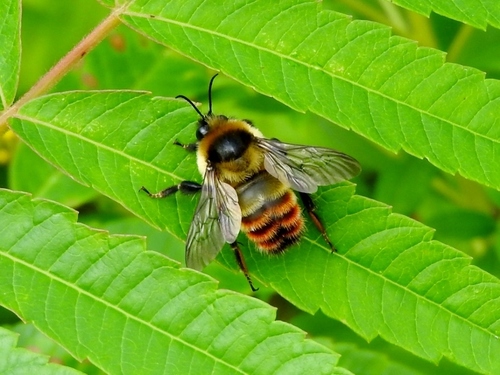
Wisconsin, US
Puedes ver Red-Belted Bumble Bee, Red-Breasted Merganser y Pato.
Ver guía →
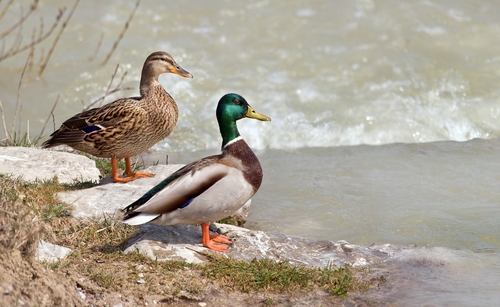
Massachusetts, US
Puedes ver Pato, Ring-Necked Duck y American Pokeweed.
Ver guía →

Washington, US
Puedes ver Strawberry Tree, Pato y Castor Americano.
Ver guía →

Illinois, US
Puedes ver Barnacla Canadiense, Gaviota De Delaware y Tordo Sargento.
Ver guía →













