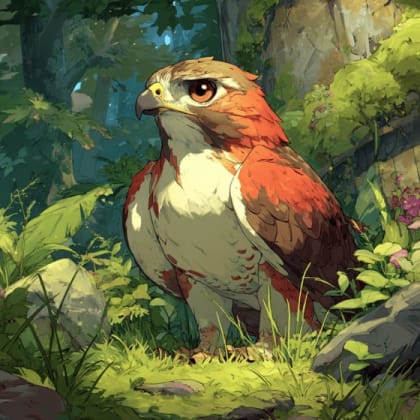
Red-headed Woodpecker
Melanerpes erythrocephalus
The Red-headed Woodpecker is a colorful bird with a bright red head and a black and white body. They love to peck on trees to find yummy bugs to eat!
Hábitat: Forests
The Red-headed Woodpecker has an unmistakable, vibrant crimson head and throat. Its body is starkly divided with a glossy blue-black back and wings, contrasted by brilliant white underparts and large white patches on its secondary feathers. This striking pattern makes it easy to identify.
Categoría
AvesRareza
Common
Peligro
1/5 · Muy bajo
Snaps
¡Sé la primera persona en hacer un snap!
Their bright red head makes them one of North America's most colorful woodpeckers.
These birds use dead trees called 'snags' to find food and make cozy nests.
They can sometimes catch and eat small rodents or even other birds!
Unlike most birds, they sometimes nest in utility poles or fence posts if trees are scarce!
Red-headed Woodpeckers can wedge acorns, nuts, and even live insects into tree crevices because they have specialized bill movements that help them store food for later.
Red-headed Woodpeckers are expert aerial insect hunters, snatching flying insects mid-air with agile flight, which helps them catch prey other birds miss.
Red-headed Woodpeckers can excavate their own nest cavities in dead trees, creating safe homes for their chicks because of their strong bills and necks.
These omnivorous woodpeckers enjoy a diverse menu of insects, fruits, seeds, and nuts.
Buteo jamaicensis
Large raptors like hawks occasionally prey on adult woodpeckers.
Quercus alba
They rely on oak trees for acorns, nesting sites, and insect foraging.
Formica rufa
They consume various insects, including ants found on and in trees.
Vaccinium corymbosum
They forage on and consume a variety of berries when available.
Describe a los animales, principalmente aves, que poseen una cubierta de plumas.
Las criaturas aéreas pasan una parte importante de su vida en el aire, utilizando el vuelo para diversas actividades como la caza, la migración o la anidación.
Los animales arborícolas viven principalmente en los árboles, utilizándolos como refugio, alimento y protección contra los depredadores.
Colorido describe a organismos u objetos que exhiben una amplia variedad de colores brillantes y distintivos.

Este rasgo identifica a los organismos cuya dieta consiste principalmente en insectos y otros pequeños invertebrados.

Los hábitats boscosos son entornos terrestres dominados por una densa cubierta arbórea, que sustentan una gran diversidad de vida animal y vegetal.

Los animales diurnos están activos principalmente durante el día y suelen descansar o dormir por la noche.

Describe una especie cuya presencia y papel tienen un efecto desproporcionadamente grande en su entorno.

Este rasgo identifica a los organismos que exhiben una rapidez excepcional en sus movimientos para cazar, escapar o desplazarse.
Todavía no hay alias listados.
Peligro
1/5 · Muy bajo
Enjoy watching birds from a distance and don't disturb their nests.
20-24 cm
42-45 cm
0.07-0.09 kg
5-10 años
45 km/h
These omnivorous woodpeckers enjoy a diverse menu of insects, fruits, seeds, and nuts.
Forests
Foraging
Acércate para separar los grupos y explorar dónde se ha fotografiado este objeto.
Los snaps recientes aparecerán aquí a medida que se añadan nuevas observaciones.

Tennessee, US
Puedes ver American Coot, Crane-Fly Orchid y Pied-Billed Grebe.
Ver guía →
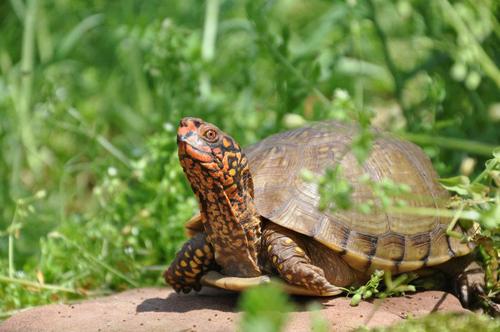
Oklahoma, US
Puedes ver Three-Toed Box Turtle, Blackjack Oak y American Persimmon.
Ver guía →

Georgia, US
Puedes ver Red-Headed Woodpecker y American White Waterlily.
Ver guía →
South Dakota, US
Puedes ver Borrego Cimarrón y Narrow-Leaved Purple Coneflower.
Ver guía →

Wyoming, US
Puedes ver Perrito De Las Praderas y Bur Oak.
Ver guía →