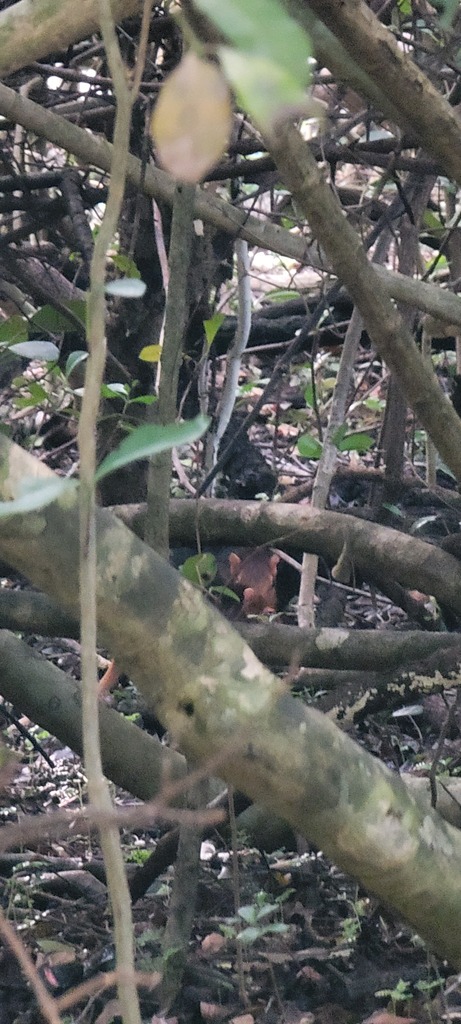





Rhynchocyon adersi
Rhynchocyon adersi
El sengi de Ader es un animal pequeño y tímido con una nariz larga y orejas grandes. Le encanta esconderse en los bosques y es muy bueno permaneciendo en silencio y fuera de la vista.
Hábitat: Bosques
El Rhynchocyon adersi es un pequeño mamífero con un distintivo hocico largo y flexible y ojos grandes rodeados de pelaje pálido. Su pelaje es de un rico marrón rojizo, a menudo con una raya más oscura en la espalda, lo que le ayuda a camuflarse bien con la hojarasca del bosque.
Categoría
MamíferosRareza
Raro
Peligro
2/5 · Bajo
Snaps
¡Sé la primera persona en hacer un snap!
Cada sengi de Ader construye varios nidos para dormir, moviéndose entre ellos por seguridad.
Estos pequeños y veloces mamíferos a menudo corren por 'caminos' bien usados que crean en el bosque.
¡Están más emparentados con los elefantes que con las musarañas o los ratones!
Mantienen su territorio sorprendentemente limpio al eliminar hojas viejas y escombros.
Olfatean y se dan un festín con pequeños insectos y otros invertebrados que encuentran en el suelo del bosque.
Peludo describe a los animales que poseen una cubierta densa de pelo o pelaje suave.
Los animales solitarios viven solos durante la mayor parte de su vida y solo interactúan con otros para aparearse o cuidar de sus crías.
Este rasgo caracteriza a los organismos cuya dieta consiste total o principalmente en material vegetal.
Los hábitats boscosos son entornos terrestres dominados por una densa cubierta arbórea, que sustentan una gran diversidad de vida animal y vegetal.
Los animales nocturnos están principalmente activos durante la noche, y suelen descansar o dormir durante el día.
El estado de peligro de extinción indica que una especie corre un riesgo muy alto de extinguirse en estado silvestre en un futuro próximo.
Todavía no hay alias listados.
Peligro
2/5 · Bajo
Observen desde la distancia y no molesten a los animales salvajes.
Compara orejas, hocico, cola, patas y marcas del pelaje. El tamaño es difícil de calcular sin algo cerca que sirva de referencia, y las crías pueden no tener aún el color de los adultos. Identificador de mamíferos: sube una foto y compara los detalles visibles.
17-23 cm
0.2-0.28 kg
2-4 años
25 km/h
Olfatean y se dan un festín con pequeños insectos y otros invertebrados que encuentran en el suelo del bosque.
Bosques
Forrajeo
Acércate para separar los grupos y explorar dónde se ha fotografiado este objeto.
Los snaps recientes aparecerán aquí a medida que se añadan nuevas observaciones.
Llévate el descubrimiento
Haz una foto con Snappit, identifica la especie y guarda el hallazgo en tu colección.