






Scarlet Gilia
Ipomopsis aggregata
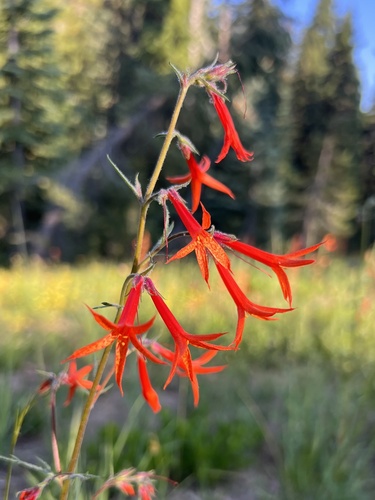
The Scarlet Gilia is a beautiful red flower that blooms in the summer. It attracts hummingbirds with its bright color and sweet nectar, making it a favorite in nature!
Hábitat: Mountain regions
The Scarlet Gilia has vibrant, trumpet-shaped flowers, typically brilliant scarlet or orange-red, clustered atop a tall, slender stem. Its finely divided, fern-like leaves distinguish it from other red wildflowers in rocky areas.
Categoría
PlantasRareza
Common
Peligro
1/5 · Muy bajo
Snaps
¡Sé la primera persona en hacer un snap!
Its long, tube-shaped flowers perfectly fit a hummingbird's beak like a straw!
Some Scarlet Gilia flowers open at dusk to attract night-flying hawk moths!
The tiny seeds of this plant can lie dormant in the soil for a very long time!
This plant often acts like a biennial, living two years before dying after seeding.
Scarlet Gilia's bright red, tubular flowers act as a perfect target, drawing hummingbirds to nectar.
Scarlet Gilia can survive and flourish in dry, rocky, high-altitude environments where many plants struggle.
Some varieties open flowers at dusk, attracting hawk moths with their unique evening scent for pollination.

Archilochus alexandri
visits flowers for nectar
.jpg&width=800)
Selasphorus rufus
a key pollinator species
Hyles lineata
visits flowers at night
Odocoileus hemionus
browses leaves and flowers
Lepus californicus
may graze on foliage
Las plantas con flores son cualquier planta que produce flores como parte de su ciclo reproductivo.
Una flor tubular tiene pétalos fusionados en la base, formando una estructura distintiva en forma de tubo que generalmente guarda néctar en el fondo.
Las plantas de floración de verano producen sus flores durante la temporada estival, a menudo aportando un color vibrante cuando muchas otras plantas ya han terminado de florecer.
Las flores fragantes emiten un aroma agradable, a menudo para atraer polinizadores o como defensa.

Colorido describe a organismos u objetos que exhiben una amplia variedad de colores brillantes y distintivos.

Describe plantas que son particularmente atractivas y beneficiosas para una amplia variedad de organismos polinizadores.

Este rasgo de hábitat identifica a las especies que se encuentran en regiones montañosas, caracterizadas por su gran altitud, pendientes pronunciadas y zonas climáticas variables.
Peligro
1/5 · Muy bajo
Always look at flowers from a distance and don't pick them, so they can keep growing!
30-90 cm
15-30 cm
2-4 cm
Late spring to early fall
No
Ninguna
Bienal
Aves
Acércate para separar los grupos y explorar dónde se ha fotografiado este objeto.
Los snaps recientes aparecerán aquí a medida que se añadan nuevas observaciones.















.jpg&width=800)


