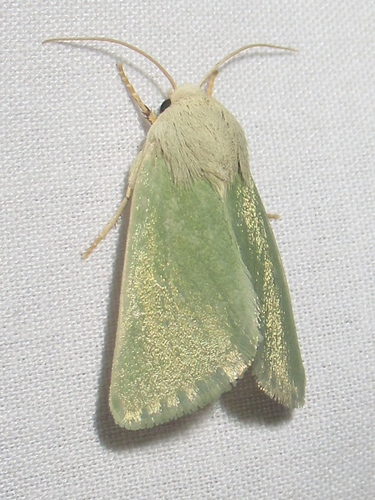


Schinia Simplex
schinia simplex
Schinia simplex, también conocida como la mariposa de la flor de la llanura, es una polilla especializada, nocturna y diurna, nativa de los pastizales arenosos y praderas del centro de Norteamérica. Este fascinante insecto pertenece a la familia Noctuidae y es reconocido por su ciclo de vida altamente especializado, que está estrechamente entrelazado con especies nativas de gloria de la mañana (Ipomoea). A diferencia de muchas otras especies de polillas que permanecen completamente ocultas durante el día, esta polilla a menudo se puede encontrar descansando dentro de las flores de sus plantas hospederas, donde se beneficia tanto de refugio como de una fuente abundante de alimento.
Hábitat: Se encuentra en praderas secas y arenosas, dunas y pastizales abiertos donde crecen sus principales plantas hospederas larvales.
El adulto de Schinia simplex presenta una envergadura modesta de aproximadamente 2.2 a 2.8 centímetros. Sus alas delanteras son de un color ocre-bronceado suave o beige pálido relativamente uniforme, ocasionalmente mostrando líneas transversales muy tenues, ligeramente más oscuras, que pueden ser difíciles de ver sin magnificación. Las alas traseras son notablemente más oscuras, presentando una coloración gris parduzco ahumado o fusca, bordeada por una franja más pálida. Su sutil coloración deslavada proporciona un excelente camuflaje al posarse contra las gramíneas secas de la pradera o dentro de las gargantas tubulares pálidas de las flores marchitas.
Categoría
InsectosRareza
Common
Peligro
1/5 · Muy bajo
Snaps
2
Debido a que se mimetizan tan perfectamente con el interior de las flores de gloria de la mañana, los investigadores a menudo las encuentran simplemente asomándose a los tubos de color rosa púrpura profundo de las flores.
Las orugas se alimentan de semillas de alto valor energético dentro de las resistentes vainas de gloria de la mañana, lo que les permite crecer rápidamente mientras están protegidas de los fuertes vientos de las Grandes Llanuras.
Esta especie de polilla tiene un reloj interno increíblemente preciso, emergiendo de su etapa de pupa subterránea exactamente cuando su flor hospedera florece a mediados del verano.
Las larvas se alimentan internamente de los brotes, flores y cápsulas de semillas de las glorias de la mañana, mientras que los adultos consumen néctar de diversas flores silvestres de la pradera.
Diferencias por edad: Las larvas son herbívoros estrictos que perforan semillas y flores, mientras que los adultos hacen la transición a una dieta líquida de néctar.
Ipomoea leptophylla
La oruga de Schinia simplex se alimenta casi exclusivamente de las semillas, brotes y flores de la gloria de la mañana arbustiva, que sirve como su planta hospedera larval obligada.
Peucetia viridans
Mientras visitan las flores, las polillas adultas de Schinia simplex son frecuentemente cazadas por depredadores de emboscada que esperan sobre o dentro de las flores.
.jpg&width=800)
Tyrannus verticalis
Las polillas adultas activas que vuelan cerca de sus plantas hospederas son presas objetivo para las aves insectívoras de la pradera.
Aún no hay insignias de rasgos asignadas a este objeto.
Todavía no hay alias listados.
Las colecciones para este objeto aparecerán aquí a medida que se añadan más temas.
Peligro
1/5 · Muy bajo
Todavía no hay notas especiales de seguridad.
La forma más fácil de identificar a Schinia Simplex es usar la aplicación de identificación de naturaleza Snappit.
Las larvas se alimentan internamente de los brotes, flores y cápsulas de semillas de las glorias de la mañana, mientras que los adultos consumen néctar de diversas flores silvestres de la pradera.
Se encuentra en praderas secas y arenosas, dunas y pastizales abiertos donde crecen sus principales plantas hospederas larvales.
Pastoreo
Acércate para separar los grupos y explorar dónde se ha fotografiado este objeto.
Llévate el descubrimiento
Haz una foto con Snappit, identifica la especie y guarda el hallazgo en tu colección.













.jpg&width=800)




