
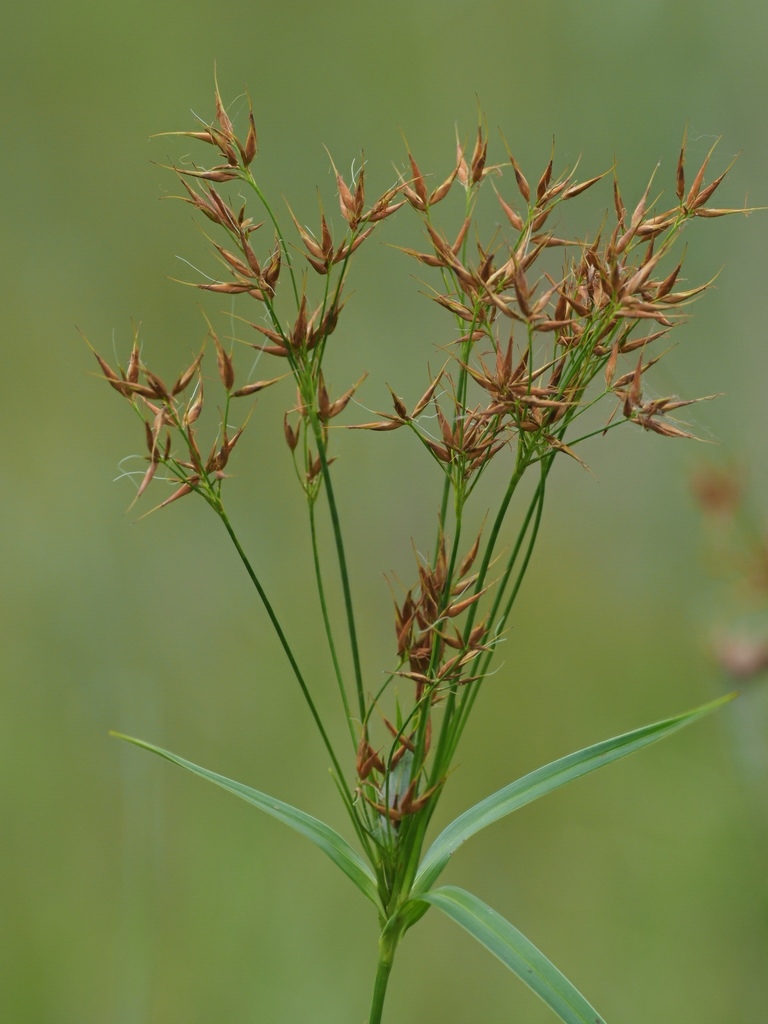





short-bristled horned beaksedge
Rhynchospora corniculata
The short-bristled horned beaksedge is a special plant with unique, horn-like seed heads. It grows in wet areas and helps provide food for small animals and insects.
Hábitat: Wetlands
The short-bristled horned beaksedge is a tall, grass-like plant with stiff, triangular stems. It stands out with its clusters of greenish-brown seed heads, each featuring prominent, horn-like beaks and tiny bristles, making them distinct from other wetland grasses.
Categoría
PlantasRareza
Common
Peligro
1/5 · Muy bajo
Snaps
¡Sé la primera persona en hacer un snap!
Each seed head has tiny bristles, helping them stick to things and travel far!
It's a cousin to important food crops like rice, but prefers wild, wet habitats!
Its scientific name, Rhynchospora, means "beaked seed," describing its unique look!
The plant's stems are triangular, not round like most common grasses!
short-bristled horned beaksedge has tough underground stems called rhizomes that help it spread widely and form dense colonies.
short-bristled horned beaksedge produces unique seeds with long, horn-like beaks that may help them hitch rides on animals or float.
Anas platyrhynchos
eats its protein-rich seeds, especially during migration.
%2C_Vorderansich.jpg&width=800)
Lithobates sphenocephalus
provides dense cover and hiding spots for this wetland frog.
Neoschoenobius virgula
larvae of this moth bore into its stems for food and shelter.
Las plantas caducifolias pierden periódicamente todas sus hojas, por lo general durante el otoño o las estaciones secas.
Las plantas con flores son cualquier planta que produce flores como parte de su ciclo reproductivo.
Las plantas similares a la hierba son plantas herbáceas que se asemejan visualmente a las verdaderas hierbas, típicamente con hojas largas y estrechas.
Se caracteriza por tener una o más proyecciones duras, permanentes y puntiagudas en la cabeza.

Describe plantas que son particularmente atractivas y beneficiosas para una amplia variedad de organismos polinizadores.

Este rasgo de hábitat identifica especies que se encuentran en humedales, que son áreas de tierra saturadas de agua, ya sea permanente o estacionalmente, e incluyen marismas, pantanos y ciénagas.

Describe una especie cuya presencia y papel tienen un efecto desproporcionadamente grande en su entorno.
Todavía no hay alias listados.
Peligro
1/5 · Muy bajo
Always look but don't touch plants unless you know they are safe.
90-150 cm
30-60 cm
Verano a otoño
No
Ninguna
Perenne
Viento
Wetlands
Acércate para separar los grupos y explorar dónde se ha fotografiado este objeto.
Los snaps recientes aparecerán aquí a medida que se añadan nuevas observaciones.





.jpg&width=800)









