.JPG&width=800)





Sitatunga
Tragelaphus spekii
El sitatunga es un tipo especial de antílope al que le encanta vivir en los humedales. Con patas largas y delgadas y un pelaje desgreñado, son excelentes nadadores y pueden esconderse en la hierba alta.
Hábitat: Humedales
El sitatunga tiene un pelaje desgreñado e impermeable, que varía de marrón rojizo en las hembras a marrón grisáceo en los machos, a menudo con rayas blancas. Sus características más llamativas son sus pezuñas largas y extendidas, perfectamente adaptadas para terrenos fangosos, y los impresionantes cuernos en espiral de los machos.
Categoría
MamíferosRareza
Common
Peligro
2/5 · Bajo
Snaps
¡Sé la primera persona en hacer un snap!
¡Los machos de sitatunga usan sus impresionantes cuernos en espiral para luchar contra otros machos!
¡Los sitatungas pueden dormir mientras flotan en el agua, totalmente escondidos!
¡Sus pezuñas pueden extenderse como raquetas de nieve, ayudándoles a caminar sobre barro blando!
¡Son tan buenos nadadores que pueden cruzar ríos anchos con facilidad!
El sitatunga tiene pezuñas extendidas y alargadas que le ayudan a caminar sobre terrenos blandos y fangosos y vegetación densa sin hundirse.
El sitatunga puede sumergirse casi por completo bajo el agua, respirando a través de la nariz como un esnórquel para esconderse de los depredadores.
El sitatunga tiene un pelaje desgreñado y aceitoso que repele el agua, manteniéndolos cálidos y secos incluso después de largos nados.
Los sitatungas son herbívoros que se alimentan de hojas jugosas, hierbas y brotes que se encuentran en sus hogares acuáticos.
Panthera leo
Los leones cazan sitatungas cerca de fuentes de agua.
Crocodylus niloticus
Los cocodrilos son depredadores de emboscada en el hábitat acuático del sitatunga.
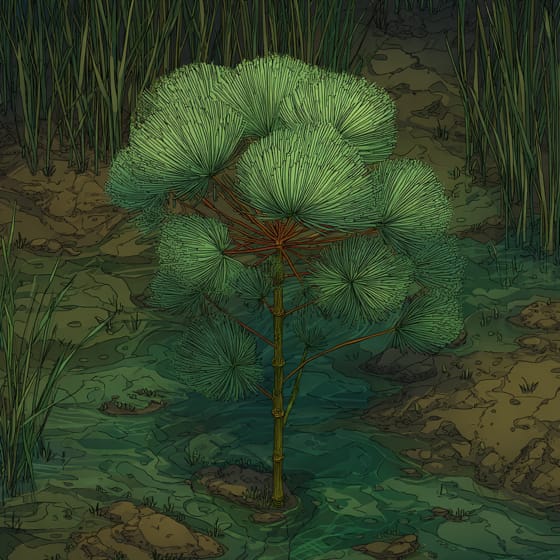
Cyperus papyrus
Proporciona alimento crucial y densa cobertura en su hábitat de humedal.

Phragmites australis
Ofrece refugio y alimento en aguas poco profundas y áreas pantanosas.
Peludo describe a los animales que poseen una cubierta densa de pelo o pelaje suave.
Los animales solitarios viven solos durante la mayor parte de su vida y solo interactúan con otros para aparearse o cuidar de sus crías.
Se caracteriza por tener una o más proyecciones duras, permanentes y puntiagudas en la cabeza.
Este rasgo caracteriza a los organismos cuya dieta consiste total o principalmente en material vegetal.

Este rasgo de hábitat identifica especies que se encuentran en humedales, que son áreas de tierra saturadas de agua, ya sea permanente o estacionalmente, e incluyen marismas, pantanos y ciénagas.

Los hábitats acuáticos abarcan entornos donde los organismos viven principalmente en el agua, incluidos océanos, ríos, lagos y humedales.

El estado de peligro de extinción indica que una especie corre un riesgo muy alto de extinguirse en estado silvestre en un futuro próximo.
Todavía no hay alias listados.
Peligro
2/5 · Bajo
Siempre observa a los animales desde la distancia y nunca intentes tocarlos ni perseguirlos.
La forma más fácil de identificar a Sitatunga es usar la aplicación de identificación de naturaleza Snappit.
135-170 cm
40-120 kg
10-15 años
50 km/h
Los sitatungas son herbívoros que se alimentan de hojas jugosas, hierbas y brotes que se encuentran en sus hogares acuáticos.
Humedales
Búsqueda De Alimento
Acércate para separar los grupos y explorar dónde se ha fotografiado este objeto.
Los snaps recientes aparecerán aquí a medida que se añadan nuevas observaciones.
Llévate el descubrimiento
Haz una foto con Snappit, identifica la especie y guarda el hallazgo en tu colección.





.jpg&width=800)



.JPG&width=800)


.jpg&width=800)
