






Slaty Skimmer
Libellula incesta
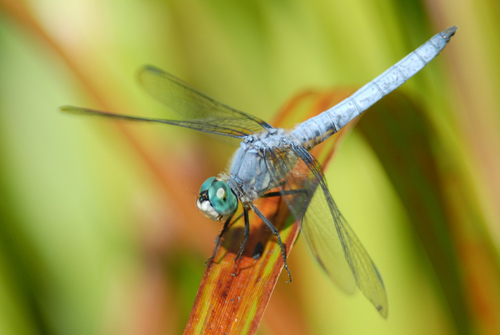
The Slaty Skimmer is a beautiful dragonfly with shiny blue wings. It loves to fly around ponds and lakes, where it catches tiny insects to eat.
Hábitat: Wetlands
The Slaty Skimmer is a medium to large dragonfly, known for its deep, powdery blue-gray body in mature males, giving it a 'slaty' appearance. Immature males and females are a dull yellowish-brown. Its wings have notably dark veins and often a faint dark streak at the base of the hindwings.
Categoría
InsectosRareza
Common
Peligro
1/5 · Muy bajo
Snaps
¡Sé la primera persona en hacer un snap!
Baby Slaty Skimmers live underwater for up to two years before transforming!
Dragonflies can move each of their four wings independently, allowing for incredible flight tricks!
Sometimes, they'll perch on warm rocks to soak up sunshine and get energized!
Their large compound eyes have thousands of tiny lenses for amazing all-around vision!
Slaty Skimmer can catch flying insects mid-air using its keen eyesight and agile flight, helping them secure food.
Slaty Skimmer has special pruinescence that turns its body from brown to powdery blue-gray, signaling its readiness to mate.
Slaty Skimmer larvae live underwater and munch on mosquito larvae, helping to keep aquatic environments healthy.
Slaty Skimmer larvae can camouflage themselves in pond muck, quickly ambushing prey that swims too close.
These speedy hunters snatch up smaller insects right out of the air for a tasty meal!
Diferencias por edad: Larvae (nymphs) are aquatic ambush predators, eating insect larvae and small aquatic creatures; adults hunt flying insects.
Culex pipiens
Larvae actively hunt and eat their aquatic larvae.
Lithobates catesbeianus
Adult Slaty Skimmers are prey for larger frogs.
.jpg&width=800)
Tyrannus tyrannus
Birds catch adult dragonflies in mid-air.
Drosophila melanogaster
Adults actively pursue and eat small flying insects.
Las criaturas aéreas pasan una parte importante de su vida en el aire, utilizando el vuelo para diversas actividades como la caza, la migración o la anidación.
Colorido describe a organismos u objetos que exhiben una amplia variedad de colores brillantes y distintivos.
Este rasgo identifica a los organismos cuya dieta consiste principalmente en insectos y otros pequeños invertebrados.
Este rasgo de hábitat identifica especies que se encuentran en humedales, que son áreas de tierra saturadas de agua, ya sea permanente o estacionalmente, e incluyen marismas, pantanos y ciénagas.

Los hábitats de agua dulce incluyen entornos acuáticos no salinos como ríos, lagos, estanques y humedales, vitales para numerosas especies.

Los animales diurnos están activos principalmente durante el día y suelen descansar o dormir por la noche.

Este rasgo identifica a los organismos que exhiben una rapidez excepcional en sus movimientos para cazar, escapar o desplazarse.

Describe organismos que transfieren polen, permitiendo la fertilización y reproducción de las plantas.
Todavía no hay alias listados.
Peligro
1/5 · Muy bajo
Dragonflies are harmless, but it's best to watch them from a distance.
70-86 mm
45-58 mm
30-180 días
45 km/h
These speedy hunters snatch up smaller insects right out of the air for a tasty meal!
Wetlands
Pursuit
6
Acércate para separar los grupos y explorar dónde se ha fotografiado este objeto.
Los snaps recientes aparecerán aquí a medida que se añadan nuevas observaciones.
New Jersey, US
Puedes ver Libélula Azul, Eastern Pondhawk y Laughing Gull.
Ver guía →

District of Columbia, US
Puedes ver Libélula Azul, Fragile Forktail y Slaty Skimmer.
Ver guía →
New York, US
Puedes ver Northern Fungus-Farming Ant, Bronzed Tiger Beetle y Gallberry.
Ver guía →




_-_Schwarze_Kiefernholzwespe_(7615319732).jpg&width=800)







