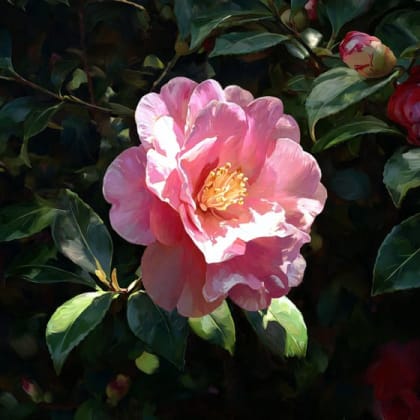
spatterdock
Nuphar advena
Spatterdock is a lovely water plant with big, round leaves that float on the surface of ponds and lakes. It has bright yellow flowers that look like little cups and attract many insects.
Hábitat: Wetlands
The spatterdock is an aquatic plant featuring large, leathery, heart-shaped leaves that often float or stand above the water. Its bright yellow, cup-shaped flowers typically emerge on thick stalks, contrasting with its deep green foliage. It looks distinctly sturdy and lush in its watery home.
Categoría
PlantasRareza
Common
Peligro
1/5 · Muy bajo
Snaps
¡Sé la primera persona en hacer un snap!
Its massive underwater rhizomes can grow as thick as a human arm!
Native Americans once used spatterdock roots to make a soothing tea for various ailments.
Spatterdock flowers smell like fermenting apples, which attracts buzzing pollinator insects.
The plant's leaves provide important shade, keeping the water cool for fish and other creatures.
Spatterdock has special air canals in its stems and leaves that carry oxygen from the air down to its roots, helping it breathe underwater.
Spatterdock uses strong, thick rhizomes to anchor itself firmly in the mucky bottom, preventing it from floating away in currents or wind.
Spatterdock has waxy leaves that shed water easily, helping them stay dry and prevent clogging of pores for photosynthesis.
Ondatra zibethicus
consumes its starchy rhizomes and leaves
Anas platyrhynchos
feeds on the nutrient-rich seeds and fruits
Micropterus salmoides
finds protection and shade among its broad leaves
Las plantas con flores son cualquier planta que produce flores como parte de su ciclo reproductivo.
Las plantas de floración de verano producen sus flores durante la temporada estival, a menudo aportando un color vibrante cuando muchas otras plantas ya han terminado de florecer.
Las plantas tolerantes a la sombra están adaptadas para crecer y prosperar en áreas con bajos niveles de luz, requiriendo menos luz solar directa.
Los árboles de hoja ancha son angiospermas caracterizadas por hojas planas y anchas que típicamente se caen anualmente en climas templados.

Las plantas comestibles son aquellas partes de una planta que se consideran seguras para el consumo humano.

Describe plantas que son particularmente atractivas y beneficiosas para una amplia variedad de organismos polinizadores.

Este rasgo de hábitat identifica especies que se encuentran en humedales, que son áreas de tierra saturadas de agua, ya sea permanente o estacionalmente, e incluyen marismas, pantanos y ciénagas.

Los hábitats de agua dulce incluyen entornos acuáticos no salinos como ríos, lagos, estanques y humedales, vitales para numerosas especies.

Describe una especie cuya presencia y papel tienen un efecto desproporcionadamente grande en su entorno.

Los hábitats acuáticos abarcan entornos donde los organismos viven principalmente en el agua, incluidos océanos, ríos, lagos y humedales.
Peligro
1/5 · Muy bajo
Always stay close to an adult when exploring ponds and lakes.
10-55 cm
50-200 cm
4-7 cm
Late spring to early fall
Sí
Leve
Perenne
Insectos
Acércate para separar los grupos y explorar dónde se ha fotografiado este objeto.
Los snaps recientes aparecerán aquí a medida que se añadan nuevas observaciones.
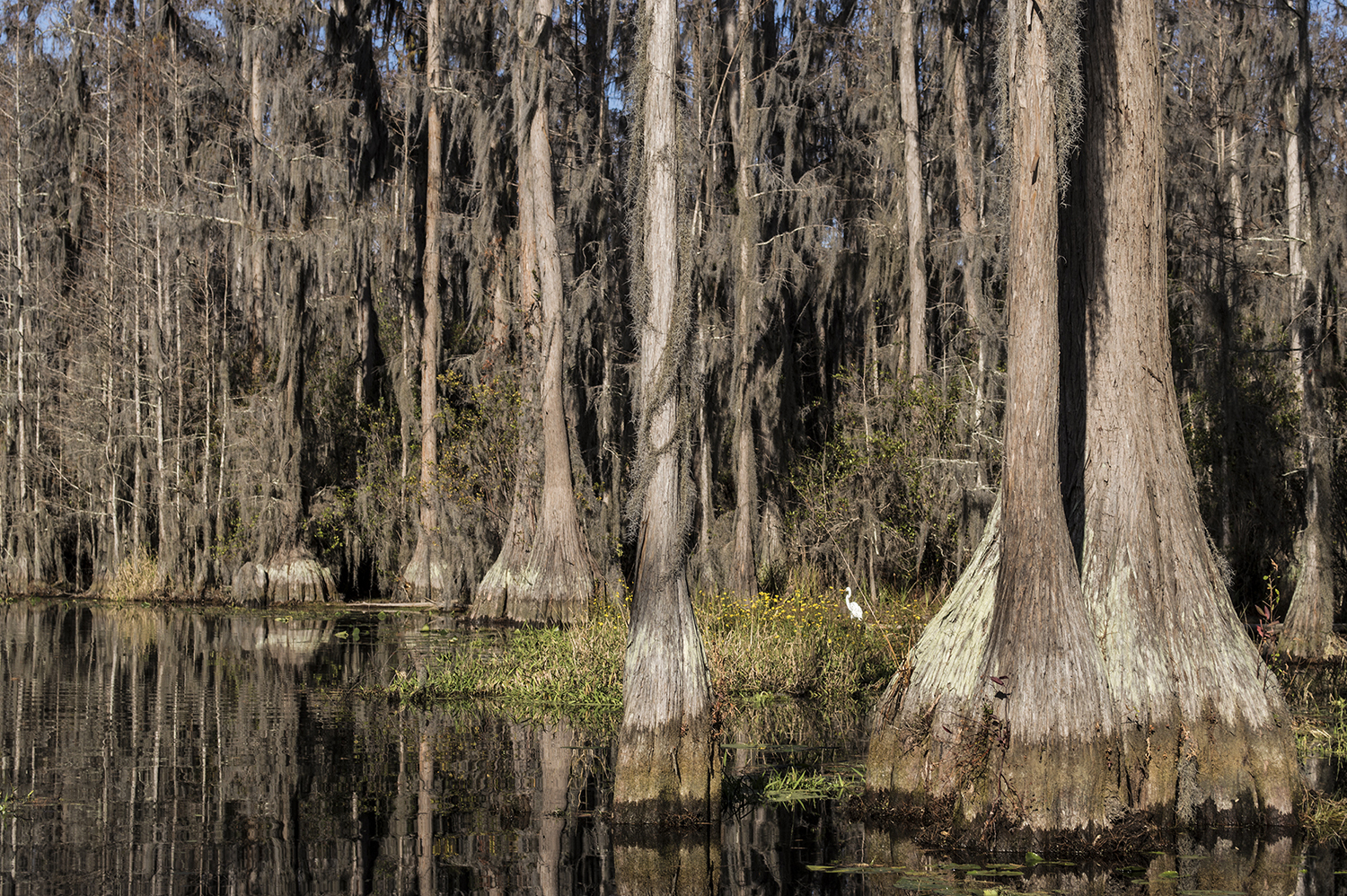
Georgia, US
Puedes ver Caimán Americano, Ciervo De Cola Blanca y Anolis Verde.
Ver guía →

North Carolina, US
Puedes ver Cipreses Calvos, Southern Cricket Frog y Green Treefrog.
Ver guía →