

Sphingonotus Willemsei
sphingonotus willemsei
Willemse's Blue-winged Grasshopper (Sphingonotus willemsei) is a master of disguise inhabiting the rocky, arid landscapes of the Mediterranean region. Spanning the dry, sun-drenched slopes and gravelly riverbeds, this orthopteran blends seamlessly with its geological surroundings, appearing virtually invisible until disturbed. It belongs to the band-winged grasshopper subfamily, known for their cryptic resting coloration and vibrant hindwings that flash during flight to confuse oncoming predators. This fascinating insect plays an important ecological role as both a primary consumer of dry vegetation and a vital food source for local reptiles, birds, and larger predatory invertebrates. When startled, it leaps into the air, revealing a sudden, mesmerizing flash of bright blue wings before instantly disappearing back into the gravelly landscape upon landing. This deceptive defense mechanism confuses predators, showcasing the incredible evolutionary adaptations of arid-dwelling insects in rugged environments.
Hábitat: Found on sunny, rocky slopes, gravelly riverbeds, and arid grasslands with sparse vegetation.
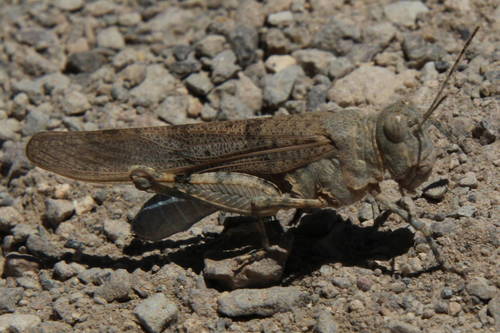
Sphingonotus willemsei is highly camouflaged to match stony, gravelly soils, presenting a mottled grey, brown, or sand-colored body with dark, irregular banding. It possesses a rugged, textured pronotum and robust hind legs adapted for explosive jumping. The most striking visual identifier is hidden until it takes flight: the basal area of its translucent hindwings features a brilliant light-blue coloration, bordered by a dark, smoky band near the outer margin. Its length ranges from 1 to 3 centimeters, with females being notably larger than males.
Categoría
InsectosRareza
Common
Peligro
1/5 · Muy bajo
Snaps
¡Sé la primera persona en hacer un snap!
The bright blue color on their hindwings does not contain blue pigment; instead, it is created by microscopic physical structures that reflect blue light.
They lay their eggs deep in dry soil inside a protective foamy pod that hardens to shield them from extreme winter temperatures.
To prevent overheating on blazing hot rocks, they can raise their bodies high off the ground using their legs in an action called stilting.
It uses its mottled body to blend in with gravel, then flashes bright blue wings during flight to startle and confuse predators before landing and instantly camouflaging again.
It positions its body flat against sun-warmed stones in the early morning to rapidly absorb heat and achieve optimal activity levels.
Males rub a specialized row of pegs on their hind femora against their forewing veins to produce a quiet buzzing song to attract females.
Feeds primarily on dry grasses, low-lying herbaceous plants, and organic detritus in arid environments.
Diferencias por edad: Nymphs feed on tender green plant shoots, whereas mature adults transition to consuming coarser dry grasses and organic soil debris.
Avena fatua
Feeds opportunistically on the foliage and fallen seeds of this common grass in dry meadows.
Merops apiaster
Falls prey to this agile aerial hunter, which easily snatches grasshoppers in mid-flight.
Mantis religiosa
Preyed upon by this ambush predator while resting on low-lying shrubs or rocks.
Aún no hay insignias de rasgos asignadas a este objeto.
Todavía no hay alias listados.
Las colecciones para este objeto aparecerán aquí a medida que se añadan más temas.
Peligro
1/5 · Muy bajo
Todavía no hay notas especiales de seguridad.
La forma más fácil de identificar a Sphingonotus Willemsei es usar la aplicación de identificación de naturaleza Snappit.
1-3 cm
3-6 cm
0.001-0.003 kg
hasta 1 años
10 km/h
Feeds primarily on dry grasses, low-lying herbaceous plants, and organic detritus in arid environments.
Found on sunny, rocky slopes, gravelly riverbeds, and arid grasslands with sparse vegetation.
Acércate para separar los grupos y explorar dónde se ha fotografiado este objeto.
Los snaps recientes aparecerán aquí a medida que se añadan nuevas observaciones.