

Springtime Amanita
amanita velosa
The Springtime Amanita (Amanita velosa) is a striking and often sought-after mushroom native to western North America. Renowned for its delicate appearance and distinctive features, it emerges predominantly in spring, providing a delightful foraging opportunity for experienced mushroom hunters. However, like many species within the Amanita genus, its identification requires absolute certainty, as the genus also includes some of the world's most deadly fungi. Its presence is a testament to healthy forest ecosystems, where it plays a vital role in nutrient cycling.
Hábitat: Found exclusively in coniferous or mixed forests, particularly under Douglas-fir, pine, and grand fir trees, often growing solitarily or in small scattered groups on soil.
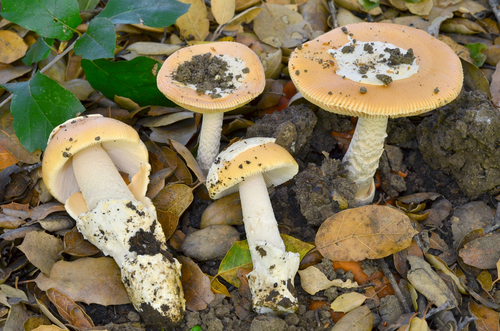
Amanita velosa is characterized by its large, sticky, and often peach-colored to orange-brown cap, which starts convex and flattens with age, reaching 5-20 cm in diameter. The gills underneath are white, crowded, and free from the stipe. The stipe (stem) is white, firm, 10-25 cm tall, and lacks a ring but has a distinctive, large, sac-like volva at its base that often remains underground. It exudes a mild, flour-like odor when fresh.
Categoría
HongosRareza
Common
Peligro
1/5 · Muy bajo
Snaps
¡Sé la primera persona en hacer un snap!
Despite being in a genus known for deadly species, Amanita velosa is considered an excellent edible mushroom by many foragers, though expert identification is crucial.
Its common name 'Springtime Amanita' aptly refers to its primary fruiting season, making it one of the earlier large edible mushrooms to appear in western North American forests.
The sticky cap of Amanita velosa is often covered with debris like pine needles or leaves, which can be an identifying characteristic and sometimes makes it harder to spot.
Unlike some Amanita species, Amanita velosa lacks a universal veil remnant on its cap, contributing to its generally smooth appearance, though its cap margin can be striate.
This fungus forms a mutually beneficial relationship with the roots of certain trees, exchanging nutrients like water and minerals for sugars produced by the tree through photosynthesis.
Amanita velosa possesses a prominent, sac-like volva (cup) at the base of its stipe, a critical identification feature that differentiates it from many other mushrooms and indicates its genus.
Like all gilled fungi, it produces vast numbers of microscopic spores from its gills, which are then dispersed by air currents, facilitating its colonization of new forest areas.
Amanita velosa forms a symbiotic, ectomycorrhizal relationship with conifers, primarily Douglas-fir. It obtains sugars from the tree roots while providing the tree with enhanced access to water and mineral nutrients from the soil.
Pseudotsuga menziesii
Forms symbiotic relationship with tree roots, enhancing nutrient uptake for the tree.
Odocoileus virginianus
Fruiting bodies are occasionally consumed by various forest mammals and invertebrates.
Sciaridae
Larvae of certain insects can feed on the mushroom cap and gills.
Amanita phalloides
Competes for resources and space with other mycorrhizal fungi in forest soils.
Aún no hay insignias de rasgos asignadas a este objeto.
Todavía no hay alias listados.
Las colecciones para este objeto aparecerán aquí a medida que se añadan más temas.
Peligro
1/5 · Muy bajo
Todavía no hay notas especiales de seguridad.
La forma más fácil de identificar a Springtime Amanita es usar la aplicación de identificación de naturaleza Snappit.
10-25 cm
0.05-0.3 kg
0 años
Amanita velosa forms a symbiotic, ectomycorrhizal relationship with conifers, primarily Douglas-fir. It obtains sugars from the tree roots while providing the tree with enhanced access to water and mineral nutrients from the soil.
Found exclusively in coniferous or mixed forests, particularly under Douglas-fir, pine, and grand fir trees, often growing solitarily or in small scattered groups on soil.
Nutrient Absorption
Acércate para separar los grupos y explorar dónde se ha fotografiado este objeto.
Los snaps recientes aparecerán aquí a medida que se añadan nuevas observaciones.