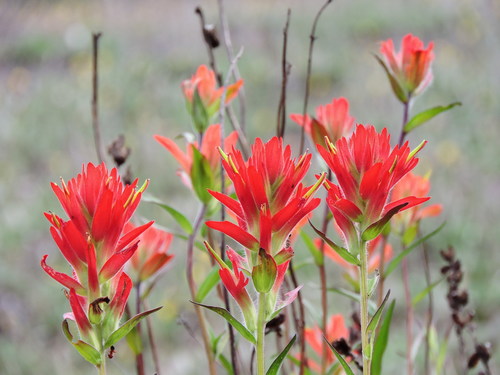
Subalpine Fleabane
erigeron glacialis
The Subalpine Fleabane is a cheerful flower that loves to grow in cool, high-altitude areas. Its colorful blooms can brighten up even the most rocky landscapes!
Hábitat: Subalpine meadows and rocky slopes in mountainous regions.
The Subalpine Fleabane has vibrant daisy-like flowers, typically with numerous slender purple or lavender ray petals surrounding a bright yellow center. Its stems and leaves are often covered in fine hairs, giving it a slightly fuzzy appearance.
Categoría
PlantasRareza
Common
Peligro
0/5 · Sin peligro conocido
Snaps
¡Sé la primera persona en hacer un snap!
Its flowers are heliotropic, slowly turning to follow the sun across the sky!
Its genus name Erigeron means 'early old man' for its early flowering and fuzzy seeds!
The 'fleabane' name comes from an old belief it repelled fleas, but it doesn't!
This tough plant grows where snow lingers, popping up quickly as ice melts!
Subalpine Fleabane has strong roots and compact growth, helping it survive harsh winds and cold in mountains.
Subalpine Fleabane has tiny hairs on its leaves and stems, protecting it from intense sun and cold mountain air.
Subalpine Fleabane produces lightweight seeds carried by wind, helping it spread to new rocky slopes.
Bombus occidentalis
Collects nectar and pollen, aiding in reproduction.
Vanessa cardui
Feeds on nectar, helping to spread pollen between flowers.

Marmota flaviventris
May occasionally browse on its leaves and stems.
Colorido describe a organismos u objetos que exhiben una amplia variedad de colores brillantes y distintivos.
Este rasgo caracteriza a los organismos cuya dieta consiste total o principalmente en material vegetal.
Los hábitats de pastizales son biomas terrestres dominados por pastos y plantas herbáceas, que sustentan a una variedad de animales de pastoreo.
Los hábitats boscosos son entornos terrestres dominados por una densa cubierta arbórea, que sustentan una gran diversidad de vida animal y vegetal.

Describe organismos que transfieren polen, permitiendo la fertilización y reproducción de las plantas.
Peligro
0/5 · Sin peligro conocido
Todavía no hay notas especiales de seguridad.
10-40 cm
15-30 cm
1-3 cm
Mid-summer to early fall
No
Ninguna
Perenne
Insectos
Acércate para separar los grupos y explorar dónde se ha fotografiado este objeto.
Los snaps recientes aparecerán aquí a medida que se añadan nuevas observaciones.