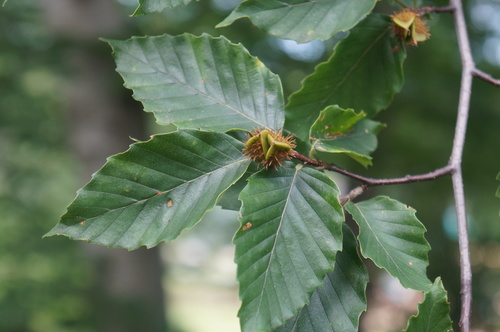
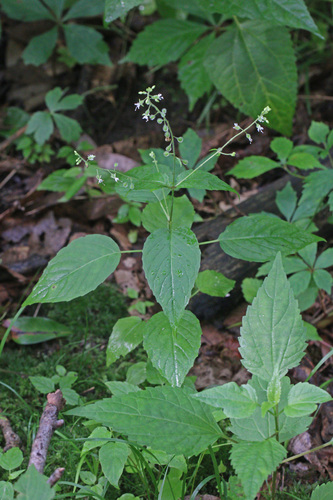
tea viburnum
Viburnum setigerum
Tea viburnum is a lovely shrub with beautiful clusters of white flowers. It grows berries that are enjoyed by birds, making it a great plant for gardens and parks.
Hábitat: Forests
The tea viburnum is an upright, deciduous shrub featuring ovate, dark green leaves that turn reddish-purple in autumn. It produces clusters of small, creamy-white flowers in late spring, followed by striking, bright orange to red berries that persist into winter.
Categoría
PlantasRareza
Common
Peligro
1/5 · Muy bajo
Snaps
¡Sé la primera persona en hacer un snap!
Despite its name, the 'tea' viburnum isn't typically used for tea, but its leaves were once explored as a tea substitute!
In fall, its green leaves transform into stunning shades of purplish-red, adding a fiery glow to the garden!
Its scientific name, setigerum, means 'bristle-bearing,' hinting at tiny hairs on its leaves and stems!
The tea viburnum's cheerful red berries can last on branches all winter, even after the leaves have fallen!
Tea viburnum's bright red berries act like a beacon, attracting birds to eat them and spread its seeds far and wide.
Its dense branches and foliage create cozy hiding spots, offering shelter and safety for small birds and insects.
The small, creamy-white flowers host a party for insects, inviting them to help the plant make new seeds.
Apis mellifera
Gathers nectar and pollen from flowers
Bombus impatiens
Visits flowers for nectar and pollen
Turdus migratorius
Consumes the bright red berries, aiding seed dispersal
Bombycilla cedrorum
Feeds on the persistent berries, especially in winter
Pyrrhalta viburni
Larvae and adults feed on the leaves
Las plantas caducifolias pierden periódicamente todas sus hojas, por lo general durante el otoño o las estaciones secas.
Las plantas con flores son cualquier planta que produce flores como parte de su ciclo reproductivo.
Las plantas ornamentales se cultivan principalmente por su atractivo estético, embelleciendo paisajes y jardines con su atractivo follaje, flores o forma.
Un arbusto es una planta leñosa más pequeña que un árbol, típicamente con múltiples tallos que se ramifican desde o cerca del suelo.

Las plantas de floración primaveral producen sus flores durante la temporada de primavera, lo que a menudo significa el final del invierno y el comienzo de un nuevo crecimiento.

Las flores fragantes emiten un aroma agradable, a menudo para atraer polinizadores o como defensa.

Las plantas frutales producen frutos, que son los ovarios maduros de las plantas con flores que contienen semillas.

Describe plantas que son particularmente atractivas y beneficiosas para una amplia variedad de organismos polinizadores.

Los hábitats boscosos son entornos terrestres dominados por una densa cubierta arbórea, que sustentan una gran diversidad de vida animal y vegetal.
Todavía no hay alias listados.
Peligro
1/5 · Muy bajo
Always look but don't touch the berries, as they might not be safe to eat.
200-400 cm
150-300 cm
0.5-1 cm
Late spring to early summer
No
Ninguna
Perenne
Insectos
Acércate para separar los grupos y explorar dónde se ha fotografiado este objeto.
Los snaps recientes aparecerán aquí a medida que se añadan nuevas observaciones.