thinleaf huckleberry
Vaccinium membranaceum
Thinleaf huckleberry is a small bush with tasty blue berries! These bushes grow in forests and are loved by animals and people alike for their sweet fruit.
Hábitat: Forests
The thinleaf huckleberry has bright green, oval leaves with finely toothed edges, giving it a delicate appearance. Its small, urn-shaped flowers are typically pale pink to greenish-white, maturing into glossy, dark purple to black berries.
Categoría
PlantasRareza
Common
Peligro
1/5 · Muy bajo
Snaps
¡Sé la primera persona en hacer un snap!
Despite its name, its 'berries' are technically small capsules with many tiny seeds inside!
Indigenous peoples have gathered and used these delicious berries for thousands of years as food and medicine!
Its tasty berries are a favorite snack for bears, who help spread its seeds far and wide!
This plant loves sunshine and is often one of the first to grow back vigorously after a forest fire!
Thinleaf huckleberry can resprout from its sturdy underground rhizomes after a forest fire, helping it quickly recover and colonize burned areas.
Its tough leaves and woody stems help it withstand harsh mountain winds and cold temperatures at high elevations, surviving where others can't.
This plant has robust root systems that help it thrive in nutrient-poor, acidic soils where many other plants struggle to grow.
Bombus occidentalis
visits bell-shaped flowers for nectar
Turdus migratorius
enjoys the sweet, dark berries
Odocoileus hemionus
browses on leaves and twigs
Las plantas caducifolias pierden periódicamente todas sus hojas, por lo general durante el otoño o las estaciones secas.
Un arbusto es una planta leñosa más pequeña que un árbol, típicamente con múltiples tallos que se ramifican desde o cerca del suelo.
Las plantas frutales producen frutos, que son los ovarios maduros de las plantas con flores que contienen semillas.
Las plantas medicinales poseen compuestos químicos que pueden utilizarse con fines terapéuticos para tratar enfermedades o mantener la salud.

Las plantas comestibles son aquellas partes de una planta que se consideran seguras para el consumo humano.

Describe plantas que son particularmente atractivas y beneficiosas para una amplia variedad de organismos polinizadores.

Este rasgo de hábitat identifica a las especies que se encuentran en regiones montañosas, caracterizadas por su gran altitud, pendientes pronunciadas y zonas climáticas variables.

Los hábitats boscosos son entornos terrestres dominados por una densa cubierta arbórea, que sustentan una gran diversidad de vida animal y vegetal.
Todavía no hay alias listados.
Peligro
1/5 · Muy bajo
Always ask an adult before picking and eating berries from bushes.
50-200 cm
50-150 cm
0.5-0.7 cm
Late spring to early summer
Sí
Ninguna
Perenne
Insectos
Acércate para separar los grupos y explorar dónde se ha fotografiado este objeto.
Los snaps recientes aparecerán aquí a medida que se añadan nuevas observaciones.

British Columbia, CA
Puedes ver Canada Jay, Pink Mountainheath y Yellow-Pine Chipmunk.
Ver guía →

British Columbia, CA
Puedes ver White Pasqueflower, Hoary Marmot y Columbian Ground Squirrel.
Ver guía →
British Columbia, CA
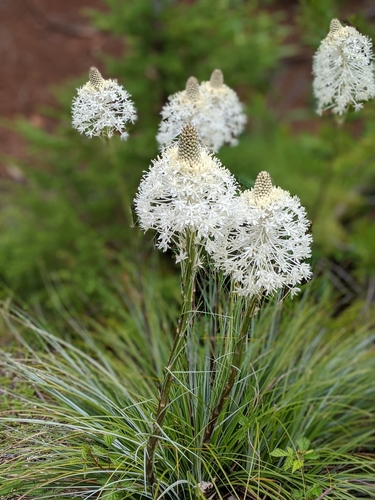
Puedes ver Common Beargrass, White-Flowered Rhododendron y Glacier Lily.
Ver guía →












.jpg&width=800)